Blossom end rot tomatoes: the black patch and watering

A hard black patch at the flower end follows uneven watering, so the plant cannot take up calcium. Pots dry faster, and blight marks the fruit differently.
On this page

You turn a tomato and the end opposite the stalk is a hard black patch. It looks like a disease you bought in the packet. Blossom end rot tomatoes are a moisture problem both British guides put in the same place: the flower end, after the plant has been too dry or the moisture has swung about. The plant cannot take up calcium without enough water. Look at the watering before you look at the seed.
Gardeners' World names the mark blossom end rot and ties the hard black patches to dryness. The RHS ties fluctuating moisture to splitting or to this rot, and says containers may need daily water in hot weather. Those two pages are the mechanism here. They leave the fertiliser dose blank, and this article leaves it blank too.
The tomato seeds comparison lists the packets, the GBP prices and the review notes. Those notes cover germination and, in one case, thin skins. They do not score this patch. You can grow the top pick and still see it if the pot is allowed to bake. A qualifying purchase through that comparison can earn us a commission, at no extra cost to you. Products Compared has not grown these plants in a lab. The lines below are Gardeners' World and the RHS, written up in October 2026.
In short
A hard black patch at the flower end follows uneven watering. Gardeners' World links it to plants too dry to take up calcium. The RHS links it to moisture that fluctuates, and says pots may need water every day in a hot spell. The scar is separate from blight's watersoaked brown patches and from a split skin. Keep the compost evenly moist, sink a 15 cm pot beside the plants as the RHS suggests, and feed containers every 10 to 14 days once fruit swells. These guides print no calcium dose.
The black patch and uneven water
The patch sits at the flower end, usually the bottom of a hanging fruit. It is hard, dark and sunken, unlike a soft wet rot that spreads under the skin. Gardeners' World puts it next to the watering can. Irregular watering splits fruit. If the plants are too dry, you get the hard black patches, because the plant cannot take up calcium without enough moisture. That calcium sentence is about water. A dry spell shows up on the fruit.
The RHS reaches the same disorder from the other side of the can. Moisture that fluctuates causes splitting or blossom end rot. A plant soaked at the weekend and left through a hot week has fluctuated, even after a heavy Saturday watering. The standard they set is even moisture: regular water, so the roots stay in one condition. Curling leaves can mean the plant is already short of water, before the next truss marks its fruit.
Both guides explain why water matters for calcium uptake. Neither prints a dose, a brand or a spray, and this article will not invent one. The interval the RHS does give for tomato feed is below. The amount stays on the product label.
Pots and grow-bags dry out faster
Gardeners usually meet this patch on container plants, because the compost volume is small. The RHS says containers may need daily water in hot weather. A grow-bag on a patio behaves like a pot: it heats up, it sheds water through the leaves, and one missed evening can take it from damp to dry. A thorough soak followed by three dry days is the fluctuation the guide names, even when each watering feels generous.
A 15 cm pot sunk beside the plants is the RHS tip for watering the roots. Sink it so the rim is at compost level, then fill that pot. The water goes down to the roots instead of running off or wetting only the top centimetre. One pot between plants in a bed, or a small pot in a large container if it fits, is their method. In a heatwave you still look every day. The sunk pot makes the water you give more likely to reach the roots.
Leaves that curl are the RHS sign that the plant is short of water. Act the same day. By the time a fruit shows a black end, that fruit has already been affected. Later fruit is what the new habit can still help. The marked tomato will not grow the patch out. Pick it at the stage you would pick any fruit, then keep even moisture.
Once the fruit is swelling, feed belongs in the container routine. The RHS says every 10 to 14 days from that point. Gardeners' World talks about feeding weekly once flowers appear, a different clock. Pick one guide and keep to it. This article follows the RHS interval, and still gives no homemade calcium rate. A weekly feed on a plant that dries out every afternoon leaves the dryness in place. The patch is showing you the water.
Blight lesions and split skins
Two other marks get blamed on the same afternoon. Late blight on the fruit, as the RHS describes it, is watersoaked brown patches on green tomatoes, on a plant that is infected, typically in warm, wet weather. Fruit from a badly infected plant may already be infected. The RHS use is to cook it at once, for chutney or sauce, because a drawer often lets a large share rot. Tomato blight after a wet July follows that disease. A hard flower-end scar on firm fruit, with ordinary leaves, is the watering problem. A collapsed plant with brown patches on several green fruits is the disease. Even watering will not clear blight.
Splitting is the related water problem, with a different scar. Gardeners' World says irregular watering splits fruit, in the sentence before blossom end rot. You see cracks in the skin, often after a dry spell and then a heavy water. Use the fruit promptly if it is still sound. It is a crack, and the hard black disc sits at the flower end. Both can show in the same month, because both follow unsteady water. Steady moisture helps both. A split is on the skin. Blossom end rot is at the flower end.
Black Krim needs a separate caution. Across 160 amazon.co.uk reviews, that beefsteak packet draws comments on flavour and on thin skins that split, with some fruit rotting outdoors. That is a variety comment. Thin skin can split in the rain because of the fruit itself. A hard black flower end on a Black Krim still points to moisture, which is what both guides say about that patch, whoever packed the seed. Outdoor rot in a review is also a reason to look at shelter and at blight on the plant in front of you.
Germination reviews that say nothing came up are about seed. A scar on a fruit you already grew is a later problem. If the plant grew, flowered and set a tomato, the seed did the part the packet can do. The sowing guide covers depth, heat and planting out. It will not water the pot in August. Just Seed Sungold F1, the top pick at £3.65 with 4.5 stars from 111 reviews, is an orange cherry. A cherry can show the patch in a baked pot as readily as a beefsteak. Fruit size changes how soon the fruit colours. Even moisture still applies.
What to change this week
Change the habit that let the compost swing. The steps are short because the guides are short.
- Water so the moisture stays even. In hot weather, check containers every day. The RHS says they may need daily water.
- Sink a 15 cm pot beside the plants and water into it, so the drink reaches the roots. That is the RHS tip.
- Feed containers every 10 to 14 days once the fruit is swelling, and take the amount from the product label. Skip any calcium scoop this article never measured.
- Pick fruit that already has the hard patch. The scar stays. Keep a soft fruit out of a bag of clean tomatoes.
- If the leaves are collapsing and the green fruit has watersoaked brown patches, leave this list. Cook that fruit promptly and keep the infected haulm out of the compost.
Common questions
What is the black patch at the bottom of a tomato?
Is blossom end rot a fungus?
Do I add calcium?
How is it different from blight on the fruit?
Why do pot plants get it?
Will the rest of the truss be ruined?
Did I buy bad seed?
How often should I water?

Products Compared publishes British-English buying guides based on amazon.co.uk listings and public UK sources. We do not run a lab and we do not invent test scores.
Related articles
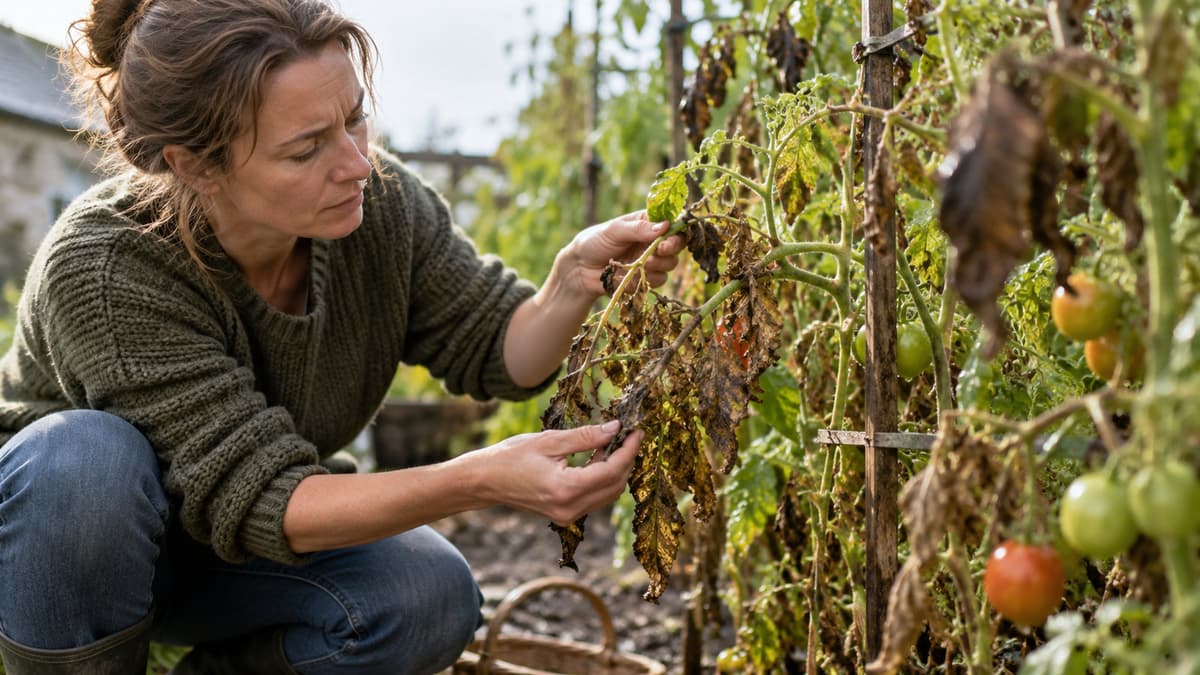
Tomato blight after a wet July
Brown collapsed leaves in a warm, wet British summer are late blight, and the fruit may already be infected.
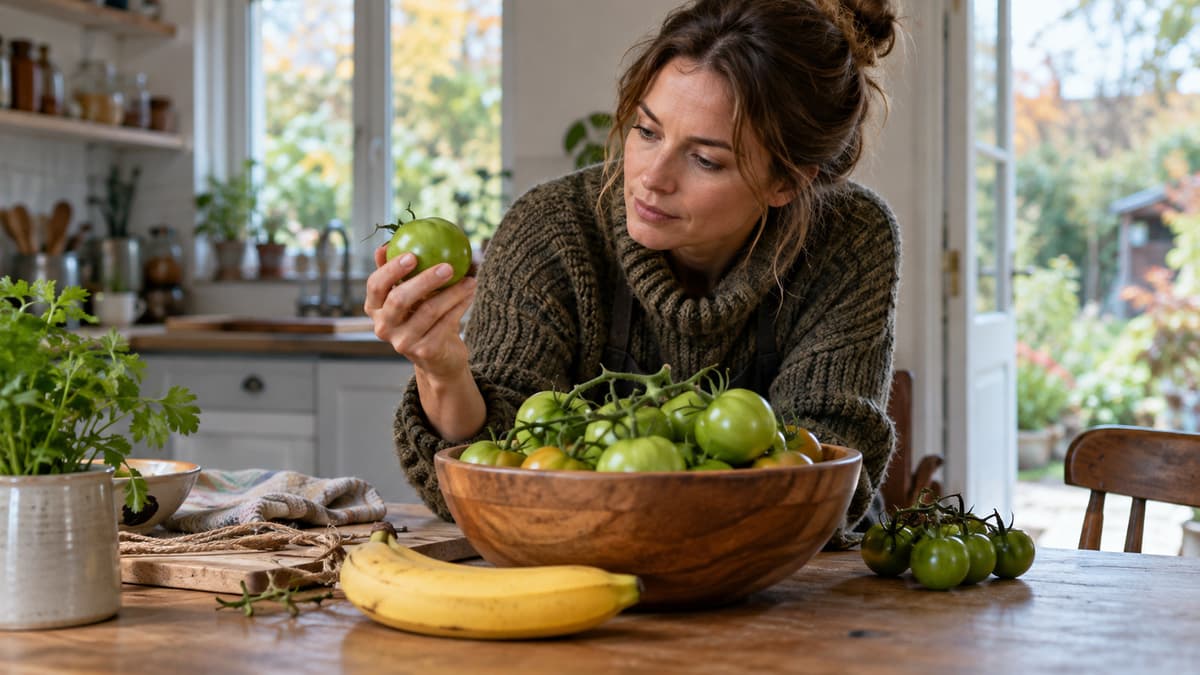
Ripening green tomatoes indoors
How to colour sound green fruit indoors, and why blighted fruit should be cooked at once.

Cherry, plum or beefsteak tomatoes
Cherries, plums and beefsteaks are different meals, and one San Marzano listing contradicts itself.