Ripen green tomatoes: what to do before a cold night
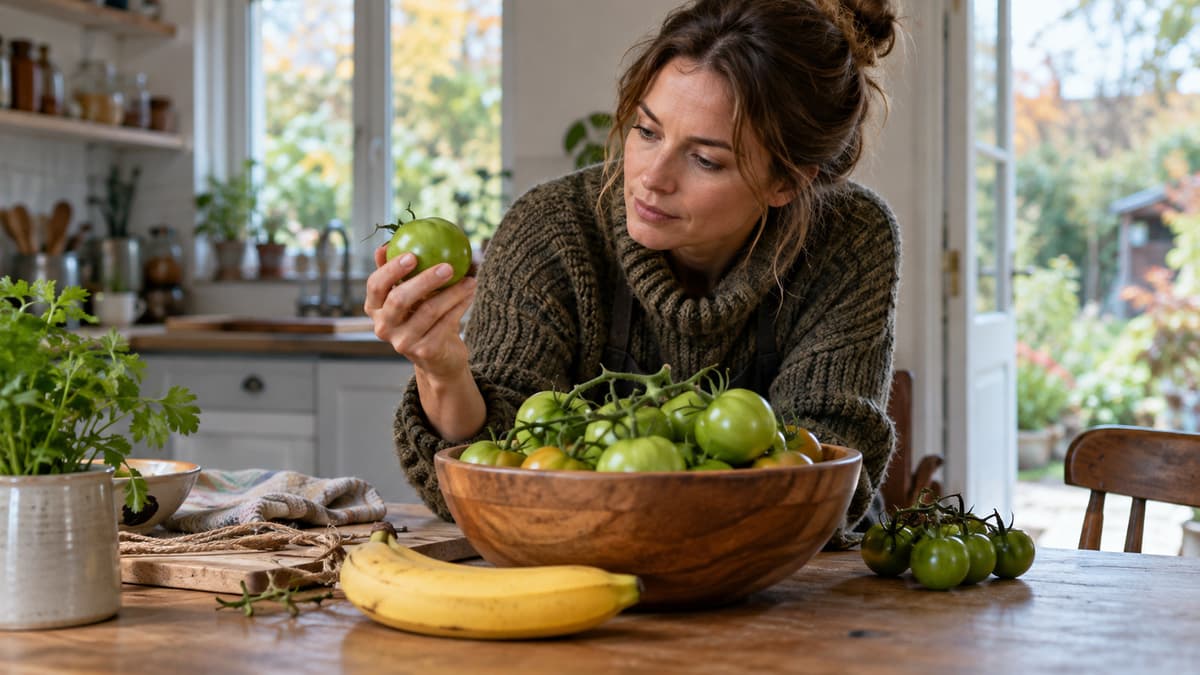
Sound green tomatoes from a healthy plant can colour indoors, warm and dark, or with a banana. Fruit from a blighted plant often rots, so cook the crop at once.
On this page

The forecast has dropped, the trusses are still green, and you are trying to decide whether to leave them for one more week. October is a normal moment to have green fruit in Britain. Ripen green tomatoes indoors only when the fruit is sound and the plant is healthy. Fruit from a blighted plant is a different job, and a drawer often turns that job into a bowl of rot.
The RHS and Gardeners' World describe the healthy-plant method as warmth, darkness, and a banana, and blighted fruit as something you cook at once. Settle that split before you clear a drawer.
The tomato seeds comparison is where the packets in this hub are set out, with prices in GBP from amazon.co.uk. None of those listings gives a yield, and none gives a number of days from green to red. Variety still matters at the margin, because smaller cherries ripen sooner than large fruit. It does not give you a date.
In short
Sound green fruit from a healthy plant can finish indoors, warm and dark, or with a banana in a drawer or a bag. Outdoor plants can be lifted onto straw under cloches. Fruit from a badly infected plant may already be infected, and the RHS says a large share can rot if you try to colour it inside. Cook that fruit now. Once a healthy tomato is red, keep it out of the fridge if you can, for about a week. Whole tomatoes do not freeze well. Sauce does.
Two kinds of green fruit
Look at the plant before you look at the bowl. A healthy plant has firm green fruit and leaves that are fading in an ordinary October way, not collapsing brown. That is the fruit the harvesting pages send indoors. The RHS blight page says fruit from a badly infected plant may already be infected even while it looks merely unripe.
Watersoaked brown patches on green fruit are the blight symptom the RHS describes on the fruit itself. A hard black patch at the flower end is blossom end rot, which follows uneven water, and it is a separate problem with its own article in this hub. A tomato can be green, firm and unmarked and still be a bad candidate if the haulm above it is already badly hit.
Greenhouse and outdoor plants do not reach this week on the same calendar. Greenhouse crops run later into autumn. An outdoor beefsteak can be finished while a plant under glass still has weeks. The greenhouse or outdoor guide sets out that difference, including the point that glass lowers blight risk and does not delete it. A shut house in a cold snap is not a reason to leave diseased fruit hanging in the hope it will colour.
Smaller cherries ripen sooner than large fruit. A Sungold-type cherry can be red in the same week that a beefsteak beside it is still green. That is the RHS size point, not a days-to-red claim, and not a promise that every cherry will beat the frost. Just Seed Sungold F1 is the orange cherry with the review volume here, 10 seeds at £3.65. The listing does not state a ripening time.
A healthy plant at the end of the season
During the season you pick when the fruit is fully coloured, and the RHS says to take the stalk with it. That is the ordinary harvest. The end of the season is the exception, and the RHS gives outdoor plants two routes. You can lift the plants and lay them on straw under cloches, so the fruit finishes with some cover. Or you can pick the fruit and put it somewhere warm and dark, or in a drawer with a banana.
Gardeners' World adds the work on the plant before you pick. Take off flowers that will never make a tomato in time, and leaves that are shading fruit. Stop the cordon so the plant stops making new growth at the tip. Stopping is a cordon step. A bush tomato keeps the side-shoots a cordon loses. Several listings in this set never state the habit. If the packet was silent, look at the plant: one main stem you have been training is a cordon, and a branched plant you have left alone is the bush case.
Pick on a dry day if you can. Leave the stalk on when it comes away with the tomato. The RHS writes that stalk instruction for fruit picked fully coloured. A green fruit that loses its stalk can still go into the warm and dark. Leave behind fruit that is already soft, split, or marked with brown patches.
Cloches and straw are the outdoor alternative to a kitchen drawer, for a plant you can lift and lay down. A pot on a balcony often cannot take that route. Picking is then the route you have. Bring the pot into a frost-free place only if the plant is healthy and you can give it light. A dark cupboard is for picked fruit, not for a whole live plant you still expect to photosynthesise.
Indoors, in the dark, with a banana
The indoor method is short, and both guides already agree on the shape of it.
- Pick sound green fruit from a healthy plant, with the stalk if it will stay on.
- Put the fruit somewhere warm and dark, which is the RHS wording, or in a drawer with a banana.
- If you follow Gardeners' World, put the fruit in a bag with a banana.
- Look through the fruit while they sit, take out anything that is softening or spotting, and take out fruit as it colours.
- Leave a number of days off the plan. Neither guide gives you one, and a cold north-facing room will not behave like a warm cupboard.
One banana is what the guides describe. This article will not add a lecture on ethylene, a count of bananas per kilogram, or a temperature in degrees for the drawer. Warm and dark is the RHS place. A bag is the Gardeners' World place. If the only spot you have is a cold porch, you have not met warm, and the fruit will sit. Move it into the house.
A blighted plant
Stop the drawer plan when the plant is badly infected. The RHS says many green fruits on that plant may already carry the infection, and that ripening them indoors can mean a large share rots. The use they name is immediate: chutney or sauce, while the fruit is still worth cooking. Waiting to see if a brown-patched tomato turns red is how you lose the pan as well as the plant.
Tomato blight after a wet July is the piece that stays with the disease itself. Healthy end-of-season fruit may go warm and dark. Blighted fruit is cooked. If only one stem is touched and you are unsure, keep the doubtful fruit out of the bag with the clean fruit. One leaking tomato in a drawer is enough to smear the rest.
Do not compost the haulm of a badly infected plant. Fruit you can use goes to the kitchen the same day. Stems stay out of the compost heap. A comparison of seed packets will not undo a July infection, and no variety in this set is the Wisley name the RHS cites for a season when blight was the story.
After they are red
Gardeners' World asks you to keep ripe tomatoes out of the fridge if you can. The cold turns the texture mushy. Room temperature for about a week is their storage line once the fruit is red, whether it coloured on the plant or in the drawer. A green tomato in the fridge is not a shortcut this guide supports.
Whole tomatoes do not freeze well, on the same Gardeners' World note. Sauce can be frozen. If the drawer delivers more red fruit than you will eat in that week, cook it and freeze the sauce. Chutney remains the RHS suggestion for the unripe blighted fruit, which is a different pan from a sauce of clean ripe tomatoes. Label them if both end up in the freezer, because one was a rescue and the other was a glut.
Common questions
How do I ripen green tomatoes indoors?
Does a banana help?
Should ripe tomatoes go in the fridge?
What if the plant has blight?
Can I freeze whole tomatoes?
When do I pick them off the plant?
Will every green fruit colour up?
Do I leave them on the vine until frost?

Products Compared publishes British-English buying guides based on amazon.co.uk listings and public UK sources. We do not run a lab and we do not invent test scores.
Related articles
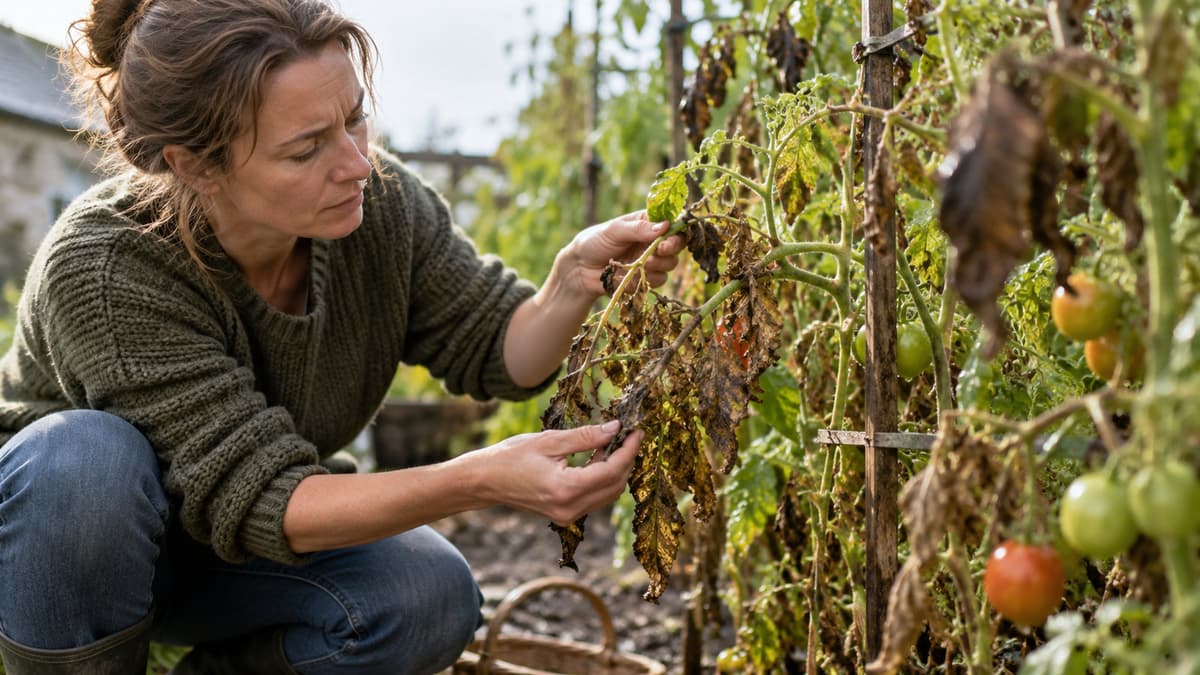
Tomato blight after a wet July
Brown collapsed leaves in a warm, wet British summer are late blight, and the fruit may already be infected.

Cherry, plum or beefsteak tomatoes
Cherries, plums and beefsteaks are different meals, and one San Marzano listing contradicts itself.

Blossom end rot on tomatoes
The black flower-end patch follows uneven water. It is separate from blight and from the seed packet.