Pinch out tomato side shoots: read the habit first

Pinch out tomato side shoots on a cordon and leave them on a bush. Find the leaf axil, choose when to stop the stem, and pause if the packet never says.
On this page

You are about to pinch out tomato side shoots on a plant that is already waist-high. On a cordon the nub in the leaf axil is a side-shoot, and it comes off. On a bush tomato the same-looking shoot is part of the plant that fruits, and it stays. The wrong pinch removes the crop. The packet is the first thing to read, before your thumbnail.
This page follows the Royal Horticultural Society tomato grow guide and Gardeners' World on growing tomatoes, plus the habit lines on the tomato-seed listings we compared on amazon.co.uk. It is not a laboratory trial. Pinching is not a blight treatment. A qualifying purchase through the tomato seeds comparison can earn us a commission, at no extra cost to you.
In short
Pinch out tomato side shoots on a cordon, and leave them on a bush. The side-shoot is the growth in the leaf axil, not the flower truss. Gardeners' World says check at least weekly. Stop the cordon two leaves above the top truss: the Royal Horticultural Society uses seven trusses indoors or four outdoors, and Gardeners' World uses four to five outdoors or six indoors. Do not blend those counts. If the packet never states the habit, do not pinch yet.
Cordon or bush, before you pinch
A cordon, often called indeterminate, is grown as one stem. You remove the side-shoots, tie the stem to a cane, and later stop the tip so the plant puts its effort into the trusses it can ripen. A bush, often called determinate, is left to branch. Gardeners' World and the Royal Horticultural Society both say bush and trailing types are not pruned. Side-shoots come off the cordon and stay on the bush.
People lose the crop when they learn the pinch first and the habit second, usually because a packet says tomato and a photograph shows a tall plant. If you have bought both in the same year, label the pots on sowing day. By June the axils look alike. The sowing sequence is on how to sow tomato seeds.
Trailing types sit with the bush rule. They are not mini cordons. For a basket or a trough, the Royal Horticultural Society points you to bush types. A cordon in a pot can still be trained, with a cane and a sheltered spot, because a tall plant in a pot becomes top-heavy. That does not turn the cordon into a bush, and it does not mean you leave the axil shoots on.
If you are still unsure which seed you bought, stop. One week of extra side-shoots on a cordon is recoverable. A bush that has had every shoot removed is a stick with a few flowers. Listing language is unpacked in the tomato seeds buying guide. Use it before you commit the plant.
Where the side-shoot grows
The side-shoot grows in the leaf axil. That is the angle between the leaf stalk and the main stem. It starts as a small green point and, if you leave it, becomes another stem with its own leaves and its own trusses. The flower truss is a different organ. It grows out from the stem and carries the buds that become tomatoes. You leave the truss. Pinching the truss because it also appears at a joint is the mistake that deletes the fruit.
Look at one leaf at a time, from the bottom upward. If a shoot is emerging in the axil on a cordon, that is the one that comes off. The truss extends and shows flowers or tiny green beads. Take the shoot while it is still small and soft, between finger and thumb. Gardeners' World puts the job at least weekly. The sources used here do not give a millimetre size, so this page will not invent one.
If a shoot is already pencil-thick, you are late. Removing it still follows the cordon rule. A large wound is a reason to keep that stem dry while it heals, not a reason to switch to the bush method halfway through July. Neither the Royal Horticultural Society grow guide nor Gardeners' World describes rooting side-shoots as cuttings. If the plant is already blighted, tomato blight in a wet summer applies to the whole plant, and pinching will not clear it.
How often, and what you leave
Check a cordon at least once a week until you stop the tip. A fortnight away in July is enough for an axil to become a rival stem. Show someone the axil rather than saying tidy the tomatoes. The flower trusses stay. The leaves stay, except for a tired lower leaf you already remove for airflow. This page is about side-shoots, not a general strip of foliage.
Tie the main stem in as you go. The Royal Horticultural Society cordon method is remove side-shoots, tie in, then stop. A stem that flops snaps at the fruit you were trying to save. A cane, a soft tie and a weekly loop are the hardware. In a pot the cane matters more, because the container becomes top-heavy.
On a bush you leave the side-shoots, the main tip and the trusses. Support a heavy bush if the fruit pulls it over, but do not remodel it into a single stem. Taking the strongest side-shoots and keeping a weak leader is a cordon pinch on the wrong plant. If the packet says bush, or the plant is trailing, put the thumbnail away. The weekly pinch will not stop blight.
Stopping the cordon, and the two counts
Stopping means pinching out the growing tip of the main stem so the plant does not keep adding trusses it cannot ripen. The Royal Horticultural Society says to leave two leaves above the top truss, and to stop at seven trusses indoors or four outdoors. Gardeners' World says four to five trusses outdoors or six indoors. Both are published limits. They are not the same numbers. This page will not blend them into a single "about five".
Outdoors, both sources stop you earlier than they do indoors. A British outdoor season runs into colder nights and, often, blight. Indoor plants get a longer run under glass. If you cite one number, say which guide it came from and whether the plant is inside or outside.
The two leaves above the top truss are part of the Royal Horticultural Society instruction. Stop at the count you chose, not when the tip hits the glass. A plant you never stop keeps flowering into autumn on trusses that may never ripen. Stop too early and it carries fewer trusses than the guide allowed. Do not stop a bush because the cordon beside it has reached its count.
Packets in this set that do not say
Meldon states an indeterminate habit. The bullets for Ailsa Craig and for Moneymaker tell you to grow a single stem and remove the side-shoots, so the weekly pinch applies. You still choose a truss count from one of the two guides, because remove side-shoots has not settled four outdoor trusses against seven indoor ones.
JustSeed Moneymaker does not state a habit. Just Seed Sungold does not either. Sungold is the only packet in the set with F1 in the title, and it is the top pick on the listing score, not because the packet says cordon. The Royal Horticultural Society describes Sungold as an Award of Garden Merit cordon, a variety note rather than a test of this packet. The listing does not say cordon, and a 65 cm height attribute is not proof of a bush.
A kit title that says dwarf or small patio plants is the other trap. A review said two of the four varieties were not dwarf. That is one buyer's split, not a full trial, so do not treat every plant as a bush you never pinch or a cordon you always pinch. If you cannot tell, leave the side-shoots. A delay on a cordon is the smaller loss.
When you buy the next packet, check whether habit is printed at all. A photograph of a tall plant is not a training plan. Indeterminate, cordon, single stem, and remove side-shoots are. Bush, determinate, and trailing are the opposite instruction. Silence means you wait.
Common questions
Where is a tomato side-shoot?
Do I pinch side-shoots on a bush tomato?
How often should I check for side-shoots?
When do I stop the main stem?
Why do the RHS and Gardeners' World give different truss counts?
My packet does not say cordon or bush. What then?
Does pinching out side-shoots stop blight?

Products Compared publishes British-English buying guides based on amazon.co.uk listings and public UK sources. We do not run a lab and we do not invent test scores.
Related articles
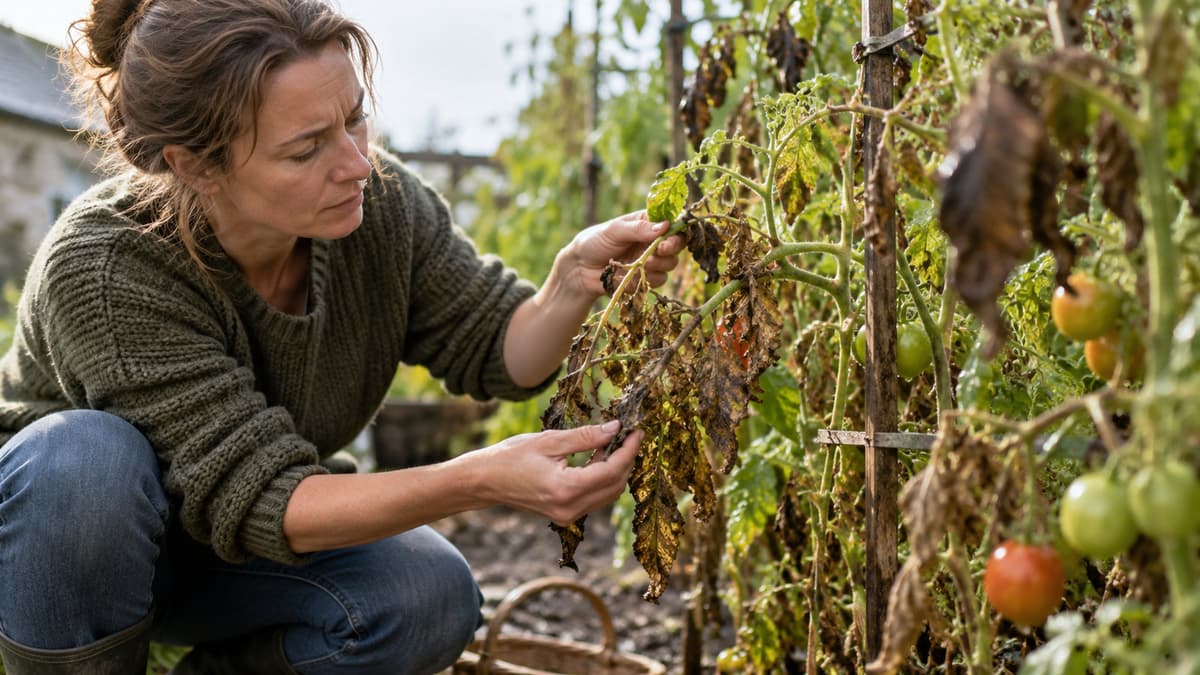
Tomato blight: spotting the collapse after a wet July
Brown collapsed leaves after a wet July are late blight. Pinching side-shoots does not clear it.

Tomatoes in pots: pot size, grow-bags and watering
A cordon in a pot needs a cane and a sheltered spot. A 65 cm line is not a bush.

Harden off tomatoes: two weeks before planting out
Tomatoes are frost-tender. Gardeners' World allows a couple of weeks before planting out.