Helping hands vs PCB holder: which grip you are buying
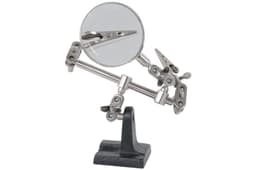
Helping hands and a PCB holder are titled as if they were the same clamp. They are not. Clips grab a wire or a corner. An edge holder grabs the board and, on the usual trade pattern, lets you rotate it. Buying the first when you needed the second means the board walks under the iron. This page does not rank PanaVise or Hakko. Shelf prices stay on the [third hand comparison](/hub/hand-tools/third-hand). Products Compared wrote this on 15 October 2026 from those listings and ESR's UK trade page, with no lab test. A qualifying purchase through our links can earn us a commission at no extra cost to you.
Helping hands and a PCB holder are titled as if they were the same clamp. They are not. Clips grab a wire or a corner. An edge holder grabs the board and, on the usual trade pattern, lets you rotate it.
Helping hands and a PCB holder are titled as if they were the same clamp. They are not. Clips grab a wire or a corner. An edge holder grabs the board and, on the usual trade pattern, lets you rotate it. Buying the first when you needed the second means the board walks under the iron. This page does not rank PanaVise or Hakko. Shelf prices stay on the third hand comparison. Products Compared wrote this on 15 October 2026 from those listings and ESR's UK trade page, with no lab test. A qualifying purchase through our links can earn us a commission at no extra cost to you.
Our top picks
| Badge | Product | Grip | Base | Arms | Note | Price | Offer |
|---|---|---|---|---|---|---|---|
| Best overall |  Jewellers Tools Jewellers Tools third-hand tweezers | Finding, not a board | 600 g vice | 4 tweezers | 8.8 | about £11.99 | View offer |
 Nomiou Nomiou magnetic 4-arm plate | Corner or small board | 1.13 kg painted steel plate | 4 clips | 9.2 | about £19.99 | View offer | |
| Preis-Tipp |  Mercury Mercury 2-clip 3× helping hands | Wire or tag | 100 g metal stand | 2 clips | 8.0 | about £5.99 | View offer |


On this page
Two tools, one search result
When helping hands are the right buy
When a PCB holder is the right buy
What to do if you already clip a board
Common questions
What is the actual difference?
Can four crocodile arms replace a PCB holder?
What size of board is the UK trade holder sold for?
Which of these twelve ASINs is a real edge vise?
When are helping hands the better buy?
Will clips scratch the solder mask?
Related pages
Sources
Public UK sources and the amazon.co.uk listings in this comparison. Listings captured 15 October 2026. Page updated October 2026.
- HSE: Solderer (retrieved 15 October 2026)
- HSE SR20: rosin-based solder flux fume (retrieved 15 October 2026)
- Consumer Rights Act 2015, section 22 (retrieved 15 October 2026)
- GOV.UK: General Product Safety Regulations 2005 (Great Britain) (retrieved 15 October 2026)
- GOV.UK: Electrical Equipment (Safety) Regulations 2016 (retrieved 15 October 2026)
- ESR: helping hands and magnifiers (retrieved 15 October 2026)
- amazon.co.uk (retrieved 15 October 2026)