Independent comparisons. We may earn from shop links. More info

How to use a block plane

Updated: 22 October 2026

The plane is in your hand, the iron is somewhere in the box, and the first pass either skates over the wood or tears a corner out of it. How to use a block plane starts with the iron the right way up, a mouth that matches the shaving, and a cut light enough that you can still see the line you marked. This page is that sequence for any of the planes on the [block plane comparison](/hub/hand-tools/block-plane). It does not rank them. A qualifying purchase can earn us a commission at no extra cost to you. Peter F. wrote this on 22 October 2026 from UK tool guides and from the faults that repeat in those amazon.co.uk review files. He did not set these planes up on a bench of his own.

The plane is in your hand, the iron is somewhere in the box, and the first pass either skates over the wood or tears a corner out of it.

Our top picks

On this page

Put the iron in bevel-up

A block plane beds the iron bevel-up. The flat back of the iron sits on the frog, and the bevel faces you, toward the lever cap. If you drop the iron in bevel-down, the way a bench plane is often pictured, the edge will not meet the wood at the angle the bed was made for, and the cap will not clamp it. Wonkee Donkee’s setup notes start with a clean bed and a straight iron. Wipe the oil off a new plane first. The CBP65 reviews mention an oily arrival, and a film of oil under the iron is enough to let it creep. Seat the cap so the iron cannot rattle, and stop before the adjuster will not turn. Find My Tool’s caution on a Stanley 60½ is simple: keep the iron sharp, and do not force the threads. On the CBP95, one buyer broke the depth-adjuster screw in two while reassembling after fettling. Turn the screw with your fingers until you feel it take. If the cap screw keeps unwinding in the cut, as reviewers describe on the Stanley 1-12-020, the cap is failing to hold the iron. The back of a bevel-up iron is the surface that has to be flat. You hone the back, then a bevel around 25°, and you do not grind under 25° if you want the edge to survive end grain. A dull iron is the first cause of chatter, ahead of any argument about bed angle.

Mouth and depth together

The mouth is the gap in front of the edge. Open it when the shaving is thick. Close it when you are on end grain or you want a fine shaving that does not break. The mouth should end up just wider than the shaving you are actually taking. If the toe touches the edge, the iron cannot cut, and forcing it will chatter or jam. Set the depth first with the mouth a little open, take a trial shaving, then close the mouth until the shaving still passes. Sight along the sole. You want a hair of iron, even across the width, not a dig at one corner. Lateral adjustment is there for that even line. On a plane with no lateral adjuster you loosen the cap slightly and tap the iron sideways, then lock it again. There is no single projection in millimetres that suits every wood. The offcut tells you. A sliding toe is worth using if the plane has one. The CBP65 and CBP95 bullets include that mouth. The Stanley 220 bullets do not. If you own the 220, you live with the mouth it was machined with, and you keep the cut light. Why a lower bed helps on end grain, once the iron is sharp, is the short version of low angle vs standard block plane.
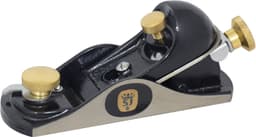
Stanley Stanley 220 block plane

Testsieger

Stanley Stanley 220 block plane
7.5/10about £29.43

The first shaving

Mark the line, then cut an offcut of the same wood before you touch the job. Hold the plane so the sole stays on the wood for the whole stroke. On a narrow edge, one hand is normal: the palm on the cap, the fingers around the body. Keep the other hand behind the sole, not in front of the mouth. A block plane will take a fingertip as happily as it takes a chamfer. Wonkee Donkee shows a 45° presentation for a marked chamfer. Start at the near end if the grain tears, or skew the plane so the edge slices rather than scrapes. On end grain, take a short cut in from the far corner first, or put a sacrificial block behind the edge, so the last fibres do not split off. A thick shaving on end grain is how a closed mouth jams. Open the mouth a fraction, or back the iron off, until the shaving curls out. If you are easing a door, stop as soon as the rub is gone. How much that is, and when the door should not be planed at all, is block plane for a sticking door. Some new soles need a lap and some do not. You want the sole flat enough at the toe, the heel, and both sides of the mouth that the plane does not rock. Jorgensen buyers often found the sole flat on arrival. Stanley buyers describe concave soles, including an indent at the mouth that hours of lapping did not clear. If a straight edge shows a hollow you can see, lap with the iron removed.

Chatter, jams, and a crooked mouth

Chatter is a ripple, a buzz, or a washboard left in the surface. A dull iron chatters. A cap that is loose lets the iron vibrate. An open mouth on a heavy cut lets the edge bounce. A bit of grit on the bed rocks the iron. Hone, clean the bed, tighten the cap until the adjuster still moves, and reduce the cut. Then try again on the offcut. A jam is usually a mouth that is tighter than the shaving, or a cut that is too thick. Open the mouth, or retract the iron, and clear the throat. Do not drag the plane backwards under pressure with a jammed mouth. You will nick the edge you just honed. One corner digging in means the iron is not square to the sole, or the mouth will not let it sit square. If the iron hits one side of the mouth before the edge is even, stop. On the Stanley 220, a reviewer could not square the blade because the mouth was machined on an angle, and a retired carpenter sent that plane back. That is a different problem from an iron that is merely blunt. Consumer Rights Act 2015, section 9, is the satisfactory-quality rule. A mouth that cannot hold a square iron is that kind of fault. An iron that still needs a hone is ordinary setup. HSE wood-dust limits are written for machining and sanding in a workplace, not for a hand plane in a hallway. You still sweep the shavings up.

Common questions

Which way up does the iron go?
Bevel-up. The flat back lies on the bed, and the bevel faces the lever cap, toward you when you look down into the mouth. The back is the face that has to meet the wood cleanly, so that is the face you hone flat. Bevel-down is the habit from a bench plane with a chipbreaker. In a block plane it puts the edge at the wrong angle and the cap will not clamp it properly. If the first shaving is impossible and the edge is keen, take the iron out and check this before you change anything else.
How far should the blade stick out?
Far enough to take a fine, even shaving, and no further. Sight along the sole and look for a thin line of edge that is the same height at both corners. There is no universal projection in millimetres that we can honestly print. End grain wants less than a soft chamfer. If one corner digs in, the iron is proud on that side, or the mouth is holding it crooked. A thick ribbon that jams the mouth is too much iron, not a sharp plane.
How tight should the mouth be?
Just wider than the shaving you are taking. A thicker cut needs a more open mouth. End grain and a fine surface need a closer mouth, and the toe must still clear the edge. If the front of the mouth rubs the wood and the iron cannot bite, you have closed it too far. Planes without a sliding toe, such as the Stanley 220 as its bullets describe it, stay at the mouth they were made with, so you control the cut with depth alone and you keep that cut light.
Why does it chatter on end grain?
Usually the iron is dull, the cap is loose, the mouth is too open for the depth you set, or a speck of grit is rocking the iron on the bed. Hone the back and the bevel, clean the seat, tighten the cap without locking the adjuster solid, and take a lighter cut. A lower bed helps end grain once those are sorted, which is a buying question rather than a setup trick. Chatter that remains after a square, sharp, tight iron is a reason to look at the sole and the mouth, not a reason to push harder.
Do I have to flatten the sole before the first cut?
Check it, and lap it only if it rocks. You want contact at the toe, the heel, and both sides of the mouth. Some planes in these review files arrived flat enough to cut. Others, especially in the Stanley notes, were concave or cupped, and a few stayed hollow at the mouth after a long lap. A light lap on abrasive paper on a flat surface is ordinary. Hours of sanding that still leave a dip are a fault, not a rite of passage. Remove the iron before you lap so you do not dub the edge.
When is the plane faulty rather than merely unhoned?
It is unhoned when a few minutes on a stone produces a shaving and the iron sits square. It is faulty when the mouth will not let the iron sit square, the lever cap will not stay tight in the cut, the adjuster is seized or shears, or the sole stays hollow at the mouth after a serious lap. Those are the faults named in the Stanley and Spear & Jackson review files. A blunt iron from the factory is normal. A mouth machined on an angle is a reason to return the plane under the description you paid for.

Related pages

Sources

Public UK sources and amazon.co.uk listing files. Checked on 22 October 2026.

  1. John Lloyd, Top of the Blocks (retrieved 22.10.2026)
  2. UK Workshop: low-angle vs standard-angle block plane (retrieved 22.10.2026)
  3. UK Workshop: first block plane advice (retrieved 22.10.2026)
  4. Find My Tool: Stanley 60½ block plane (retrieved 22.10.2026)
  5. Stanley Tools UK: 220 adjustable block plane (retrieved 22.10.2026)
  6. HSE WIS23: wood dust (retrieved 22.10.2026)
  7. Consumer Rights Act 2015, section 9 (retrieved 22.10.2026)
  8. GOV.UK: General Product Safety Regulations 2005 (retrieved 22.10.2026)