How often to clean BBQ grates: a practical schedule

How often to clean BBQ grates: scrape after every cook, then deep-clean a regularly used barbecue about every three months. Cast iron and stainless differ.
On this page
- 1.In short
- 2.Clean the cooking grate after every use
- 3.Give the barbecue a deeper clean every few months
- 4.Empty ash on its own timetable
- 5.Adjust the routine to how often you cook
- 6.Match the method to the grate material
- 7.Know when cleaning is not enough
- 8.A realistic barbecue cleaning routine
- 9.Sources and method
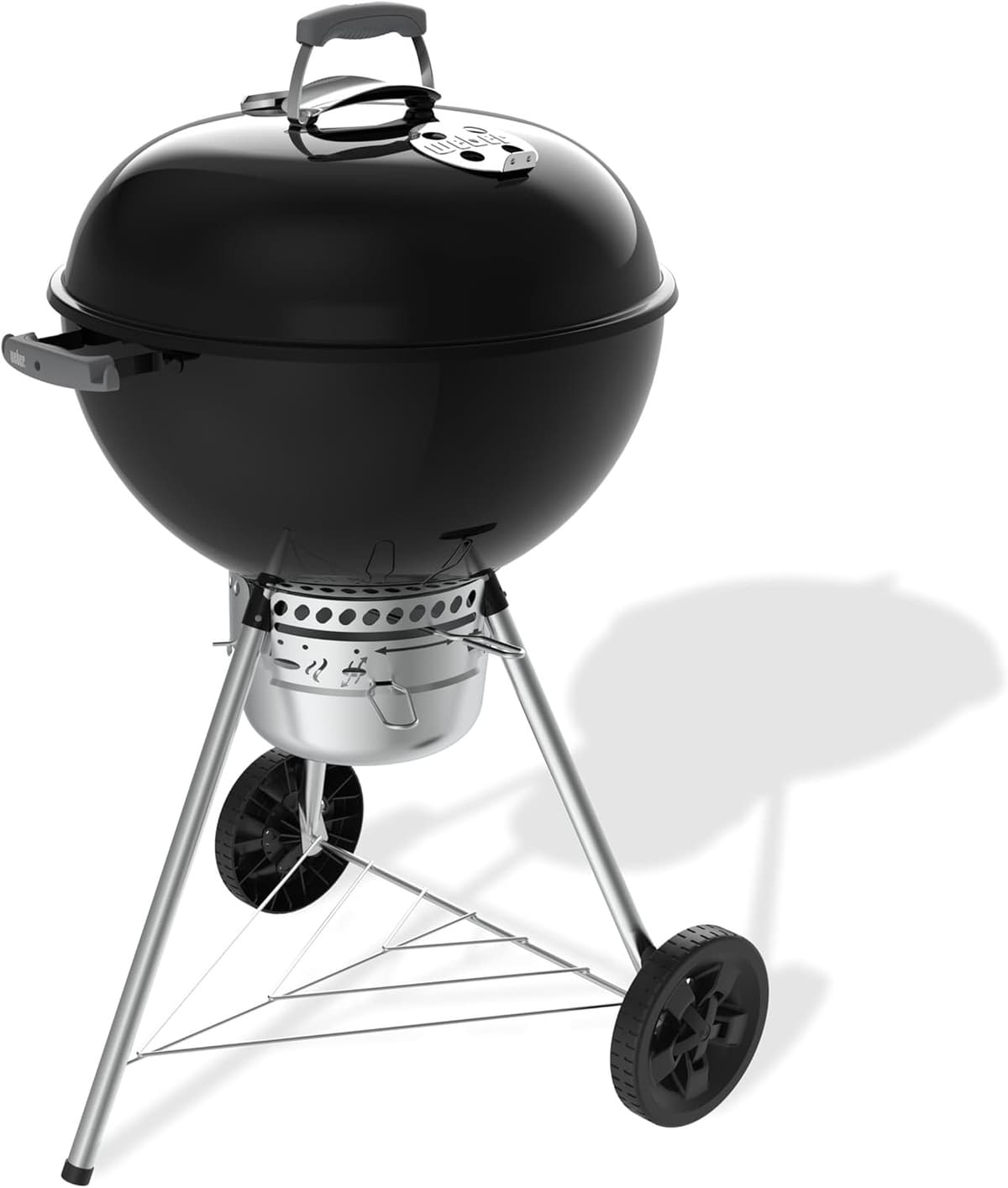
The best answer to how often to clean BBQ grates is after every cook, but that does not mean dismantling the whole barbecue each time. A short clean while the cooking grate is still warm removes the residue that becomes stubborn by the next weekend. A deeper clean of the bowl, lid, grease system and other removable parts belongs on a slower schedule.
In short
Clean the cooking grate after every use, empty fully cold ash after each charcoal session, and deep-clean a regularly used barbecue roughly every three months. If you cook only occasionally, one or two deep cleans a year may be enough, but an end-of-cook grate clean is still worthwhile every time.
Clean the cooking grate after every use
Once the last food comes off, let the heat do part of the work. While the bars are warm rather than fiercely hot, remove stuck food and loose carbon with a tool suited to the grate. A few minutes now stops yesterday's glaze, fat and fragments hardening before the next cook.
After every use means the food-contact grate, not a full strip-down. You do not need a showroom shine. Heat staining and a seasoned patina can stay. Loose debris, sticky residue and anything that would transfer to food should go.
Clean after cooking, when residue releases more easily, rather than holding up the next meal while the barbecue cools. Before you light it again, wipe away storage dust, loose corrosion or fragments left by the cleaning tool. Do not reach over flames, grip a hot grate without protection, or use a cleaner that is unsafe on a hot food-contact surface. If you cannot approach it in control, close it down as the manufacturer directs and wait.
Give the barbecue a deeper clean every few months
A deep clean reaches residue an after-cook scrape cannot. For a barbecue used regularly through spring and summer, roughly every three months is a sensible starting interval. Which? separates cleaning the grill after each use from cleaning the whole barbecue about every three months.
Deep-clean sooner when grease collects in the bottom, burner holes or vents are blocked, deposits peel inside the lid, or a grease tray is near capacity. Old fat burning away from the food can create harsh smoke and flare-ups. Visible build-up overrides the calendar.
Wait until the barbecue is cold, isolate the fuel as the instructions require, and work through removable parts in order. Clear grease-management areas and air openings, and wash only components the manufacturer says can be washed. Dry everything before reassembly, because damp metal in a closed barbecue encourages corrosion. Abrasive tools can damage enamel, plating or protective finishes. Access differs by format in our stainless-steel pedestal BBQ comparison and Weber charcoal barbecue guide.
Empty ash on its own timetable
Charcoal ash follows temperature, not grease. Empty the ash catcher after each session, and only when the coals and ash are completely cold. Grey is not proof that the fuel is safe to move.
An ember hidden under ash can stay hot enough to damage a plastic bin or start a fire. Do not judge safety by colour alone.
Follow the cooling and disposal instructions with your barbecue and your local waste service. Do not pour water into a hot barbecue unless the manufacturer specifically permits it. Sudden cooling can damage some finishes, and wet ash is more likely to sit against metal. The check is in our barbecue ash disposal guide.
Prompt removal once cold helps airflow on the next cook and limits the time damp ash sits against the bowl through British rain. Weber UK advises getting ash out before it becomes wet. Gas and electric barbecues have no ash schedule, but they still collect grease below the cooking surface. Check trays each time: a small tray can become a flare-up risk long before a three-month deep clean.
Adjust the routine to how often you cook
If you barbecue twice a week in summer, clean the grate after each session and look over the rest of the barbecue as you go. A deeper clean at the start of the season, once during heavy use, and before winter storage is a workable pattern. Fatty food, sugary marinades and long low-temperature cooks can bring the next deep clean forward.
If you cook only six times a year, you still have six short grate cleans. One or two full cleans may be enough, ideally before the first cook and before a long period of storage. Do not leave the last meal's residue sealed under a cover all winter, where moisture and food deposits stay against the metal.
A weather cover helps, but covering a wet or greasy barbecue traps moisture. Let the parts dry and the unit cool fully before the cover goes on. After a long gap, look for pests, mould, loose rust, damaged coatings and blocked burner ports before lighting. If a hose, regulator, burner or structural part looks damaged, stop. Cleaning does not replace a leak check.
Match the method to the grate material
Cleaning frequency stays much the same; the method does not. Stainless-steel grids can usually be cleaned after each cook while warm, with a compatible scraper or pad. Napoleon UK discusses occasional oiling to keep a seasoned patina. That is not a reason to leave burnt food in place. Remove debris first, and use only a light film if the maker recommends it. A thick coat turns sticky.
Bare cast iron needs prompt drying, because prolonged moisture is its weakness. Remove residue after each cook, use water sparingly, dry the grate fully and apply a thin coat of suitable cooking oil before storage. Enamelled cast iron is different: keep the enamel intact and avoid tools that chip or score it.
Chrome-plated or nickel-plated grates need a light hand. Once plating blisters, peels or exposes heavily corroded metal, harder brushing will not restore the coating. Loose flakes and deep pitting are a reason to check the replacement-part guidance. BBC Good Food suggests foil or a bristle-free brush instead of a traditional wire brush. If you use a wire brush, inspect it before use and the grate afterwards. The scrape itself is set out in how to clean a charcoal barbecue.
Know when cleaning is not enough
Normal discolouration, a stable dark patina and light surface rust are not the same thing. Food-contact bars should feel sound, without sharp flakes, deep pits or a coating lifting away. Light rust on suitable uncoated metal may come off, followed by drying and re-seasoning, but the manufacturer's instructions decide whether that restoration is appropriate.
Replace a grate if corrosion has substantially thinned it, welds have failed, bars are loose, or a plated surface is shedding. Repeated heavy rust needs a cause, not another scrub. Wet storage, trapped ash, a damaged cover, or cast iron left wet after washing are the usual ones.
Stop if cleaning shows structural corrosion, a damaged gas component or an electrical defect. Do not enlarge gas jets with an improvised tool, and do not immerse electrical controls. If the surface cannot be made clean and stable for food, ask the maker or replace the part.
A realistic barbecue cleaning routine
Use three moments rather than one annual job. After every cook, remove food from the warm grate and check the grease tray. After charcoal use, wait until the fuel is fully cold, then empty the ash. Every few months of regular use, clean the accessible body, lid, vents and grease-management parts more thoroughly.
Bring a deep clean forward after a greasy cook, or when residue restricts airflow. Leave it later if the barbecue has had little use and still looks sound. The quick clean after each meal should stay where it is. That habit keeps the slower job manageable and shows you when a grate is wearing out.
Sources and method
The Products Compared editorial team reviewed public UK cleaning advice from Which?, BBC Good Food, Weber UK, Napoleon UK and Riverside Garden Centre. We compared how those sources separate every-use grate care from periodic deep cleaning. We did not run a laboratory test. Your manufacturer's instructions remain the controlling guidance for materials and the fuel system. A qualifying purchase through the amazon.co.uk links on our comparison pages can earn Products Compared a commission, at no extra cost to you.
Common questions
Is cleaning barbecue grates once a summer enough?
Should I clean BBQ grates before or after cooking?
How often should I deep-clean a barbecue?
Should cast-iron barbecue grates be washed every time?
Do stainless-steel barbecue grates need oil?
How often should I empty a charcoal barbecue ash pan?
Is a wire barbecue brush safe to use every week?

Products Compared publishes British-English buying guides based on amazon.co.uk listings and public UK sources. We do not run a lab and we do not invent test scores.
Related articles

How to clean a charcoal barbecue: warm grate, cold ash
Scrape the warm grate, empty cold ash onto bare soil, and dry the bowl before the cover goes on.

Barbecue ash disposal: when it is safe to move
How to tell barbecue ash is cold, and why it stays out of a wheelie bin.

Electric barbecue vs charcoal: choose the right format
How a pedestal, a kettle and a plug-in grill change both the cook and the cleaning.