Electric barbecue vs charcoal: choose the right format

Compare electric, kettle and pedestal barbecues for flavour, control, space and safety, then choose the format that fits how and where you cook in the UK.
On this page
You have room for one barbecue, and the three obvious choices do not solve the same problem. In an electric barbecue vs charcoal decision, fuel is only the beginning: an open pedestal favours quick direct grilling, a kettle adds a lid and airflow, and a standing electric barbecue trades smoke and ash for a nearby socket. Space, menu and local restrictions decide the rest.
The split follows Weber's UK guidance on direct and indirect heat, BBC Good Food on plug-in models where naked flames are not allowed, and the London Fire Brigade's April 2026 line never to barbecue on balconies. No lab cook.
In short
Choose a pedestal for straightforward burgers, sausages and skewers over charcoal. Choose a kettle when you want a lid, indirect heat and a broader menu. Choose electric when easy starting and ash-free cleaning matter most, but first confirm that outdoor electrical use is suitable and that your building permits the appliance.
Three formats, three different jobs
A pedestal barbecue is usually an open charcoal bowl or column with a cooking grate and wind shield. Heat rises directly towards the food, so the format suits short cooks you can turn often. With no lid, it cannot create the enclosed, circulating heat of a kettle. The simple shape is not a miniature version of every charcoal barbecue.
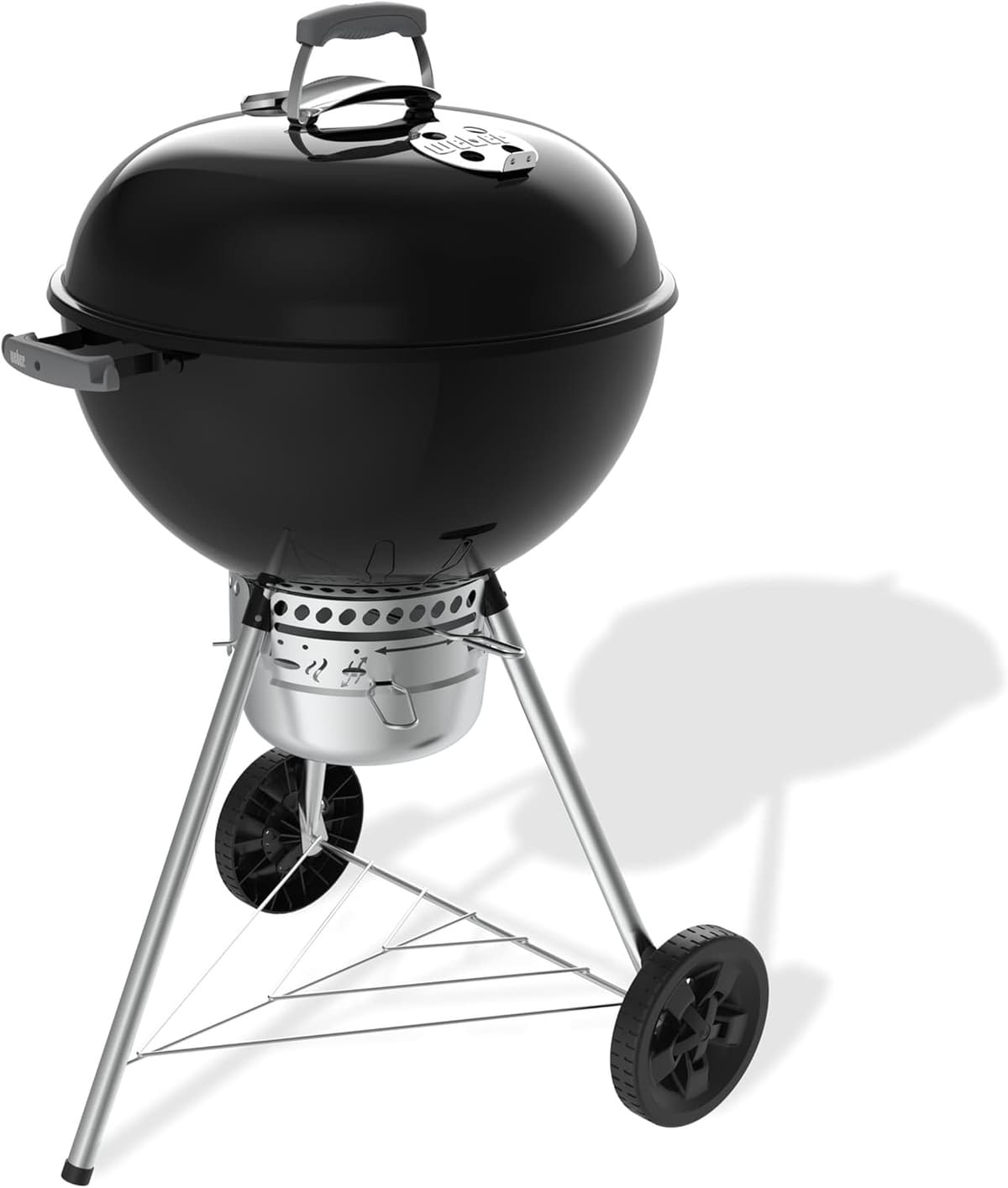
A kettle is also charcoal-fired, but its bowl, lid and adjustable vents make airflow part of the cook. You can spread coals beneath the whole grate for direct heat or bank them to one side so food cooks away from the fuel. That second arrangement suits thicker cuts that need more time without scorching.
A standing electric barbecue replaces burning fuel with a heating element. It generally starts faster, makes no charcoal ash and skips stored fuel bags, but it still needs preheating, cleaning and a suitable mains supply. Decide whether you need open direct heat, a lidded charcoal oven or plug-in cooking before you compare models.
Choose a pedestal for fast, open grilling
A pedestal earns its place when your normal barbecue is a small group, a simple menu and food that cooks quickly. Sausages, burgers, kebabs, halloumi and sliced vegetables all suit direct heat if you manage hot spots and turn the food. A stainless-steel column can also look tidier on a patio than a broad kettle on three legs.
The practical limit is the missing lid. Wind can pull heat away, fatty food can trigger flare-ups, and you cannot move a large joint to the cool side and close the barbecue. You will also handle charcoal, lighting materials and ash every time. If that is acceptable, compare stainless-steel pedestal barbecues by stability, grate adjustment and ash access.
Check working height as well as footprint. Pedestal describes the stand, not a comfortable grate or a stable seat on uneven paving. A broad base, a secure grate and a usable wind shield matter more than a polished finish. Never move the unit while fuel is burning or ash is still hot.
Choose a kettle for control and indirect heat
A kettle is the most versatile of the three when charcoal flavour is part of the appeal. Grill burgers over the coals and use the lid to calm flare-ups. For thicker chicken or a joint, bank the fuel to one side, put the food on the other and close the lid. Weber's UK guidance calls the first direct heat and the second indirect heat for longer cooks.
The lid does more than keep warmth in. With the top and lower vents open, hot air moves around the food, and adjusting airflow changes how fiercely the charcoal burns. That is more control than an open pedestal, with a learning curve. Closing every vent too far can smother the fire, and lifting the lid repeatedly loses heat.
A kettle needs clearance around the rounded body and somewhere dry for charcoal and tools. Ash restricts airflow if it builds up, and grease still collects on the bowl and grate. If you want that flexibility, compare Weber charcoal barbecues for lid fit, vent control, ash collection and cooking area. Six sausages twice a summer may never repay the extra bulk.
Choose electric when convenience matters most
An electric barbecue suits the cook who wants to turn a control, preheat the plate and avoid charcoal bags, firelighters and ash. BBC Good Food's electric barbecue coverage points to plug-in models as an option where naked flames are not allowed. That does not make every electric model acceptable everywhere. It does explain why this format deserves its own shortlist.
The main compromise is flavour. A hot electric plate can brown food and leave grill marks, but it does not burn charcoal, so there is no charcoal smoke. Convenience may outweigh that if you cook vegetables, fish, burgers or quick midweek food. If tending a live fire is the point, electric is unlikely to feel equivalent.
You need a suitable outdoor socket and the manufacturer's rules on weather, cables and electrical protection. An indoor extension lead does not become suitable in dry weather, and a cable across a doorway is a trip hazard. Compare standing electric barbecues on plate size, temperature control, grease trays and stand stability, and check the plug is meant for UK 230 V use. Electric removes ash and combustion. Hot surfaces, fat fires and supervision remain.
Make the choice around your space and menu
Start with the place where you will actually cook. A private garden with a level patio may take any of the three, with sensible separation from fences, sheds and planting. A balcony or shared access deck is different: charcoal can be ruled out by fire-service guidance and by the building's own conditions. If the only power point needs a questionable extension, electric may be ruled out too.
Write down the food you cook most often. An open pedestal is a focused tool for direct grilling. A kettle handles that job and also supports indirect cooking under a lid. Electric works when fast setup and repeatable control matter more than managing charcoal. Do not pay for hypothetical Sunday roasts if the real menu is burgers after work.
Charcoal must be lit early enough for usable heat, and the ash must be completely cold before disposal. Electric still needs preheating and degreasing, but shutdown is more predictable once it is unplugged and cool. Charcoal needs fuel each time; electric uses mains power and may cost more at the till. A cheaper barbecue that does not fit your space, socket or menu is not good value.
Safety can rule out a format
Charcoal barbecues belong outdoors, away from enclosed spaces. Burning charcoal produces carbon monoxide, and the danger continues while coals cool even after visible flames have gone. Never take a lit or cooling charcoal barbecue into a tent, garage, shed or home. Keep children and pets out of the cooking zone, use long-handled tools and have a plan for flare-ups before you light.
Balconies need a firm decision. The London Fire Brigade's April 2026 guidance says never to use barbecues on balconies. Falling embers and flames can spread to neighbouring homes. An electric appliance has no burning charcoal, but you still check the tenancy, lease or building rules and use only equipment suitable for the location.
Place any barbecue on a stable surface, keep it clear of fences, parasols and dry vegetation, and do not leave it unattended. Disconnect an electric model before cleaning. Leave charcoal until fuel and ash are fully cold. Convenience belongs on the shortlist only after the site itself is suitable.
Which comparison should you open next?
If you want direct charcoal cooking, a relatively narrow footprint and no lid, stay with the stainless-steel pedestal comparison. Focus on base stability, height adjustment and how easily you can remove cold ash.
If indirect cooking and a lid justify a larger format, stay with the Weber charcoal comparison and look at vent design, lid handling and ash collection. The kettle top pick there is the Weber Original Kettle Premium 57 cm, about £239 on amazon.co.uk, with 4.5 from 117 reviews. Weber states 18 kg.
If avoiding charcoal setup is the priority and you have suitable outdoor power, stay with the standing electric comparison. Compare heat control, grease management and the exact restrictions in the instructions. A qualifying amazon.co.uk purchase can earn a commission at no extra cost to you.
Common questions
Will an electric barbecue taste like charcoal?
Can I use a charcoal barbecue on a balcony if I am careful?
Do I need a lid on a barbecue?
Is a pedestal barbecue just a small kettle?
Which barbecue is best if I only cook sausages?
What if my garden has no outdoor socket?
Can an electric barbecue be used wherever flames are banned?

Products Compared publishes British-English buying guides based on amazon.co.uk listings and public UK sources. We do not run a lab and we do not invent test scores.
Related articles
What a charcoal barbecue costs in the UK
Plan for the barbecue, fuel and useful extras before setting your budget.

How to light charcoal safely
Learn when the coals are ready and which lighting shortcuts to avoid.

How to clean a charcoal barbecue
Clear ash and grease without damaging the grate or leaving loose bristles.