Independent comparisons. We may earn from shop links. More info

How to use a soil moisture meter

Updated: October 2026

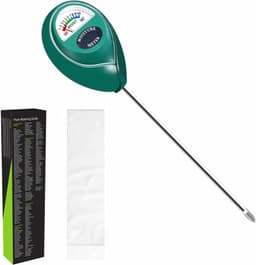
You push the probe into a pot, the needle moves towards red, green or blue, and the result looks more exact than it really is. Learning how to use a soil moisture meter means reading that scale as a relative zone, removing the probe promptly and checking the compost as well. A SUStee colour stick works differently because it stays in the pot, while a water-level float is a different device again. Our [watering indicator comparison](/hub/garden-watering/watering-indicator) covers the available types. Here the aim is to use each one correctly rather than rank it. A purchase through our links can earn a commission at no extra cost to you.

You push the probe into a pot, the needle moves towards red, green or blue, and the result looks more exact than it really is.

Our top picks

XLUX XLUX T10 dial

Best overall

XLUX XLUX T10 dial
8.4/10about £9.99
SUStee SUStee small two-pack

Alternative

SUStee SUStee small two-pack
7.8/10about £8.70
Yizerel Yizerel two-pack dial

Best value

Yizerel Yizerel two-pack dial
8.3/10about £8.49
On this page

What the dial colours mean

Red is the drier end of a dial, green the middle and blue the wetter end. The 1-to-10 scale is conductivity, so 6 is not 60% water and does not transfer unchanged between composts. Green is not a target for every plant. A cold room may mean you wait on green, and the needle will not tell you about water trapped in an outer pot. If the needle disagrees with a finger a few centimetres down, check another spot and the pot’s weight. Do not keep watering until the colour matches a hope. Whether a dial is the right tool is the watering indicator buying guide.

Insert, read and wipe a dial

Ease the probe in between the stem and the pot wall, and stop at firm resistance. Yizerel states a 7 inch probe. Dazzlingyyh says deeper than 4 inches. Stop at the root zone, not automatically at the end of the metal. Read the settled needle, then take the probe out. Wipe it with a soft dry cloth and store it out of the pot. XLUX says five minutes, or the tip corrodes. Do not test liquids or force the probe into very hard ground. If the needle stays fixed in two clearly different pots, stop relying on it.
XLUX XLUX T10 dial

Testsieger

XLUX XLUX T10 dial
8.4/10about £9.99

Leave a SUStee stick in the pot

Insert a SUStee to the arrow marks so the lower opening is covered, then water as usual. The window turns blue and later returns to white. Wait until it is fully white. Any blue still means wait. Small is for pots under about 9–10 cm. Medium is about 10–18 cm. The maker’s average core life is about six to nine months in organic compost. Read the stick in the pot. Taking it out changes how it dries. A window that stays blue in dry compost needs a finger check and possibly a new core.

A buoy is a different device

A Healeved-style buoy floats when the reservoir water is high and sinks when it is low. It is not a 1-to-10 soil scale and it does not turn white. Follow the planter instructions if a water line is what you bought. A metal probe uses the insert, read and wipe sequence. A colour stick stays in the pot that matches its size.

Common questions

How far should you push a dial probe?
Insert it far enough to sample the active root zone, without automatically forcing in the whole probe. Some seller instructions describe more than 4 inches or provide a 7 inch probe, but the pot and root ball set the safe limit. Stop at firm resistance and never drive the tip through dense roots or against the pot base.
What do red, green and blue mean?
They are relative moisture zones: red is drier, green is intermediate and blue is wetter. They are not percentages and do not prescribe one correct zone for every plant. Use the plant’s care requirements, season, compost feel and drainage alongside the dial rather than watering solely because the needle enters red.
Can you leave an analogue meter in the compost?
No. Common analogue dials are spot-check tools, not leave-in indicators. XLUX says to remove its probe within five minutes because the metal tip may corrode, and other sellers also warn against prolonged insertion. Read the scale, take the probe out and wipe it clean after each check.
Why should you wipe the metal tip?
Wiping removes damp compost and fertiliser residue that could corrode the metal or interfere with later contact. Use a soft dry cloth after each reading, without soaking the probe. Clean storage also makes it easier to notice damage or rust before you rely on another result.
What does a white SUStee mean?
White is SUStee’s cue that watering is due. Blue means moisture remains. The maker says to wait for the window to become fully white rather than watering while some blue is still visible. Keep the stick in the correctly sized pot when reading it, because removal changes how it dries.
How long does a SUStee refill core last?
SUStee gives an average of about six to nine months in organic compost, not a guaranteed lifespan for every pot. Growing medium, watering and conditions can alter the colour response and useful life. Replace the core when it no longer changes correctly after you have checked insertion and the actual compost moisture.
What does a water-level buoy show?
A buoy indicates the level in a water reservoir: it rises when the water is high and sinks as the level falls. It does not measure conductivity in compost, provide a 1-to-10 moisture reading or turn white like a SUStee. Follow the planter or reservoir instructions rather than applying dial colour rules to it.

Related pages

Sources

Sources checked for this comparison; listings captured on 15 October 2026.

  1. RHS, How to grow houseplants (retrieved 15 October 2026)
  2. RHS, How to water containers (retrieved 15 October 2026)
  3. RHS, How to help a poorly houseplant (retrieved 15 October 2026)
  4. BBC Gardeners' World, How to water house plants (retrieved 15 October 2026)
  5. SUStee, about the product (retrieved 15 October 2026)
  6. SUStee FAQ (retrieved 15 October 2026)
  7. Consumer Rights Act 2015, section 9 (retrieved 15 October 2026)
  8. GOV.UK, Consumer Rights Act 2015 (retrieved 15 October 2026)
  9. General Product Safety Regulations 2005 (retrieved 15 October 2026)