Independent comparisons. We may earn from shop links. More info

Houseplant moisture meter in winter

Updated: October 2026

When the surface of a houseplant pot looks dusty in January, it is tempting to reach for the watering can. Compost around the roots can still be wet, particularly in a cool UK room where growth has slowed. A houseplant moisture meter in winter can provide a useful second opinion, but it should support what you feel in the pot rather than dictate a weekly routine. Start with our [watering indicator comparison](/hub/garden-watering/watering-indicator) if you still need to choose a device. This guide focuses on using one without turning its reading into an automatic instruction to water. A purchase through our links can earn a commission at no extra cost to you.

When the surface of a houseplant pot looks dusty in January, it is tempting to reach for the watering can. Compost around the roots can still be wet, particularly in a cool UK room where growth has slowed.

Our top picks

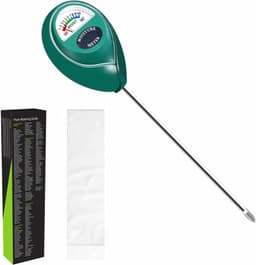
XLUX XLUX T10 dial

Best overall

XLUX XLUX T10 dial
8.4/10about £9.99
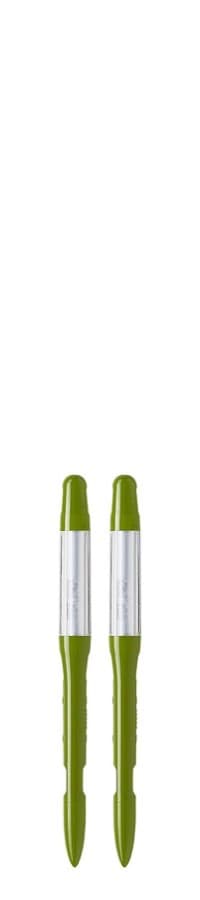
SUStee SUStee small two-pack

Alternative

SUStee SUStee small two-pack
7.8/10about £8.70
Yizerel Yizerel two-pack dial

Best value

Yizerel Yizerel two-pack dial
8.3/10about £8.49
On this page

Winter compost stays wet longer

Most houseplants use less water in the darker months, and a cool UK room slows evaporation. Seven days on a rota does not mean the root zone has dried. RHS winter guidance is to water sparingly and keep compost only barely moist. Push a finger a few centimetres down, or about a third of the way in a deeper pot if you can avoid the roots. A dry crust can sit on damp compost. Lift the pot after watering, once it has drained, and compare the weight later. Empty the saucer. Roots standing in runoff stay wet while the surface looks dusty.

Use a second check, not a rota

Use the meter when the finger, the weight and the plant disagree, not as a new rota. A 7 inch Yizerel probe reaches a medium pot and is awkward in a bonsai pot. An XLUX-style dial has helped some owners pause, and it is bulky in a tight pot. A small SUStee stays in a pot under about 9–10 cm and moves between blue and white. Wait for fully white before you treat that as water. Medium is about 10–18 cm. Do not force a long probe through a root ball. The sequence is on how to use a soil moisture meter.
XLUX XLUX T10 dial

Testsieger

XLUX XLUX T10 dial
8.4/10about £9.99

When the gadget and the pot disagree

A dial reads conductivity, not a percentage of water. Salts, a peat-free mix or a poor contact can move the needle. Yizerel reviews include a needle that never reached wet in soaking compost. If your finger comes out wet and the pot is heavy, do not water to chase the scale. Wipe the probe and try one other spot. Do not test it in a glass of water. A stick that stays blue in bone-dry compost may be spent or badly fitted.

When the plant outranks the reading

Dark, soft or mushy roots are a plant problem, not another meter question. Stop watering, check drainage, and ask a nursery if you are unsure what to cut away. A collapsing plant needs care, not more probing. If a new meter never worked, contact the retailer. Satisfactory quality is the Consumer Rights Act 2015. Citizens Advice is the route if the seller refuses a remedy.

Common questions

Should you water houseplants every week in winter?
No fixed weekly rota suits every plant, pot and room. Winter growth and evaporation are often slower, so test the compost a few centimetres down and consider the pot’s weight before watering. Aim for the moisture level suitable for the plant. For many houseplants, RHS winter guidance is to water sparingly and keep compost barely moist.
Where should you put your finger before trusting a dial?
Check below the dry-looking surface, a few centimetres into the compost and, where practical, towards the root zone. In a larger container, a check about a third of the way down is more informative than touching the top centimetre. Avoid tearing roots, and compare what you feel with the dial rather than automatically accepting either sign alone.
Why can the top look dry while the roots are wet?
The exposed surface loses water first, while deeper compost is insulated and can retain moisture for much longer. A cool room, a large pot, water-retentive compost or water left in a saucer can widen that difference. This is why looking at the surface alone can lead to winter overwatering.
Is a long probe a problem in a small pot?
It can be. A long probe may be difficult to position without hitting the pot base or dense roots, and its reading may come from a narrow pocket rather than the root zone you meant to check. For a very small pot, use your finger where possible or choose a correctly sized small indicator instead of forcing in a long dial.
Can a SUStee stay in a succulent pot under 10 cm?
The small SUStee is intended for pots under about 9–10 cm and is designed to remain inserted. Pot diameter alone does not decide whether watering is due. Succulents need a drying pattern appropriate to the species and season. Treat the white-or-blue window as a supporting cue, not a substitute for plant-specific care.
What should you do if the roots are mushy?
Stop using the meter as the main question and deal with the plant’s condition. Dark, soft, mushy roots can indicate serious root damage associated with excess moisture, so check drainage and seek horticultural advice if you are not confident about removing damaged material and repotting. Adding more water because a dial reads dry could make matters worse.
Does a moisture meter prevent overwatering by itself?
No. It can reveal that compost is still damp and prompt you to delay watering, but readings can be affected by contact, compost and salts, and devices can fail. The safer decision combines the reading with a finger check, pot weight, drainage and the condition of the plant.

Related pages

Sources

Sources checked for this comparison; listings captured on 15 October 2026.

  1. RHS, How to grow houseplants (retrieved 15 October 2026)
  2. RHS, How to water containers (retrieved 15 October 2026)
  3. RHS, How to help a poorly houseplant (retrieved 15 October 2026)
  4. BBC Gardeners' World, How to water house plants (retrieved 15 October 2026)
  5. SUStee, about the product (retrieved 15 October 2026)
  6. SUStee FAQ (retrieved 15 October 2026)
  7. Consumer Rights Act 2015, section 9 (retrieved 15 October 2026)
  8. GOV.UK, Consumer Rights Act 2015 (retrieved 15 October 2026)
  9. General Product Safety Regulations 2005 (retrieved 15 October 2026)