Independent comparisons. We may earn from shop links. More info

How to use a grafting tool

Updated: 22 October 2026

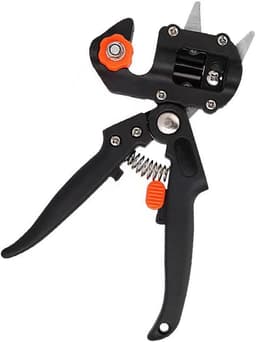
You have dormant pencil wood in a bag and a stamp pruner on the bench, and you want the cut, the seat and the moment to stop. How to use a grafting tool in a UK garden is a short sequence on wood that is still asleep and still inside the printed diameter. It is not a way to force a dry branch or a trunk. This page does not rank the seven listings in the [grafting tool comparison](/hub/garden-tree-and-hedge-shears/grafting-tool). If the two pieces are different thicknesses, stop before you squeeze. Peter F. used RHS and PTES guidance for the calendar and the bind. A qualifying purchase can earn a commission at no extra cost to you.

You have dormant pencil wood in a bag and a stamp pruner on the bench, and you want the cut, the seat and the moment to stop.

Our top picks

On this page

When to graft, and which wood to refuse

The RHS puts whip-and-tongue grafting in March or early April, with pencil-thick scion wood of about 8 mm collected in December or January and kept dormant. PTES points the same way: one-year wood, before bud-burst. The RHS steps are a knife method. They give you the calendar and the wood. They are not a laboratory result for a stamp pruner. Stop if the wood is thicker than that tool’s printed bullet, if the buds have already broken, or if the stick is dry hardwood that the blades crush. If the listing never printed a diameter, you cannot make this check. That gap belongs on the grafting tool buying guide. Some losses are normal even on good wood.

Cut and seat the same profile

Use the same profile on the stock and the scion. If the tool holds one shape at a time, cut the first piece, then turn the second so the shapes nest, rather than stacking two identical notches that will not lock. Centre both pieces in the jaws. If the wood sits off to one side, the joint offsets, and you line up the outside of the bark instead of the cambium. Do not touch the cut faces. If the scion is clearly thinner than the stock, do not expect the omega or the V to find one side of cambium by itself. That one-sided seat is a knife adjustment. If you cannot seat the two profiles without a gap you can see, cut again on a fresh internode or stop.

Bind, then wait for callus

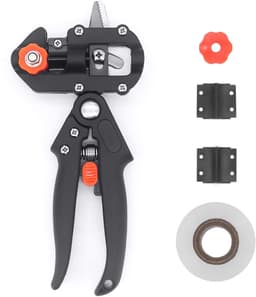
Bind the union so the pieces cannot slide while callus forms. The RHS uses grafting tape or raffia and takes the tie off when callus shows, about eight weeks. Use that interval as the RHS figure for the tie, not as a measured result for these stamp tools. The film in a consumer kit is not Parafilm and it is not nursery grafting tape. If the box only holds a short coloured film, bind with proper tape or raffia. Seal the faces the profile does not cover. Leave the tie until you can see callus, then take it off so it does not become a band around a swelling stem. Cut away shoots that break from the rootstock below the union.

When to stop

Stop when the limb is thicker than the printed ceiling, when you cannot keep scion wood dormant until March, or when a stone-fruit graft has already failed once. A stamp that will not finish the cut is telling you the wood is wrong. Stored reviews in this comparison describe rootstocks that will not cut through, and cuts that tear the far side. Several of these listings ship a sharp blade and a small knife in the same pouch. One UK reviewer wanted a cover because the knife was easy to grab. Keep the lock on, where the tool has one, when it is in the shed. Disinfect the blade between trees. The RHS cites about 15 to 20 minutes of contact for the disinfectants that page names. A clean stamp on day one does not mean the graft will take.

Common questions

When in the year do I use a grafting tool in the UK?
For fruit, follow the RHS window used here: collect pencil-thick dormant scions in December or January, and graft in March or early April. PTES prefers one-year wood before bud-burst. If the buds on your scion have already broken, wait for next year’s wood.
How thick should the wood be?
Aim at pencil thickness, about 8 mm in the RHS description, and stay inside the diameter printed on your own tool. A listing that says up to 10 mm is not a licence for a 20 mm limb. If the bullet and a spec field disagree, use the bullet. Dry old hardwood is the wood these stamps handle badly.
How do I seat the two cuts so they match?
Cut the same profile on both pieces and turn one so the shapes nest. Centre them in the jaws. The cambium under the bark has to meet. If the scion is much thinner than the stock, this seat is the wrong method and a knife is the next step.
What do I bind with if the box only has a short film?
Use grafting tape or raffia, which is what the RHS names, and treat the kit film as a short wrap rather than nursery tape. Do not call it Parafilm. A film that reviewers describe as cling film will not hold a branch for about eight weeks.
When do I take the tie off?
Take it off when callus shows. The RHS figure for whip-and-tongue is about eight weeks. Use that as the tie interval, not as proof that a stamp pruner heals on a faster clock. Leaving the band on after the stem swells can constrict it.
When should I stop and use a knife or ask a nursery?
Stop if the wood is thicker than the printed ceiling, if you cannot store dormant scions, or if stone fruit has already failed once. A knife is the tool when the diameters do not match and you need contact on one side. A nursery is the right call when you are about to force a trunk.
Does a clean stamp mean the graft will take?
No. A sharp profile only means the two pieces can be seated. The RHS expects some losses when the cut or the wood is poor. Stored reviews praise clean cuts and still do not report a finished take. Wait for callus, and keep the tie on until you see it.

Related pages

Sources

Public sources used for timing, cambium contact, tool hygiene, plant passports and advertising claims. Listing prices, stars and review counts are the amazon.co.uk lines saved on 20 October 2026. This is not a graft trial.

  1. RHS — grafting ornamental fruit trees (retrieved 20.10.2026)
  2. RHS — cleaning tools (retrieved 20.10.2026)
  3. PTES — whip and tongue graft (retrieved 20.10.2026)
  4. Orchard Link — grafting new trees (retrieved 20.10.2026)
  5. GOV.UK — plants that need a plant passport (retrieved 20.10.2026)
  6. Plant passport FAQ (retrieved 20.10.2026)
  7. GOV.UK — Fruit Propagation Certification Scheme (retrieved 20.10.2026)
  8. ASA — substantiation (retrieved 20.10.2026)