When not to use wallpaper scissors: seven warning signs
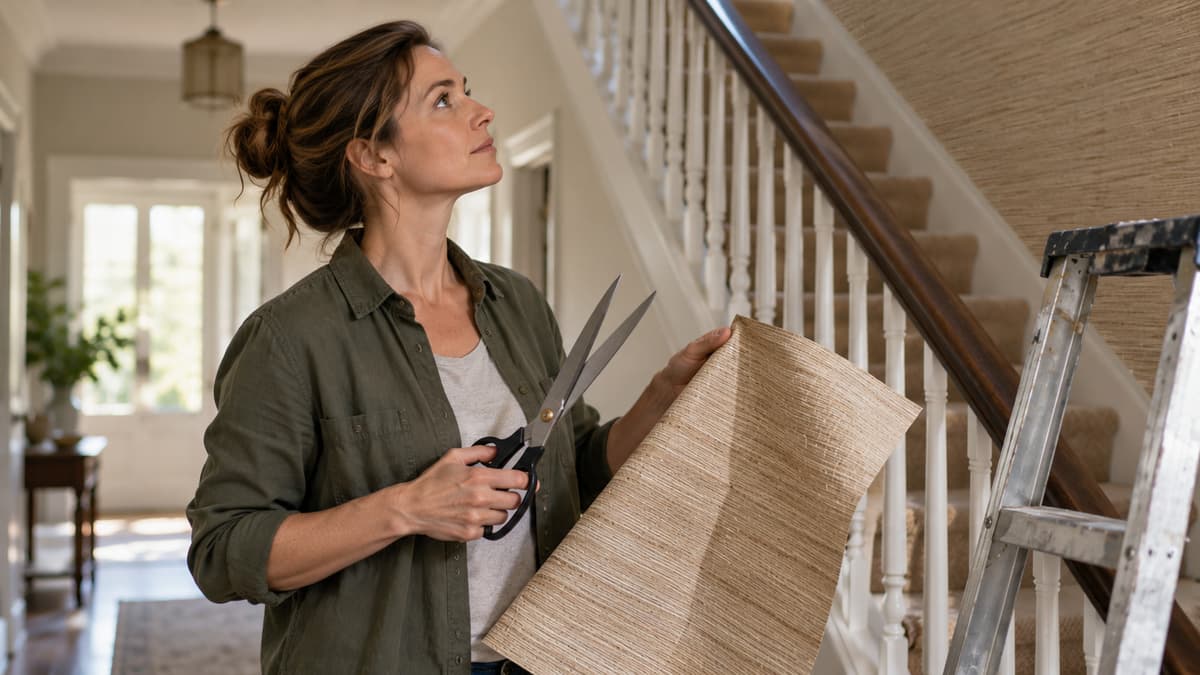
Learn when wallpaper scissors are the wrong tool for foil, silk, grasscloth, poor walls and stairwells, and when to call a decorator instead.
On this page

You have opened a long pair of paperhanging scissors and discovered that the awkward part of the job is not the cut. The paper is foil, silk or grasscloth; the plaster shows every ridge; or the final edge is above a staircase where reaching it means leaning away from a ladder with the blades open. These are signs that scissors are the wrong answer to a larger problem.
Knowing when not to use wallpaper scissors protects the wallcovering, the wall and you. These scissors can trim ordinary paper on a sound, prepared surface, but they do not strip old paper and they do not hide a bad wall. Nor do they turn delicate materials or unsafe access into an ordinary weekend decorating job.
In short
Wallpaper scissors belong to a straightforward trim: standard paper, a prepared wall, stable access and a cut the manufacturer permits. They do not remedy old wallpaper, damaged plaster, foil, silk or grasscloth, and they should not tempt you to lean from a ladder with an open blade. If the instructions or the access plan point elsewhere, stop and solve that first.
What wallpaper scissors are actually for
Long wallpaper scissors let you make controlled cuts without repeatedly opening and closing a short household pair. On conventional pasted wallpaper, you can brush the drop into place, crease it gently at the ceiling or skirting, peel the edge back, cut along the crease and brush it down again. They also work at the pasting table when the sheet is supported and the blades are clean.
That is a narrow job. The wall has already been inspected, filled, sanded and prepared, the old covering has gone, and the new paper suits the method. Our wallpapering scissors comparison covers blade format, handle shape and weight when those conditions are met. Scissors may still crease an unforgiving face or drag paste into it. For standard wet-pasted paper, the wallpaper trimming guide explains the controlled technique.
For that ordinary trim, the top pick on the best wallpaper scissors page is the Hamilton Perfection wallpaper scissors, listed on amazon.co.uk at about £8.65. The listing gives 20 cm by 4 cm and 140 g, with an angled handle for a flat surface. Blade length is not stated.
The amazon.co.uk rating is 4.6 from 159 reviews, and reviewers report clean cuts on pasted wallpaper through to the point. A qualifying purchase can earn us a commission at no extra cost to you. About £8.65 is this comparison's listing, not a live basket.
Foil, silk and grasscloth need material-specific decisions
Wallcoverings behave very differently. Standard paper may tolerate being lifted and repositioned; foil can preserve a pressure line, silk can be marked by moisture, and grasscloth can show every disturbed edge. Before cutting a premium wallcovering, read its instructions rather than relying on the tool packaging.
1. Foil and metallic faces can preserve every mistake
Foil and highly metallic papers can reveal scratches, dents and hard creases under side lighting. Cole & Son's guidance calls for smooth, dry, properly prepared walls, with extra lining or primer for some metallic backgrounds. Changing scissors will not hide a rough substrate. Keep jewellery, gritty tables and paste-contaminated tools off the face. If the instructions require a straight edge and a fresh blade, use that system or appoint a decorator who has hung the material.
2. Silk punishes water, paste and pressure
Silk can cost more in one marked drop than an ordinary pair of scissors. James Hare's professional guidance warns against adhesive or water on the silk face and stresses a properly lined surface. Paste from a pivot, thumb or blade may leave a permanent mark, and repeated lifting can bruise the material.
A practice offcut cannot stand in for full drops around corners and sockets. Professional hanging is sensible when the supplier recommends it, or when a spoiled drop would be costly.
3. Grasscloth is not ordinary printed paper
Grasscloth and other natural wallcoverings often vary between drops. That variation is part of the material, not a fault scissors can correct. Seams may show, fibres may pull, and paste on the face can stain. John Mark's guidance recommends professional hanging and a metal edge with a sharp blade, using a fresh edge for clean cuts. If the edge crushes, frays or wanders, stop before the damage runs the full drop.
When the wall is the problem
4. Scissors do not strip old wallpaper
Old wallpaper removal is a separate phase: dry stripping, scoring, water or solution, a steamer and a broad scraper, depending on the covering and the wall. Release the adhesive without gouging plaster or the plasterboard paper. Long scissors contribute nothing here and can damage the wall if used as a scraper. Let the wall dry, clear the residue, and repair loose plaster, mould, damp or recurring cracks before you open the new roll.
5. Scissors do not hide bad plaster
Wallpaper follows the surface beneath it. Ridges, hollows, filled cracks and old paste can remain visible, especially under foil, silk or paper seen in raking daylight. Thick texture is not a repair, and active damp or movement will return through the finish. Fill and feather-sand, then use the primer, size or lining paper the manufacturer specifies. Lining cannot cure damp or unstable plaster.
Stairwells, ladders and open blades
6. Unsafe access makes every cutting tool wrong
A stairwell combines long drops, changing floor levels and edges that are hard to reach while your hips stay between the ladder stiles. If the cut means leaning sideways, twisting above shoulder height, or bracing with the hand that holds open scissors, do not make it. Descend, close the blades and move the access equipment.
The Health and Safety Executive treats ladders as suitable for low-risk, short-duration work. As a guide, more than 30 minutes on a leaning ladder should prompt other equipment. A staircase may need an adjustable stair platform, ladders and boards arranged correctly, or hired access, not a chair on a tread.
A second person can support a concertina-folded length and stop pasted paper pulling you off balance. The guide to handling long wallpaper drops covers that workflow. Choose a decorator if you cannot stand stably at every edge. Keep scissors closed while you climb, and clean paste off them on a stable surface, not at height.
When to stop shopping and call a decorator
7. The cost of one error exceeds the saving
Book an experienced wallpaper hanger when signs overlap: a high stairwell with long patterned drops, silk over imperfect plaster, grasscloth around several external corners, or metallic paper that specifies specialist preparation. A longer pair of shears addresses only a small part of that job.
Compare the quote with replacement rolls, extra delivery and remedial preparation, not only the price of a tool. A large repeat can use more paper after one spoiled alignment, and a later batch of a natural material may not match. Ask how they will prepare the wall and what access they will use. If the instructions conflict with your plan, contact the supplier before pasting.
If you still DIY a safe, standard room
On ordinary wallpaper and sound walls, check batch numbers and hanging symbols, prepare the wall, set a plumb line and cut generous lengths at a clean table. Keep stable steps within reach so you are not improvising once the paper is wet.
Test the trim on an offcut. Make a light crease, peel back only as far as needed, and do not force a dull tip. Wipe paste off, dry the scissors and store them closed. If the paper tears, pause and ask whether the problem is sharpness, moisture, support or the method. Handle angle and weight matter overhead. A wallpaper scissors buying guide can narrow the choice once scissors fit the material and the room.
This page is from the Products Compared editorial team. The Hamilton figures come from its amazon.co.uk listing in our comparison. The material and ladder points follow Cole & Son, James Hare, John Mark and Health and Safety Executive guidance cited above. We did not hang these wallcoverings or lab-test the scissors.
Common questions
Can I use wallpaper scissors on foil or metallic wallpaper?
Do wallpaper scissors remove old wallpaper?
Will wallpaper hide an uneven or cracked wall?
Is it safe to trim wallpaper while leaning from a ladder?
Should I hang grasscloth myself if I own decorators' shears?
Why is silk wallcovering difficult to trim?
Are scissors the main tool for paste-the-wall paper?
When should I hire a professional wallpaper hanger?

Products Compared publishes British-English buying guides based on amazon.co.uk listings and public UK sources. We do not run a lab and we do not invent test scores.
Related articles

How to cut wallpaper around sockets safely
Make controlled cuts around sockets and switches without damaging the paper or taking avoidable electrical risks.
How to cut lining paper straight
Prepare, measure and trim lining paper cleanly so its edges do not undermine the finish above.

How to clean wallpaper scissors after paste
Remove paste from the blades and pivot, then dry your scissors properly before storage.