How to clean wallpaper scissors after the paste dries

Clean wallpaper scissors before paste hardens in the pivot. Use warm soapy water, dry both blade faces fully, and add oil only if the joint stays stiff.
On this page
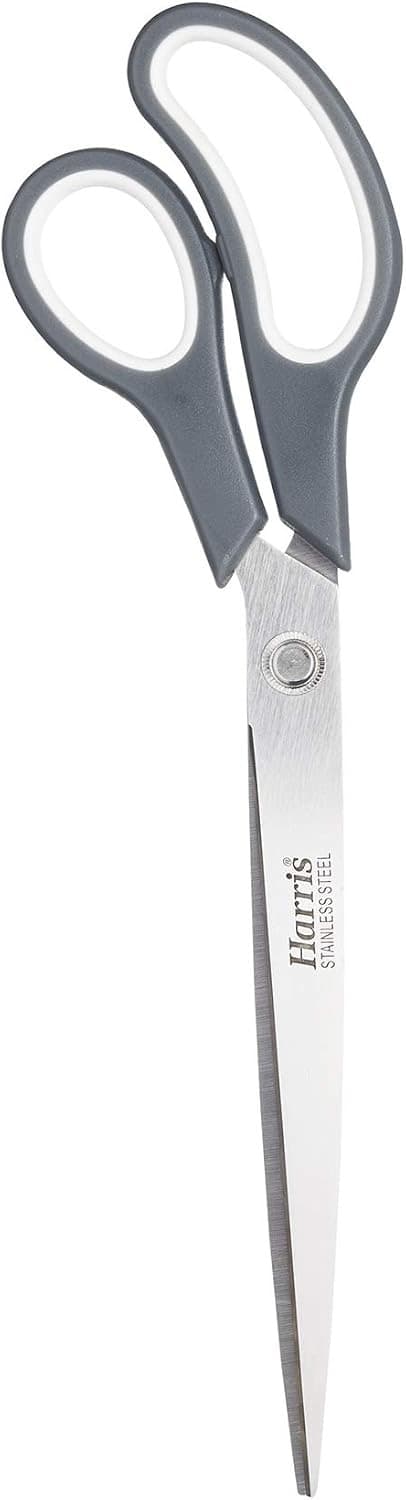
Your first drops trim cleanly, then the handles resist and the tip drags damp paper. Paste drying on the blade faces and inside the pivot is the usual cause. To clean wallpaper scissors, wipe it while it is fresh, wash with warm soapy water when you finish, and dry every steel surface before the pair goes away. Use oil only when a clean, dry joint still feels stiff.
This guide is from the Products Compared editorial team. It draws on published aftercare from Harris, Graham and Brown, ITS Decorating and general scissor-care guidance from Sheffield maker Ernest Wright. We have not laboratory-tested cleaning methods or measured edge retention. A qualifying purchase through our links can earn us a commission at no extra cost to you.
In short
Wipe fresh paste from the blades and pivot during the job, then use warm soapy water for the final clean. Open the blades carefully so you can dry the inner faces and the area around the screw. Do not store them until the steel is dry. If the action remains tight, one tiny drop of light oil at the pivot may help, but surplus oil can mark the next sheet.
Why wallpaper paste makes scissors sticky
Wallpaper paste stays workable while you position a drop, but the film on scissors loses water quickly. Cuts carry residue into the pivot, a gap a wipe across the outside misses. A tacky action is the first sign. Leave it until the next room and the handles may need noticeably more pressure.
Dirty blades also affect the paper. Inter DIY connects blunt or dirty scissors with frayed edges and advises wiping after each cut. Clean the pair and try an offcut before deciding it needs sharpening. If the clean edge still folds sound paper, sharpening or replacement is covered in our wallpaper scissors buying guide.
Wipe wallpaper scissors while you work
The easiest paste to remove has not set. Keep a damp cloth beside the pasting table and wipe whenever a cut has passed through a pasted fold. Hold the handles securely, point the blades away from your body, and wipe from the pivot towards the tip. Keep your fingers off either cutting edge. One reviewer cut a thumb while wiping a blade, so treat the clean as handling an edged tool.
Graham and Brown suggests an occasional dip in clean, warm water to loosen paste while you hang. Use a stable jar, dip only long enough to release the residue, and replace cloudy water. That is a working clean, not a soak.
Wipe when paste reaches the tool. Inter DIY's after-each-cut advice is the cautious end; trade guidance also uses the end of a room or a shift. Deal with visible paste immediately, especially near the pivot. Once the scissors are clean, how to trim wallpaper with scissors covers the cut itself.
Wash the blades and pivot after the job
At the end of the session, give the scissors a more deliberate clean. Harris specifies warm soapy water for its Seriously Good paperhanging scissors and says to dry them completely before storage. You need a bowl of warm water, a small amount of ordinary washing-up liquid, a soft cloth and, if paste has gathered around the joint, a soft brush. Avoid abrasive pads on the cutting faces and do not put the pair in a dishwasher.
- Remove the loose paste first. Wipe each blade from the pivot towards the point, and do not pinch a sharpened edge between finger and thumb.
- Wash both blade faces with a cloth dampened in warm soapy water, including the inside surfaces. Open the scissors only as far as you can hold them safely.
- Clean around the pivot with the corner of the cloth or a soft brush, on both sides of the screw. Move the handles a few times so hidden residue works out, and keep your fingers clear of the closing blades.
- Wipe off any soap film with clean water and look along the inner faces under good light. Translucent paste is easy to miss.
- Dry at once with a lint-free cloth, then leave the scissors somewhere safe to air-dry fully.
There is no need to reach first for vinegar, alcohol or adhesive remover. The reviewed aftercare relies on water for wallpaper paste, while Harris adds soap. For a specialist adhesive that is not water-soluble, check its label and the scissors manufacturer's care instructions.
Dry wallpaper scissors completely
Water stays longest where the blades cross and around the pivot. Open the scissors on a stable surface, dry each inner face from the screw towards the point, then work a dry cloth around the joint and wipe any moisture that appears when you move the handles. Harris says to dry its paperhanging scissors completely before storage.
ITS Decorating warns against putting damp blades into a box or van, because a closed toolbox can hold moisture beside the metal. Leave the open pair briefly in a dry room, then check the pivot before you close them. Do not use heat. A paste clean will not reverse steel that is already pitted.
Fix a pivot that still feels stiff
Test the action only after the scissors are clean and dry. Open and close them slowly without cutting paper. If resistance occurs at the same point each time, inspect the pivot again for a thin ring of paste or fibres caught between the blade faces. Repeat the warm-water clean around the screw, work the joint gently and dry it fully. Lubricant placed over paste merely turns the residue into an oily paste.
If a clean joint is still tight, ITS Decorating suggests one tiny drop of light oil at the pivot: a spot, not a line down the blade. Work the scissors, then wipe the pivot and both faces until a clean white cloth stays unmarked. Surplus oil can mark a pale or already pasted sheet.
Do not use oil for loose blades, a bent joint or a damaged edge. Side-to-side play at the pivot can let the edges separate, and overtightening an adjustable screw can make sound scissors feel blunt. Follow the maker's adjustment notes if they exist. To choose a length or handle layout, use the wallpapering scissors comparison.
Protect the edge between decorating jobs
Keep one pair for wallpaper. Tape, card, plastic packaging and carpet are harder on the edge than paper, and a wash cannot restore a nick. Mark the handles or store the pair with your pasting brush. Keep them closed, dry and out of children's reach, in a sleeve, out of the paste bucket and clear of other tools. Before the next job, check for rust and test-cut a clean offcut.
How we prepared this guide
Products Compared used UK-facing care advice from Harris, Graham and Brown and ITS Decorating, plus Ernest Wright's notes on cleaning blade faces near a scissor screw. Those sources separate the wipe during hanging from the warm soapy wash and complete dry afterwards. We did not run a corrosion trial or compare cleaning chemicals in a laboratory, and there is no British Standard in the reviewed material for this maintenance.
The featured Harris 12 in paperhanging scissors are our best value on the wallpapering scissors comparison, listed on amazon.co.uk at about £4.00, with 4.6 stars from 2,024 reviews and a listed weight of 160 g. The care line is warm soapy water, then a complete dry. We include them because the maker publishes that aftercare. We did not test this pair against every other model.
Common questions
How do I clean wallpaper paste off scissors without dulling them?
Why do my wallpaper scissors feel stiff after one room?
Should I clean the pivot or just the blades?
Can I use vinegar, alcohol or adhesive remover on decorating scissors?
Is it safe to dip wallpaper scissors in warm water while hanging?
Will wallpaper paste make scissors rust?
How often should I wipe wallpaper scissors during a job?

Products Compared publishes British-English buying guides based on amazon.co.uk listings and public UK sources. We do not run a lab and we do not invent test scores.
Related articles

Left-handed wallpaper scissors: what actually changes
Reversed blades are not the same as ordinary scissors with larger or symmetrical handles.

How often should you sharpen wallpaper scissors?
Use cut quality, not an invented calendar interval, to decide when the edge needs attention.
Wallpaper scissors and your UK consumer rights
What satisfactory quality and matching the description mean when a new pair is faulty.