Sieve compost
The heap looks finished until you fork it and find twigs, eggshells and lumps the size of a walnut. You want to know whether to sieve compost, which opening is enough, and what to do with the pile that will not go through. Sieving evens the crumb. It does not make home compost safe for seed, and a fine mesh on a damp heap mostly clogs. The sieves themselves, with prices and review counts, are on the [garden sieve comparison](/hub/garden-tools/garden-sieve). This page stays with the bin. We did not run a lab test. A qualifying purchase through our links can earn a commission at no extra cost to you.
The heap looks finished until you fork it and find twigs, eggshells and lumps the size of a walnut.
The heap looks finished until you fork it and find twigs, eggshells and lumps the size of a walnut. You want to know whether to sieve compost, which opening is enough, and what to do with the pile that will not go through. Sieving evens the crumb. It does not make home compost safe for seed, and a fine mesh on a damp heap mostly clogs. The sieves themselves, with prices and review counts, are on the garden sieve comparison. This page stays with the bin. We did not run a lab test. A qualifying purchase through our links can earn a commission at no extra cost to you.
Our top picks
| Badge | Product | Opening | Listed uses | Mesh held | Note | Price | Offer |
|---|---|---|---|---|---|---|---|
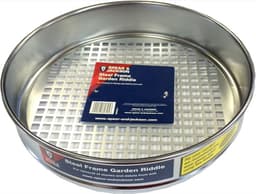
| Best overall |  Spear & Jackson Spear & Jackson steel riddle | 10 mm square | Soil and stones | Fixed base plate | 9.2 | about £14.95 | View offer |
| Alternative |  johgee johgee garden sieve with tools | 3, 6, 9 and 12 mm | Soil, stones, weeds | Removable screens | 7.1 | about £27.44 | View offer |
| Best value |  Flatro Flatro stainless sieve, 5 meshes | 3, 5, 8, 10 and 12 mm | Soil, compost, stones, roots | Inserts; ridges named in a review | 7.3 | about £14.95 | View offer |


On this page
When the heap needs a riddle
What falls through, and what goes back
Seed compost is a different job
A damp heap and a small frame
Common questions
Do you have to sieve finished compost for a bed?
What opening is enough for a heap, and what is too fine?
Where do the twigs and lumps go?
Can sieved home compost go on small seed?
What must not go into the bin in the first place?
Related pages
Sources
Public UK sources used for this comparison. Listing prices, stars, and review counts are the amazon.co.uk lines in the product rows. A 20 October 2026 search snapshot is a price-band rule of thumb only, not a second check of these ASINs. We did not run a lab test.
- RHS — How to make your own potting mix (retrieved 20.10.2026)
- RHS — Four steps to perfect compost (retrieved 20.10.2026)
- RHS — John Innes potting compost (retrieved 20.10.2026)
- RHS — Sowing in pots (retrieved 20.10.2026)
- BBC Gardeners' World Magazine — How to make a soil sieve (retrieved 20.10.2026)
- Spear & Jackson — Garden riddle (retrieved 20.10.2026)
- HSE — Good handling technique (retrieved 20.10.2026)
- Consumer Rights Act 2015 — notes on goods remedies (retrieved 20.10.2026)