Independent comparisons. We may earn from shop links. More info

Copper mesh vs slug fence

Updated: 22 October 2026

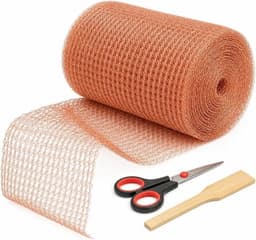
You are holding a copper-coloured roll in one hand and a green plastic fence in the other, and the listing says the metal will turn slugs around. Copper mesh versus a slug fence is that choice: a roll sold as a deterrent, or a shaped lip you can see. The [snail fence comparison](/hub/garden-supplies/snail-fence) lists the ten amazon.co.uk products, including the only rigid plastic kit and the mesh rolls. A qualifying purchase from that page can earn us a commission at no extra cost to you. Peter F. read those listings and the public UK pages named below, and did not run a slug trial. Electric bands and pellets are not the decision on this page.

You are holding a copper-coloured roll in one hand and a green plastic fence in the other, and the listing says the metal will turn slugs around.

Our top picks

On this page

What the garden trial measured

The Royal Horticultural Society's Wisley trial used copper tape on pots and copper collars in the ground, over six weeks, with 108 lettuces, plus grit, bark, wool pellets and eggshells. The Society reported no reduction in damage. Knitted mesh was not the test piece, so you cannot say the trial failed a cage. The Guardian, on 27 September 2018, put average leaf loss at about 5.7% in the ground and about 0.2% in pots. BBC News quoted Hayley Jones: the Society was not ruling barriers out, and it still had no evidence they reduced damage. Garden Organic still lists copper tape, and says none of the barriers are failsafe. On TOONGEEN, one UK review says a cage stopped slugs and the metal did not repel them. Another says slugs climbed the mesh.

Foil delayed slugs and did not save the crop

Watz and Nyqvist, in Crop Protection in 2021, tested copper foil on Arion vulgaris. The foil delayed passage and did not prevent it. Widths of 3 cm, 4 cm and 6 cm did not change that, and semi-field damage was not significantly lower. The work is not a UK garden and not knitted mesh. A roll titled around 12.7 cm is not a stronger deterrent because it is wider, and it still has holes. The buying order, before this argument, is the slug fence buying guide.

A lip is a different bet

Swissinno, at about £25.99 with 3.4 from 93 reviews, is a green click-in kit, not electric. The product is the shape: panels, corners, and a toothed edge. A UK review watched a slug climb over. A rectangle from the pieces was about 66 cm by 33 cm, so 2 m is the kit. The corner is 30 degrees in a bullet and 135 degrees in the item type. HanYun, twelve rings at about £12.99, each 21 cm by 21 cm, is a collar, not a copper claim. A Which? line in the Telegraph found no useful effect from a plastic barricade, and that trial did not use this kit. A leaf on the lip is a bridge, which is the how to install a slug fence page.

When mesh is still the thing in the basket

Buy mesh to plug a hole or wrap a pot, and do not call it a proven repellent. TOONGEEN at about £9.99, 4.3 from 409, is the top pick on listing score, and the title size fights a 50 cm by 12.7 cm field. The FACIACC 12 m roll at about £8.99 shares its 3.9 from 28 with the 6 m roll, and a buyer watched slugs cross mesh laid flat. PCCALIGO at about £15.99 disagrees with itself on width. Satar Refes at about £6.59 has a UK review calling the mesh coloured plastic. Dooaqiin at about £9.82 has no star line. A lip when the patch is small and you will close gaps. Mesh when you are plugging or wrapping. Stacking both is not a result Wisley missed.

Common questions

Did the RHS test copper mesh or copper tape?
The Wisley trial used copper tape on pots and copper collars in the ground, with grit, bark, wool pellets and eggshells. The Society reported no damage reduction. Knitted mesh was not the test piece. Use it as a warning against a deterrent claim, not as a fail for a cage you built.
If tape failed, can mesh still work as a cage?
It can work as a wall if the sleeve is closed and leaves do not bridge it. A TOONGEEN reviewer said a cage stopped slugs and the metal did not repel them. Another update says slugs climbed it. A FACIACC buyer watched slugs cross mesh laid flat. The trial and the foil paper do not support a repellent claim.
When is the plastic fence the better object?
When you need a lip around a very small patch and the Swissinno panels can close it. At about £25.99 and 3.4 from 93, one review built about 66 cm by 33 cm and another saw a slug climb over. It is the wrong object if the bed is larger than the panels.
Does width of copper change the result in the 2021 paper?
Foil widths of 3 cm, 4 cm and 6 cm all delayed Arion vulgaris and did not stop it. Semi-field damage was not significantly lower. A wider mesh title here is not a stronger deterrent. The paper is not a UK garden and not knitted mesh.
Why do some UK reviews still praise mesh on pots?
Because a closed sleeve can be a wall, and some buyers report fewer animals on a pot they wrapped. Those notes sit next to climbing, stripped dahlias, and mesh crossed on the soil. Hostas are protected in one TOONGEEN review and eaten in another.
Is a copper-coloured roll always copper?
No. Satar Refes at about £6.59 says pure copper, and a UK review says it is plastic in a copper colour, too flimsy for a pot. That dispute is one listing. Dooaqiin has no reviews here. Look at the reel when it arrives.
Should I use both?
Only if each piece has a job: the lip around a tiny patch, the mesh in a hole or as a sleeve. Stacking them does not create a result Wisley missed. If you will not close gaps, neither earns its place. An electric fence does not repair a copper claim.

Related pages

Sources

Public UK sources on barriers, the metaldehyde phase-out and product safety, plus the amazon.co.uk listings compared on this page. Shelf prices read 21 October 2026. Updated 22.10.2026.

  1. RHS, how to stop slugs and snails (retrieved 21.10.2026)
  2. RHS, slugs and snails (retrieved 21.10.2026)
  3. RHS, gastropod barriers experiment (retrieved 21.10.2026)
  4. GOV.UK, outdoor use of metaldehyde to be phased out (retrieved 21.10.2026)
  5. AHDB, chemical and biological control of slugs (retrieved 21.10.2026)
  6. Garden Organic, slugs and snails (retrieved 21.10.2026)
  7. General Product Safety Regulations 2005 (retrieved 21.10.2026)
  8. Watz and Nyqvist, Crop Protection 2021 (retrieved 21.10.2026)