Independent comparisons. We may earn from shop links. More info

Pressure sprayer for weed killer

Updated: 22 October 2026

You are about to put herbicide in a pump tank, and the listing already says it is ideal for weed killer. That line is a materials hint, not permission. Stay on the product label, on the target, and off using the same tank for feed afterwards. The RHS would rather you mulch and hand-weed. If you still use an amateur weedkiller, the harm-reduction steps below matter more than which white plastic bottle you bought. Peter F. used HSE and RHS public pages and the ten saved amazon.co.uk sprayer listings dated 19 October 2026, not a lab. A qualifying purchase can earn a commission at no extra cost to you. Sprayer rows sit on the [pressure sprayer comparison](/hub/garden-supplies/pressure-sprayer).

You are about to put herbicide in a pump tank, and the listing already says it is ideal for weed killer. That line is a materials hint, not permission.

Our top picks

On this page

The listing line is not the authorisation

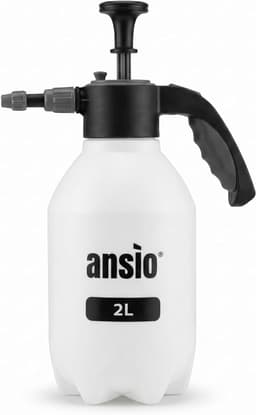
Several tanks in this set name herbicides or weedkiller in the bullets. Spear & Jackson lists water-based herbicides among non-viscous soluble products. Green Haven names weed killers and pesticides. ANSIO names weedkiller within a water-based pH 5 to 9 band. REQUISITE NEEDS is sold into that use in short reviews. Those lines tell you the seller expects water-based garden chemicals. They do not authorise a specific bottle on your shelf. Authorisation sits on the weedkiller label. HSE's guidance on understanding the label points at the MAPP number and the statutory conditions: where you may apply it, on which weeds or surfaces, at what rate, and with which restrictions. If the bottle is an amateur garden product, you do not need a sprayer training certificate. If it is a professional or agricultural product, you need appropriate training, and the use must be on that product's label. An untrained reader stops at a professional concentrate rather than making it work in a cheap pump. Spear & Jackson's brand sheet and ANSIO's amazon bullets both mention water-based chemistry around pH 5 to 9. That still is not any weedkiller. Bleach, solvent, or a reviewer's off-list brick sealant are not a listing claim and not a rinse recipe for these domestic tanks. Stick to the weedkiller label and clean water for rinsing.

Dose stays on the label

Do not strengthen the mix to finish a path faster. HSE's garden pages say amateur products are for the rate on the label. Overdosing is not a shortcut, and lawn weedkillers in particular need even application or you leave stripes of damage. Mix only what you will spray today.

Drift and other plants

Drift is how the wrong plant dies. The 2012 plant-protection rules confine application to the target. HSE's public spray-drift material is aimed at not letting spray reach someone else's property. For a householder with a lance, that means waiting for still air, keeping the nozzle close to the weed, and favouring a coarser pattern over a fine mist that floats. Boom-height rules and LERAP buffers belong to professional boom sprayers, not a 5 litre strap pump. Do not import farm code onto a patio job. RHS notes on weedkiller damage stress wind, heat and drought as conditions that make harm more likely, and they underline the legal duty to follow the label. If spray reaches a neighbour's ornamental bed or a pond edge the label forbids, you have already left the safe use case. Stop, and treat that as a contamination problem rather than a reason to buy a longer lance.

One sprayer for herbicide

Keep weedkiller in its own sprayer or watering can. RHS advice is to separate herbicide kit from feed and watering tools because residue is hard to guarantee away with a casual rinse. If you only own one tank, accept that after herbicide it is a herbicide tank. Do not casually switch it to liquid fertiliser for tomatoes the next morning. Triple-rinse with clean water onto areas the weedkiller label lists as acceptable for rinsings. Never pour leftover mix or rinsings down a household drain, a road gully, or into a watercourse. The pump-and-depressurise sequence is how to use a pressure sprayer. This page only adds why that rinse water must not become tomorrow's feed and must not enter drains. Water-test a new sprayer before the first herbicide fill, the same as any other chemical. A hissing Green Haven or Polar unit wastes concentrate and sprays the wrong place when the seal finally gives. Capacity choice, a 2 litre bottle for cracks versus a 5 litre strap for a path, stays on the pressure sprayer buying guide. If you still need a named 5 litre strap row after those rules, best pressure sprayer crowns Spear & Jackson for sample size. This page will not re-rank it for weedkiller alone.

Common questions

Can any pressure sprayer take any weedkiller?
No. Match water-based listing limits where printed, then obey the weedkiller label. Professional concentrates are not amateur fillings.
Do I need a licence for a garden sprayer?
Not for an amateur garden product. Training is required for professional products, and the use must appear on that label.
Can I put a farm or trade concentrate in it?
Only if you are appropriately trained and the label allows that use. Otherwise leave the bottle alone.
Should weedkiller and feed share a tank?
No. Keep herbicide kit separate. Residue is the risk the RHS flags.
What wind is too much?
If spray moves off the target toward plants, paths you did not mean to treat, or someone else's ground, it is too much. Wait for stiller air and use a coarser pattern.
Where do I put the rinsings?
Only onto areas the weedkiller label allows. Not down a drain.
What does the MAPP number identify?
It identifies the authorised plant-protection product and ties you to the statutory conditions on that label. Keep it if you need to report a problem.

Related pages

Sources

Public UK sources for this comparison. Prices, stars and review counts are the amazon.co.uk listings in this set, captured 19 October 2026. Page updated 22 October 2026.

  1. HSE: garden, home and allotment pesticides (retrieved 22 October 2026)
  2. HSE: understanding the product label (retrieved 22 October 2026)
  3. HSE: spray drift (retrieved 22 October 2026)
  4. Plant Protection Products (Sustainable Use) Regulations 2012, regulation 12 (retrieved 22 October 2026)
  5. NSTS: legislation (retrieved 22 October 2026)
  6. HSE: pesticides and the public (retrieved 22 October 2026)
  7. RHS: chemical labels explained (retrieved 22 October 2026)
  8. RHS: storing and disposing of chemicals safely (retrieved 22 October 2026)