Water-based or solvent stone sealer: smell and label
A water based or solvent stone sealer changes the smell and the hazard label. Read the carrier on the tin. Water-based is not automatically the safe choice.
On this page

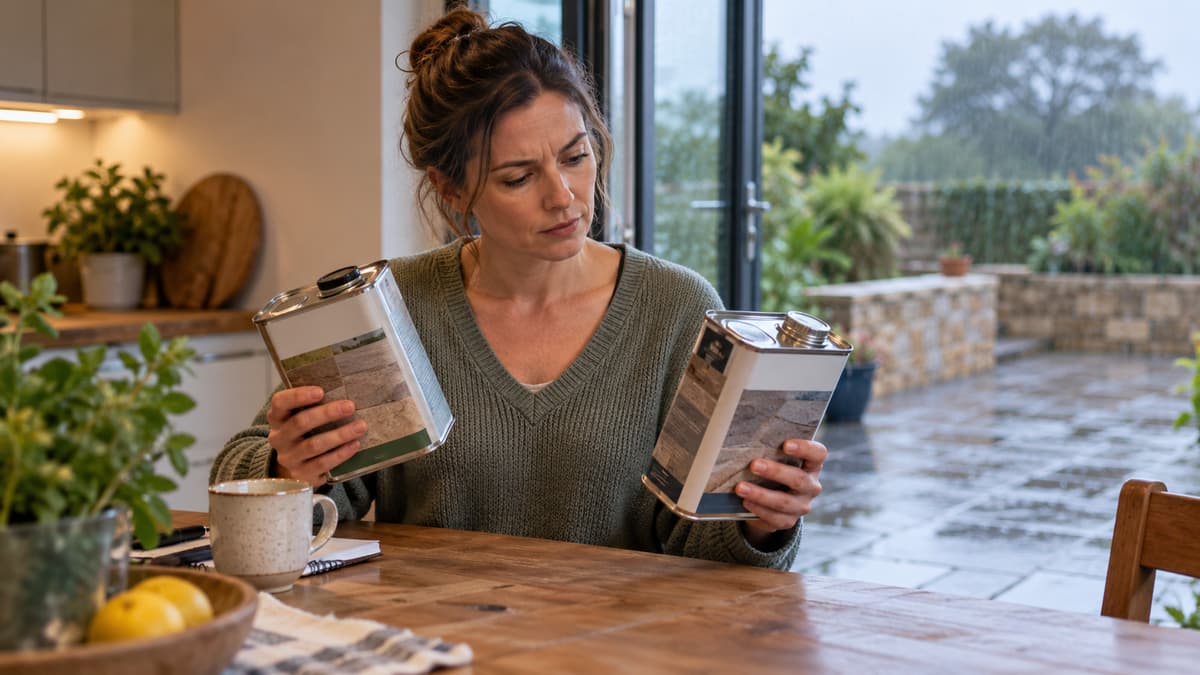
You are at the kitchen table with the back door open, one tin in each hand, and rain due before the patio is finished. One label says low odour. The other never says water or solvent, and a review talks about a smell that stayed in the room. A water based or solvent stone sealer is that choice. The carrier takes the treatment into the pores, and with it the smell, the hazard label, and the way you store the tin.
The slab still has to absorb the liquid. A mild carrier beads on porcelain and on dense granite just as a strong-smelling one does. Match the label to the room, then judge a dry test patch in daylight. Products Compared read these amazon.co.uk listings on 16 October 2026. Nobody here ran an odour or flammability test. Links use the tag pcuk26-21. A purchase through a comparison link can earn us a commission at no extra cost to you.
In short
The carrier is water, solvent, or oil. Water and solvent take a treatment into porous stone and then leave. Libéron’s interior oil stays and cures. Mona-Guard Nhance and Black Diamond CE-T are the listings in this set that say water-based. A solvent sheet can print H226. HG’s amazon.co.uk listing never names a carrier. The Libéron 5 litre title disagrees with the oil listings, so it stays unsorted.
What a water based or solvent stone sealer changes
Lithofin’s UK note describes impregnation without picking a brand. Natural stone takes liquid in through fine capillaries. An impregnation leaves a thin film of active material on those walls. The carrier is water or solvent. Afterwards the stone takes up less water, oil, and grease, and water-vapour movement is reduced only a little.
Some impregnations are colour-neutral and some are colour-intensifying. Both carriers can deepen the wet look, and both can leave it almost unchanged. Separating a colour enhancer from a clear sealer is the finish decision: deeper colour, barely any shift, or a gloss film.
Several UK maker pages treat a water-based impregnator as the usual outdoor tin. A solvent tin stays available when its sheet allows the stone, the temperature, and a wipe before excess dries shiny. Pale sandstone such as Kandla Grey often stays pale, which Universeal notes on its patio colour-enhanced sheet. A film-forming coating can use water or solvent and still sit on the face as a skin.
Listings that say water-based
Two listings in the stone colour enhancer comparison say water-based. Mona-Guard Nhance, ASIN B00GMLKYHU, is 1 litre at £27.95. The bullets name drives, patios, and natural stone, and they claim water repellence and less moss and algae. The saved listing has no review line and no coverage rate, so you cannot price a patio from this tin, and a limestone question on the page goes unanswered. Test a discreet slab if that is your stone.
Black Diamond Colour Enhancer Sealer CE-T, ASIN B01J4PRM7A, is 118.29 ml at £16.68. The listing says water-based, and that the treatment allows the stone to breathe, indoors or outdoors. The star line is 4.2 from 2,035 reviews, shared with ASIN B01J4PRM7U, mostly from the United States or Canada. CE-T WL-T, at £25.50, states no base. Keep the tin dry and temperature-controlled, because extreme heat or freezing may ruin the formula.
Outside this set, Floorseal’s water based impregnator for sandstone is described as matt and breathable, a little like damp stone without a shine. Azpects calls EASYSeal water-based and non-solvent, with 5 litres up to 25 square metres and also 1 litre per 4 to 5 square metres. Use the rate beside the pack you buy.
Solvent labels, H226, and indoor smell
A low odour patio sealer can still be solvent. Universeal calls Colour-Plus a low-odour solvent impregnator. Excess comes off within 20 to 30 minutes, or a sticky patch shows it was left. Colour-Plus is not one of the nine amazon.co.uk listings in this comparison. Universeal’s Enhance & Restore sheet, for limestone, prints H226, flammable liquid and vapour, and a range of 5°C to 20°C. That line belongs to that sheet. Under GB CLP, overseen by the Health and Safety Executive for Great Britain, a hazardous mixture is labelled before sale.
HG Natural Stone Colour Intensifier, ASIN B0012719HI, is 50 ml at £14.80, with 3.8 from 168 reviews, mostly from the United Kingdom. The listing is for indoor granite, blue stone, and other natural stone, and it never names the carrier. UK reviews describe a strong smell, including one that lingered for days. Directions say household gloves, a thin coat, and a wipe at 5 to 10 minutes. Stone should be dry for three days, or 24 hours if floor heating was on. You can walk after 4 hours and return to normal use after 3 days. About 100 square metres per litre means 50 ml is a small floor, not a patio. The twin at £24.62 and the triple at £34.23 name no base either.
HG says the treatment impregnates, lets the stone breathe, and will not make the surface slippery. Those are HG’s claims, and this comparison has no slip test. If the label says flammable liquid and vapour, keep the tin off a gas hob or a pilot light. Wipe times are on the application guide.
Linseed oil is the third carrier
Libéron’s colour-enhancing stone floor sealer is an interior oil. The maker page names linseed oil and 10 to 15 square metres per litre, against HG’s figure of about 100 square metres per litre. The oil stays in the stone and cures. Water and solvent are the carriers that leave. The hazard that travels with the oil is the cloth.
Liberon Oil-Based Stone Floor Colour Enhancer, ASIN B09YMNDXHB, is £23.95, oil-based and matt, for interior York stone, slate, terracotta, and quarry tiles. The star line is 5.0 from 7, a small interior sample, not a patio trial. The gloss listing, ASIN B0DCZF1QG9, is £22.50, paint type oil, 8 hours to dry and 24 hours to full cure. The title says 1 litre and a size field says 1 ml, so check the bottle. It has 5.0 from one rating and no review text.
The 5 litre title, ASIN B0DCZHHN26, at £73.21, stays unsorted. A size field says 5 ml, the parcel weight is 4.5 kg, and a material field says water-based, which conflicts with the 1 litre oil listing and with Libéron’s oil page. A listing that contradicts its description is a retailer question under the Consumer Rights Act 2015. Libéron says bundled oily cloths may self-combust, so lay used cloths flat outside to dry. This oil stays indoors. Open sandstone belongs on the sandstone patio page.
Check the label before you open the tin
If the back never says water-based, solvent, or oil, the tin stays unsorted. That covers every HG pack in this set, and Black Diamond’s WL-T listing. Low odour does not fill the blank. A water-based impregnator can still be an irritant, and a missing pictogram is not proof the mixture is harmless. At home you follow the print: gloves where the directions ask, ventilation where they ask, and no leftovers tipped down a drain. COSHH applies where someone is at work, so a landscaper should have the safety data sheet.
Universeal’s patio sheet wants up to 72 hours dry, and Libéron’s oil wants at least 8 hours, with the cloths laid flat the same day. The buying guide puts those different coverages against the area you measured. A solvent you cannot ventilate, or paving still showing white salts, is a job for a paving contractor.
Common questions
Which smells less, a water-based sealer or a solvent sealer?
Which stone colour enhancers can be flammable?
Is a water-based impregnator always breathable?
Can I use a solvent sealer indoors, including in a kitchen?
Why did the HG colour intensifier smell if some patio sprays do not?
Is linseed oil a solvent?
Does a low odour patio sealer mean the liquid is non-hazardous?
Which listings in this set actually say water-based?

Products Compared publishes British-English buying guides based on amazon.co.uk listings and public UK sources. We do not run a lab and we do not invent test scores.
Related articles
Patio sealer hazard label UK: what the tin means
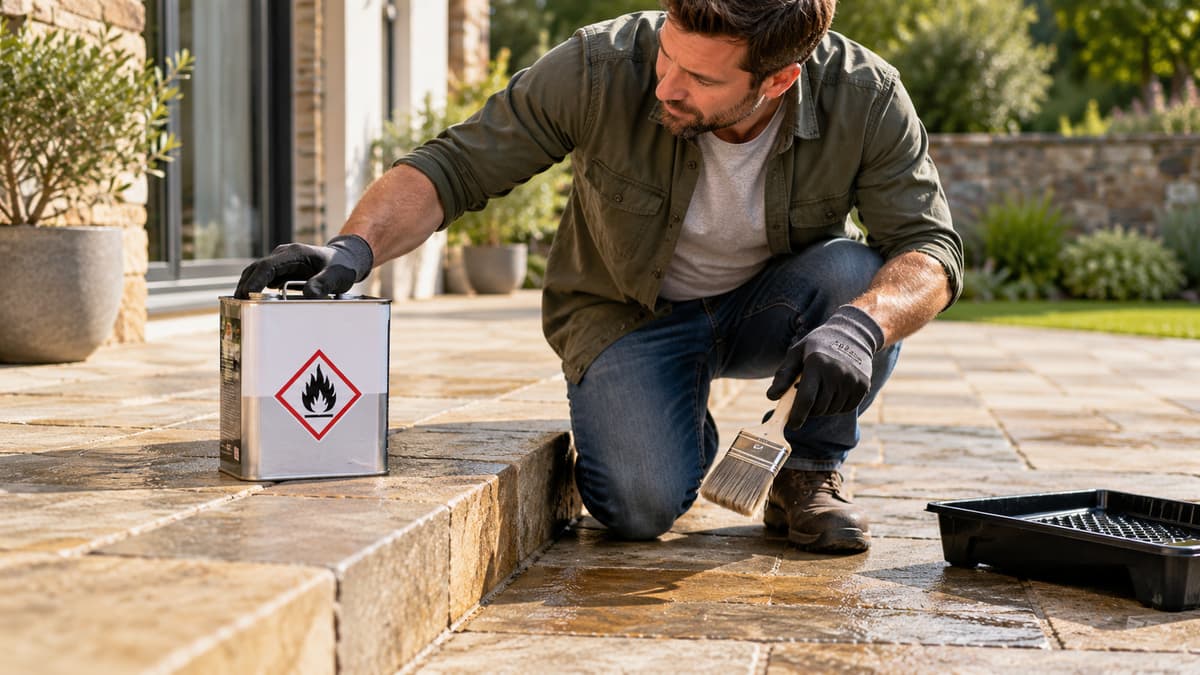
A flame or the word Danger on a patio sealer is a GB CLP label. Follow the tin at home; COSHH is the work duty.

Linseed oil rags fire risk: what to do with the cloths
Bundled oily cloths after a linseed stone floor sealer can heat on their own. Lay them flat outside to dry.
Stone colour enhancer cost: budget for your patio
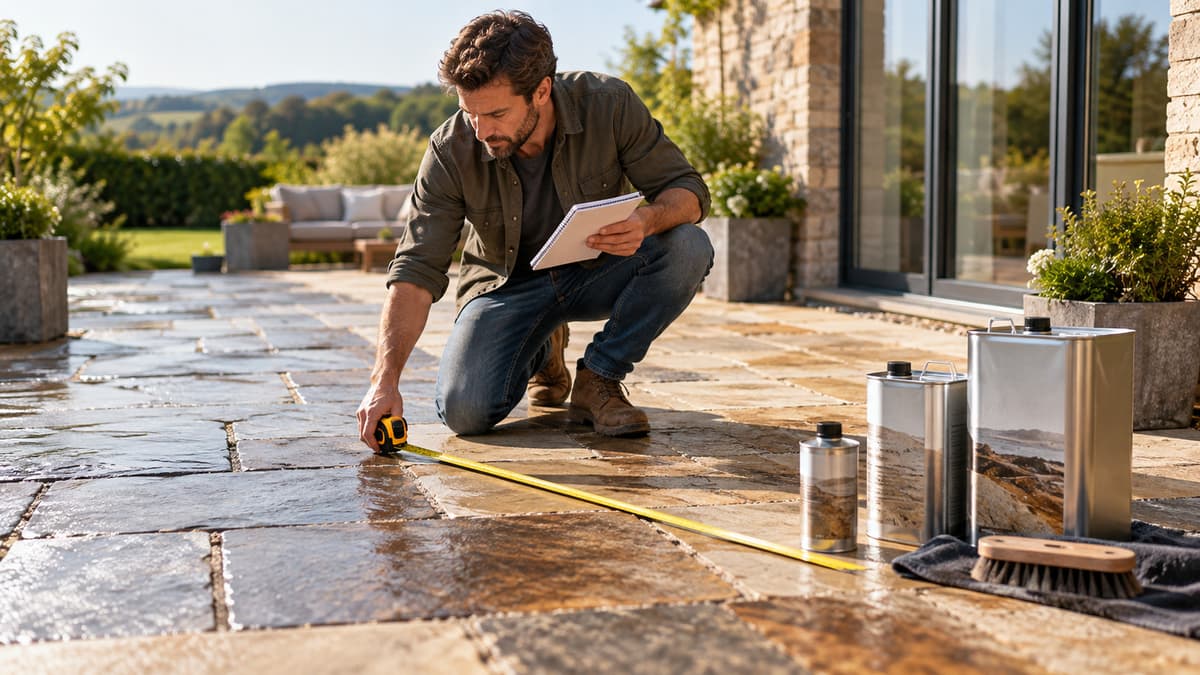
The shelf price leaves out coverage. Rates disagree, so a 50 ml tin and a 1 litre tin are different jobs.