Patio sealer hazard label UK: what the tin means
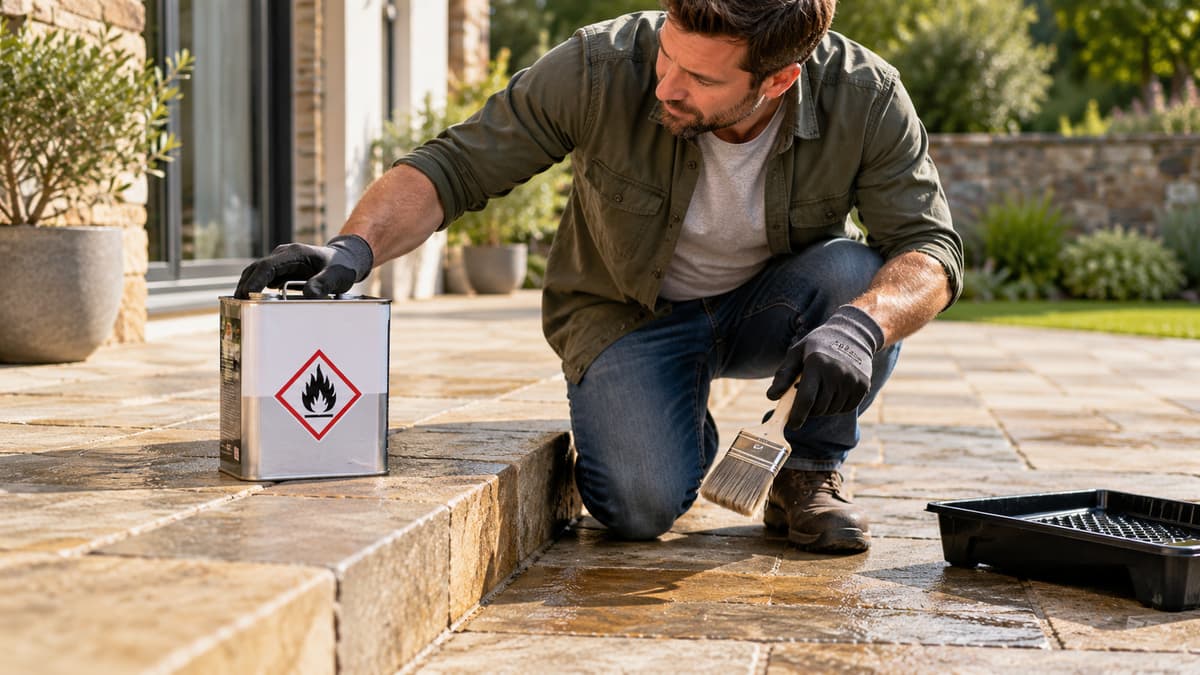
A flame or the word Danger on a patio sealer is a GB CLP label. Here is what you follow at home, and what COSHH asks when a landscaper seals the flags.
On this page

You have the flags dry, the brush out, and a tin of patio sealer on the step. The front carries a red diamond with a flame, or the word Danger. A patio sealer hazard label UK shoppers meet on amazon.co.uk is a GB CLP label. The supplier classified the mixture and printed it. COSHH appears when someone seals the patio as paid work, and the safety data sheet then belongs with the job. Only the retail label is yours when you are the householder holding the brush.
Products Compared read the amazon.co.uk listings in this set in October 2026, plus HSE's GB CLP pages and the maker sheets named below. Nobody here ran a flammability test. Links to amazon.co.uk use the tag pcuk26-21. A purchase through a comparison link can earn us a commission at no extra cost to you.
In short
A patio sealer hazard label is the GB CLP print a supplier puts on a hazardous mixture sold in Great Britain: a pictogram where one applies, one signal word, and the statements you follow. A flame and the statement H226 mean flammable liquid and vapour on the bottle that prints them. A householder follows the retail label. A landscaper at work also needs the safety data sheet, because COSHH is the workplace duty.
What a patio sealer hazard label has to include
Great Britain kept the EU classification and labelling rules as GB CLP. The Health and Safety Executive is the agency. A hazardous mixture placed on the GB market has to be classified, labelled, and packaged before it is sold.
On a retail pack you should find the product name, the supplier's name and address, and the amount in the container. Where the classification calls for them, you also get one or more red-diamond pictograms, a single signal word, hazard statements, and precautionary statements. The hazard statement names the harm. The precautionary statement tells you the action: keep away from heat, wear gloves, use in fresh air, and dispose of the contents as that line specifies.
The supplier prints that set for the mixture in that container. A colour enhancer and an interior floor oil can share a shelf and still carry different labels, because the carrier differs. Solvent products can be flammable under GB CLP. A water-based impregnator may still be an irritant. Some bottles show no pictogram. HSE's GB CLP and packaging pages are the public account of the supplier's duty.
The flame, the signal word, and the line you follow
The flame pictogram is the red diamond with a fire symbol. On a sealer it marks a flammable classification. Universeal's Enhance & Restore sheet for limestone prints H226, the statement for a flammable liquid and vapour, and an application range of 5°C to 20°C. That H226 line is the maker's classification on that sheet. Universeal is a UK maker example, and it is absent from the nine amazon.co.uk listings in the stone colour enhancer comparison, so it does not classify those nine.
The signal word sits near the pictogram. GB CLP uses Warning or Danger, and the label carries one of them. Danger is the word for the more severe category. Warning is the milder word, used where the hazard is less severe and still real. Under either word you follow the lines on heat, sparks, gloves, and ventilation. An exclamation-mark pictogram often travels with irritation, so gloves and fresh air still apply on a water-based tin that never mentions fire.
UK reviews of HG's 50 ml intensifier, £14.80 with 3.8 from 168 reviews when the listing was read, often mention a lingering smell indoors. This project does not call that bottle water-based unless a UK safety data sheet says so. Follow the label on the UK container, including when a brand's listing bullet says the origin is the USA. The colour enhancer versus sealer page separates a soak-in treatment from a film.
When COSHH applies to a patio sealer
COSHH, the Control of Substances Hazardous to Health Regulations, applies where someone is at work. Classification under GB CLP names the hazard on the container. COSHH asks the employer, and often the self-employed person in control of the work, to prevent or control exposure. A safety data sheet is what a professional user should have for that assessment. The sheet should come from the supplier of the tin they open.
Sealing the flags yourself leaves you with the retail label. This page does not hand you a COSHH form. Paying a landscaper moves the duty with the person at work. You still say what you put on the stone last year, and you keep people and pets off the flags for the cure that tin states. HG talks about walking after 4 hours and full use after 3 days. Libéron's interior sealer wants at least 8 hours. Universeal says keep the face dry for up to 72 hours. The tin on the van is the clock for this visit.
A self-employed landscaper stays at work on your property. If the tin shows Danger or a flame and there is no sheet, pause until the supplier provides it. A cigarette over an open tray, or leftovers poured into an unmarked pot, are reasons to stop the job.
What you do with the tin at home
Read the closed tin in daylight: product name, pictogram, signal word, and every precautionary line, then the stone directions. GB CLP tells you the hazard. The maker tells you the dwell, the wipe, and the rain cover. The sequence for a clean, dry face sits on the how to apply page. If that page and your label part company, the label wins.
Leave the liquid in the container it was sold in. A jam jar drops the name, the diamond, the signal word, and the statements. Where the sold pack had a child-resistant closure, the jar has an ordinary lid. Pour a working amount into a tray if the directions allow it, return the rest, and close the cap. An unmarked drinks bottle is the same failure, with a worse mistake available to a child.
A flame tin stays off the barbecue, a cigarette, and a heater brought out to force an October afternoon. Libéron's sheet for the oil-based interior stone floor sealer says bundled oily cloths may self-combust and should be laid flat outdoors to dry. That warning belongs to that oil. A water-based patio impregnator does not inherit it. Mona-Guard Nhance, 1 litre at £27.95 when the listing was read, names drives and patios and calls the liquid water-based. There is no review line and no laboratory badge, so that carrier claim is a GB CLP fact only when Mona-Guard's own label states the hazard. Black Diamond CE-T, 118.29 ml at £16.68, says store it away from extreme heat and freezing. That line is a flame classification only if the bottle prints one. Libéron quotes roughly 10 to 15 square metres per litre, and 50 ml of HG will not finish a patio. The buying guide sets those rates side by side.
When the amazon title and the bottle disagree
A title can say water-based while the tin shows Warning, Danger, or a flame. Under section 11 of the Consumer Rights Act 2015, goods should match their description, including the main characteristics. If you relied on the title and the tin contradicts it, contact the seller.
Read the amazon.co.uk listing you paid for, bullets and technical fields together. In this set the 5 litre Libéron listing has a field that says water-based, and that field conflicts with the oil-based 1 litre Libéron listing. Trust the wording on the container you opened, then query the seller if both cannot be true. A landscaper adds the safety data sheet for that exact name, volume, and supplier.
Northern Ireland is the boundary this article will not invent. GB CLP, with HSE as the agency, covers England, Scotland, and Wales. Supply in Northern Ireland can follow a different rule, set out on HSE's CLP pages. Follow the label on the container, and ask the supplier rather than reconstruct the rule. Use the label for the heater, the jam jar, and bare hands.
Common questions
What does the flame pictogram mean on a sealer?
Is Warning milder than Danger?
Do I have to do a COSHH assessment at home?
My landscaper is sealing the patio. Whose duty is that?
The bottle has no pictogram. Is it non-hazardous?
Can I decant patio sealer into a jam jar?
Does the label apply in Northern Ireland the same way?
What if the amazon title and the bottle label disagree?

Products Compared publishes British-English buying guides based on amazon.co.uk listings and public UK sources. We do not run a lab and we do not invent test scores.
Related articles

Oily cloths after a linseed stone floor sealer
Libéron warns that bundled oily cloths can heat up on their own. That warning belongs to the oil tin.
Water-based or solvent stone colour enhancer
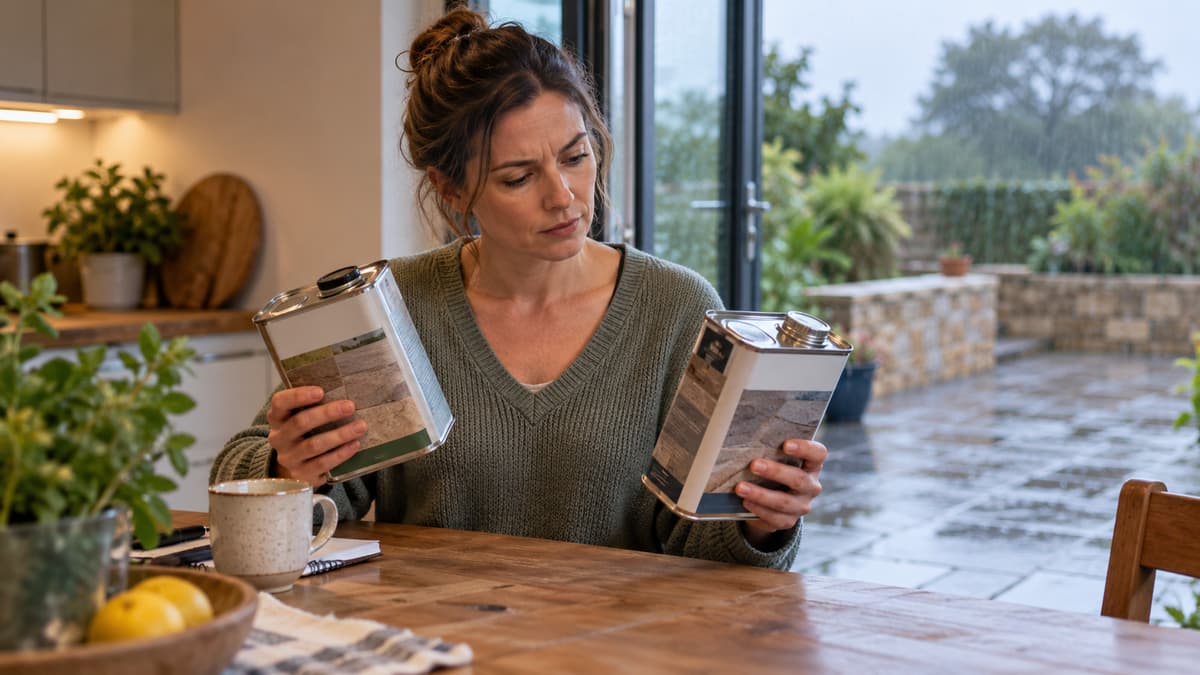
The carrier changes smell and the hazard label. A solvent tin can carry a flame, and water-based can still irritate.
What a stone colour enhancer costs in the UK
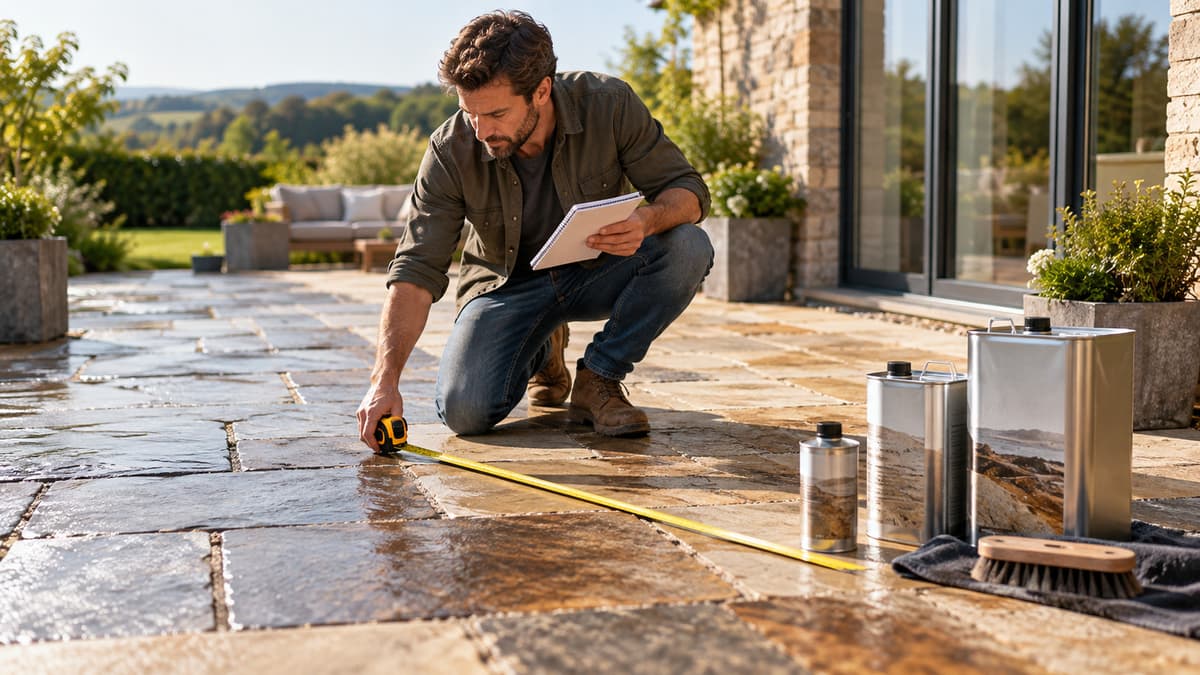
The shelf price leaves out coverage. Rates disagree, so a 50 ml tin and a 1 litre tin are different jobs.