Stone colour enhancer cost: budget for your patio
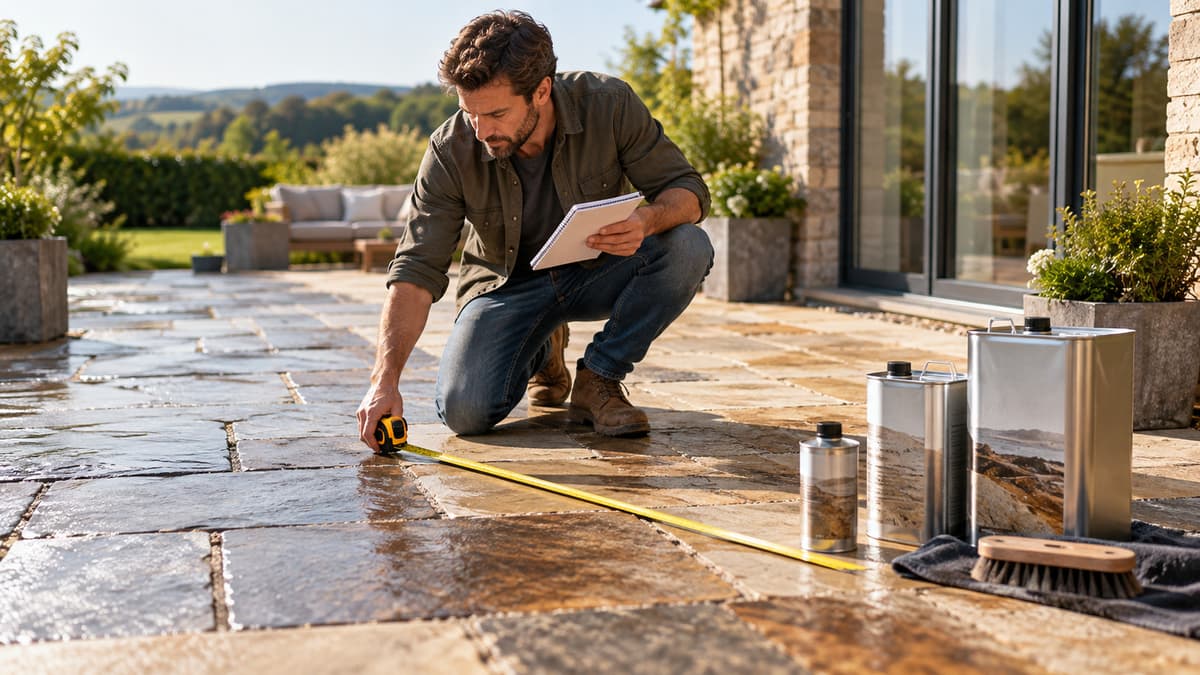
Work out stone colour enhancer cost per square metre from UK pack sizes, realistic coverage, porosity, a test patch and a possible second coat.
On this page

A stone colour enhancer cost cannot be judged from the number on the tin alone. A £15 bottle may suit a small hearth and still be useless as a patio budget. Measure the paving, use the coverage figure for that product and stone, and allow for preparation and a test patch before you buy.
In short
Compare suitable products by cost per square metre at a realistic coverage rate, not simply by pack price or price per litre. Manufacturer examples range from roughly 4–5 m² per litre for one sandstone treatment to 10–15 m² per litre for another, while a specialist intensifier can claim much higher coverage in the right setting. Those figures describe different products and must not be averaged.
Shelf price is not project cost
Observed amazon.co.uk prices on 15 October 2026 show why the cheapest-looking pack can mislead. Entry products were listed at £14.80 and £16.68, mid-priced packs at about £22.50 to £27.95, a three-pack of HG colour intensifier at £34.23, and a Libéron five-litre listing at £73.21. Listings can change, and similarly named products can contain very different quantities.
If the £14.80 HG bottle contains 50 ml, dividing £14.80 by 0.05 litre gives £296 per litre. That is arithmetic, not a claim that the bottle is overpriced. HG's technical information indicates coverage of about 100 m² per litre in suitable circumstances, so a small quantity may suit a compact, compatible surface. It does not make an indoor intensifier the right treatment for every outdoor patio.
At the other end, £73.21 for five litres equals about £14.64 per litre. That looks dramatically cheaper, but only if the listing genuinely supplies five litres, the treatment suits your paving and you can use enough of it before storage becomes an issue. Read the size selector and title together, because marketplace variants can make a large-pack price appear beside a different option.
Start with the stone colour enhancer comparison, then remove products that do not match the stone, location or finish you want. Only after that should you compare their likely project cost.
Coverage rates cannot be averaged
Coverage bridges tin price and patio price, and it is not a universal property of sealer. Azpects gives up to 25 m² from five litres for its sandstone sealer and enhancer, equivalent to up to 5 m² per litre. Libéron states 10–15 m² per litre for its colour-enhancing stone floor sealer. HG gives about 100 m² per litre for its colour intensifier for granite. Those figures apply to different formulations, surfaces and uses.
Do not average those three rates. The result would belong to none of the products. Porosity, texture, method and the number of applications all change consumption. Riven sandstone can drink in more liquid than dense, smooth stone, and porcelain generally does not absorb an impregnating treatment in the same way.
Use the lower end of the manufacturer's range for a compatible product, then check it on a representative test area. “Up to 25 m²” is a maximum under favourable conditions, not a promise that every five-litre tin will finish that area. If the instructions split first-coat and later-coat coverage, calculate each separately. Before a large tin, follow the stone colour enhancer buying guide, which puts stone identification ahead of price.
Measure the actual paved area
Multiply length by width for each rectangular section, in metres, then add the sections and subtract areas you will not treat, such as a planter bed. Split an irregular patio into simple rectangles rather than guessing from the garden's overall size.
Do not add 20 per cent waste as if you were ordering cut slabs. Buy only a modest contingency for rough paving and applicator loss. The test patch should set that margin.
A worked patio cost example
Suppose you have 18 m² of absorbent sandstone and are considering a compatible five-litre treatment listed at £73.21 with published coverage of up to 25 m² per five litres. At the maximum stated rate, one tin appears sufficient: 18 divided by 5 m² per litre equals 3.6 litres. Dividing £73.21 by 25 m² also gives a headline rate of about £2.93 per m².
That £2.93 figure is a worked calculation, not a quotation. If the test patch shows only 4 m² per litre, 18 m² needs 4.5 litres and the same tin still looks adequate, with little spare. A second full application at a similar rate means one tin is no longer enough.
Now consider a 4 m² feature area. The five-litre tin may offer the lowest price per litre but leave most of the pack unused. A one-litre compatible product at £27.95 with 10–15 m² coverage could cost more per litre yet less for the job. Pack efficiency is the quantity you need divided by the quantity you must buy, not the biggest container you can afford.
Compare confirmed pack price, a cautious square-metres-per-litre figure and the number of packs required. Round the pack count up to a whole unit, and keep a second application on its own line.
Treat the test patch as useful product
A test patch checks colour, sheen, absorption and technique on your paving, in an inconspicuous but representative place. Count that area in the quantity. A failed compatibility test may leave the rest of an opened pack unusable.
Test after cleaning and complete drying, not on a damp slab simply because the weather window is closing. The guide to applying stone colour enhancer explains why moisture and excess residue can affect the finish. Avoiding one failed full-patio application matters more than shaving a few pounds from the tin price.
Costs the tin does not cover
The tin is only one line. You may also need cleaner, a brush or suitable pressure-cleaning kit, an applicator, lint-free cloths, masking, gloves and eye protection. Coatings, black-spot growth, efflorescence, failed joints or damaged slabs may need work first. Follow the safety information on the product.
The paving still has to be cleaned, rinsed where required and fully dry, and you need a weather window for application and curing. A coat rushed on before rain can turn a modest purchase into a remedial job.
Labour varies by region, access, preparation and treatment, so a national average patio sealing cost is a poor guide. For professional work, get written quotes on the measured area and ask whether cleaning, joint repairs, two applications and VAT are included.
Delivery can change the pack decision. A heavy five-litre or 25-litre container may carry a surcharge or different returns conditions, while a small marketplace pack may be sold by a third party. Compare the checkout total, not just the search-card price. A larger tin is not a saving if you cannot store it as the label requires. Never pour surplus treatment into a drain.
Choosing a sensible pack size
Choose the smallest pack combination that covers your cautious requirement with a modest margin. A 50 ml pack can be the right buy for a tiny feature even at a high price per litre, because it avoids surplus. For an 18 m² sandstone patio, a five-litre system may make more sense once compatibility and real coverage are checked. A 25-litre trade tub means more cash, more storage and more leftover risk.
Coverage stated as 5–10 m² per litre spans a twofold range. A cost of £1.87 rather than £1.89 per square metre is false precision. Show a best case and a cautious case. The gap is the budget risk from absorption.
Identify the stone, decide whether you want enhancement as well as protection, shortlist compatible treatments, run the absorption and test-patch checks, then calculate packs. Price comes late, because the wrong chemistry has no useful cost per square metre. Dense or non-porous paving is a poor candidate for an impregnating product. Products Compared uses public UK listings and manufacturer information, not a laboratory test. Prices here are a dated snapshot. A qualifying amazon.co.uk purchase may earn us a commission at no extra cost to you.
Common questions
Why can a £15 bottle be an expensive option?
How much colour enhancer do I need for a patio?
Does porous stone cost more to seal?
Should I compare stone enhancer by price per litre?
Should I budget for two coats?
Can I return an opened tin if the chemistry is wrong?
What is excluded from the product cost?

Products Compared publishes British-English buying guides based on amazon.co.uk listings and public UK sources. We do not run a lab and we do not invent test scores.
Related articles

Water drop test for stone sealer: read the result
A drop on dry stone shows whether the slab can take an impregnator before you buy a colour enhancer.
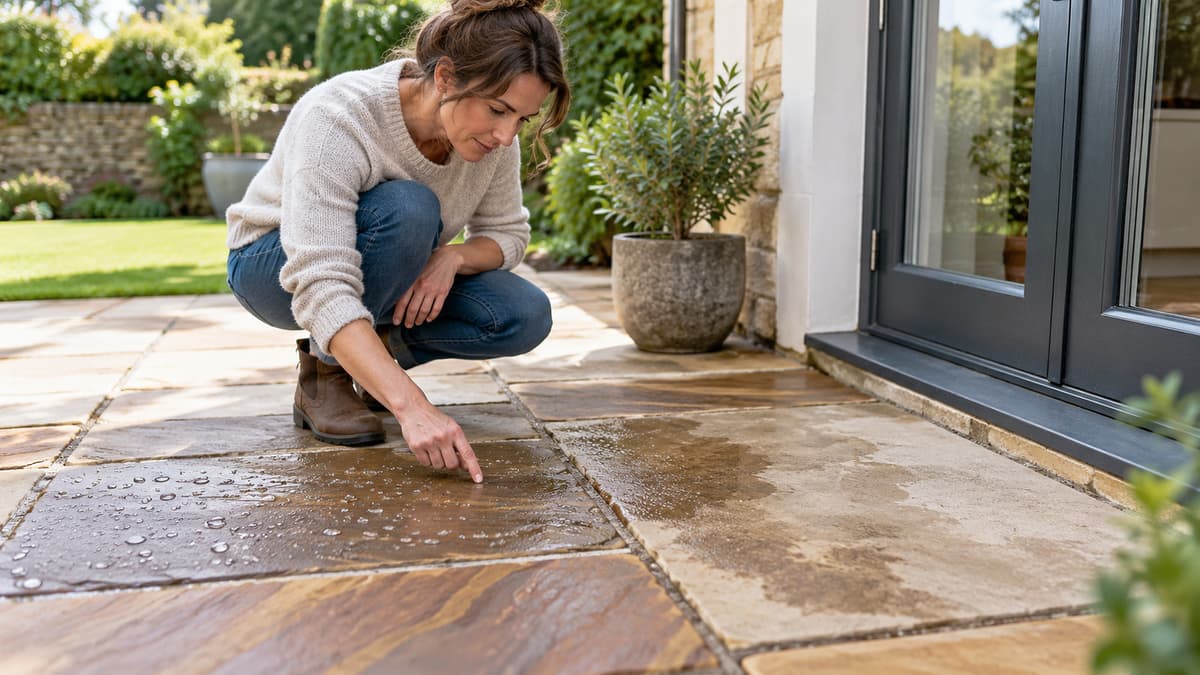
How often to reseal sandstone patio: the bead test
Makers quote two, three or five years, and the lines do not agree. A water-bead check decides the next coat.

Clean sandstone before sealing: lock in colour, not dirt
Algae, cement smear and old residue stop a new coat soaking in. Clean and dry the slab before you treat it.