Clean sandstone before sealing: lock in colour, not dirt

Clean sandstone before sealing so algae, salts, and cement haze stay off the treated face. Then match the dry wait to your tin, and keep acid off limestone.
On this page

The flags go dark when it rains and pale again by the next afternoon. The sandstone still has a green edge, a white bloom by the step, and dust in the riven face. Clean sandstone before sealing. Leave the dirt, and the colour enhancer soaks into the dirt as well as the stone, so the marks look sharper once the clean flags have darkened.
A colour enhancer on porous sandstone occupies the pores and holds the face it meets, so algae, cement haze, and salts stay in that face. The dry wait is printed on the tin. You follow the sheet that belongs to the bottle you open.
Products Compared read those maker directions, and the amazon.co.uk listings in this comparison, on 16 October 2026. We did not weather a patio for you. Links to amazon.co.uk use the tag pcuk26-21. If you buy through a link on the comparison, we can earn a commission at no extra cost to you.
In short
Clear growth, grease, old films, cement haze, and loose salts, then dry the sandstone for the wait on your tin. A colour enhancer will not hide what you leave, and it will not dry a damp slab. Keep acid off limestone.
Clean sandstone before sealing, or you lock the dirt in
The liquid rides into the capillaries, so porous sandstone moves closer to the colour rain gives it. That only helps on bare stone. Seal over a green corner and you lock the green in. Seal over a cement smear and the smear darkens with the flags.
Universeal wants the surface completely clean and dry. LTP says an impregnator on damp stone looks patchy, because water already in the pores leaves the enhancer nowhere to go. HG lists dust, grease, wax, and polish among the things that have to be gone before the intensifier goes on.
An old wet-look film or furniture oil blocks the new liquid and leaves a shiny skin on matt stone. Pale sandstone such as Kandla Grey often stays pale, and Universeal expects little change on that grey. Test a dry offcut before you commit the terrace. The outdoor bottles in this set are on the sandstone patio page.
Remove algae before sealing the patio
Green on a British patio is usually algae, with moss in the joints and lichen on older sandstone. LTP says clean organic growth first. Joint-It says remove algae, oil, and old coatings, then pressure wash. Seal over moss and the enhancer darkens the stone around it, so the green often looks sharper.
A stiff brush and a cleaner labelled for your stone will shift a light film. Scrape thick moss from the joints before you wash, or the jet drives fragments into the sand. Lichen etched into the grain will still show after one afternoon, and a tighter jet only opens the grain.
Old paint or a glossy coat is a different job from algae. If the film is still bonded, the new liquid sits on it. The colour enhancer versus sealer page separates a matt impregnator from a surface coating. Stop if you cannot tell an old sealer from bare stone. A dark oil halo is already in the pores, and an enhancer makes that halo darker.
Efflorescence before a colour enhancer
New sandstone often throws a white powder in the first months. Water brings salts to the face and leaves them when it evaporates. That is efflorescence. A harder white veil from cement in the joint is lime bloom or cement haze, and a colour enhancer dissolves neither. It can hold the film in place while the clean stone around it goes darker.
Resiblock says clean lime bloom before their urethane, and wait about eight weeks after laying. That eight weeks is their window for new work. Seal a patio laid last weekend and the salts are still moving, so the bloom can keep showing through as a white haze.
Dry-brush loose powder, rinse, and keep the enhancer off that dust. If you cannot tell salt from a failed sealer, stop. Kiln-dried joint sand holds wash water after the flags feel dry, and Universeal's dry surface includes those joints. If the lance blew the sand out, refill it and dry the new sand before you treat the patio.
Pressure wash, then wait
You cannot treat the patio on the day you jet-wash it. The lance leaves water inside the sandstone, and a slab can look dry by evening while the pores are still wet. LTP's patchy result is what a short dry-down looks like. Sealing damp stone, and sealing over dirt, are the two mistakes that spoil this job.
Keep each clock on its own sheet. HG asks for three days dry after the clean. The 50 ml listing we read, about £14.80 and 3.8 from 168 reviews, is worded for indoor floors and walls, so those three days apply when that bottle is the one you bought. Joint-It's four hours are a rain window, and they start only after the surface is already dry.
Resiblock wants a 48-hour dry spell, about eight weeks after laying, and about two weeks after you wash an older patio. A terrace cleaned for algae follows the two weeks. A patio laid this month follows the eight weeks. Folding the numbers into one week is how a damp patio gets treated. If rain is due inside your window, wait. Plastic over the flags often traps damp, so leave it off unless the maker says to cover. Wash with a moving fan and stop before the jet cuts the grain or empties the joints. The coat itself is on the how to apply page.
Cement haze, acid, and limestone
Many cement and limescale removers are acids. On some sandstone a labelled acid cleaner is allowed for cement haze. On limestone and marble the same acid etches a dull patch that rinsing will not polish back. HG uses a different cement remover for marble and other calciferous stone, and limestone is in that group. Mask a limestone coping, because splash from the sandstone cleaner is enough to etch it.
LTP says acid can still mark sensitive stone after a treatment. Where the label allows the cleaner, wet the face if the tin says so, keep the contact time, rinse, and only then start the enhancer's dry wait. A wire brush cuts the grain, and remover left to dry can stain. Thick mortar from laying day needs a mason. This page is not a dilution recipe for brick acid.
An HG tile cleaner before the intensifier belongs only where that cleaner names your stone, and the three-day dry still follows the rinse. A dark look from rinse water means the slab is still wet. Mona-Guard Nhance, 1 litre at about £27.95 on the listing we read, has bullets for drives and patios and no review line in the file. The bottles sit on the stone colour enhancer comparison.
When the cleaning is a contractor job
Wash the patio yourself when you can name the stone and the dirt is growth and grime. Call a contractor when you cannot tell sandstone from limestone, when a coating will not shift, when cement haze covers most of the terrace, or when the bloom keeps returning after brushing. A new patio still inside the laying wait is the same stop if the bedding may still be wet.
Where you can name the stone, keep this order.
- Name the stone, including any limestone coping.
- Remove algae, moss, oil, and old films before you rely on the washer.
- Wash with a fan, and stop before you cut the grain or empty the joints.
- Brush loose salts, and use a haze remover only if the label names that stone.
- Dry the slabs and the joint sand for the wait on your tin.
- Treat a hidden patch, and judge the colour the next dry day.
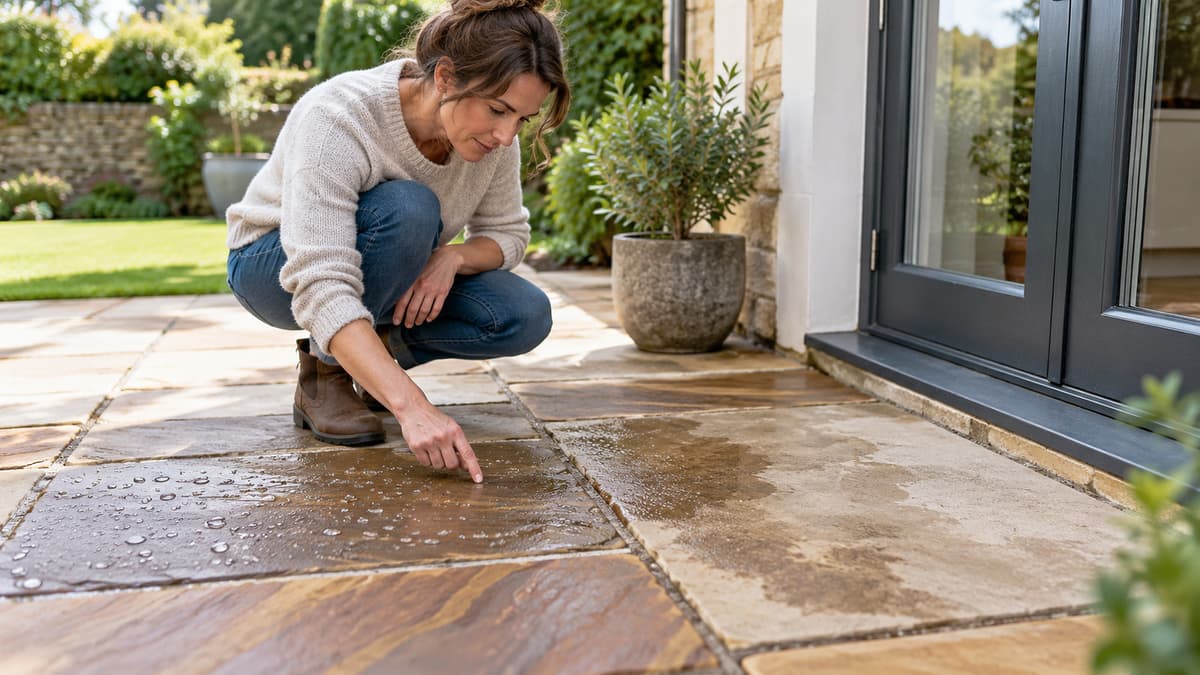
A patch that darkens the grime means the prep is unfinished, so clean those slabs and dry them again. The buying guide holds the water-drop check, and the drop only counts after this dry-down. Matching the remover now costs less than stripping a treatment that locked the algae and the salts into the face.
Common questions
Can I seal sandstone the day I jet-wash it?
Should I remove algae before sealing a patio?
What should I do about white salts on a new patio?
Can I use acid on sandstone or limestone?
How do I get cement haze off without etching the stone?
Does the joint sand have to be dry as well?
Will a colour enhancer hide dirt?
When is the preparation a contractor job?

Products Compared publishes British-English buying guides based on amazon.co.uk listings and public UK sources. We do not run a lab and we do not invent test scores.
Related articles

The water-drop test before you seal stone
A drop on dry stone shows whether an impregnator can soak in. Run it after the patio has dried.

White haze on sandstone after a colour enhancer
Damp stone, leftover sealer, and lime bloom can all look white. They are not one repair.
How often to reapply a stone colour enhancer
Makers quote different years. A water drop on a treated slab is a better check than a calendar.