Linseed oil rags fire risk: what to do with the cloths

Bundled oily cloths after a linseed stone floor sealer can heat on their own. Lay them flat outside to dry tonight. Heat builds in that pile of cloths.
On this page

You have just wiped a linseed stone floor sealer over slate, quarry tile, or York stone, and the cloths are heavy with oil. Deal with them before the tin goes away. In a bucket, a plastic sack, or a corner of the utility room, they can heat on their own. That heating is the linseed oil rags fire risk, and it belongs to oily cloths left in a bundle. The coat on the floor is a thin film with its own drying time.
Libéron's sheet says not to leave impregnated cloths in bundles, and to lay them flat outside to dry. Fire-service pages describe the same kind of incident with drying oils on wood. This page ties the warning to the oil-based interior sealer, and it stops where a listing's formula is unclear.
Products Compared read the amazon.co.uk listings in October 2026, plus Libéron's UK note, East Sussex Fire & Rescue, Northamptonshire Fire & Rescue, and British Coatings Federation guidance carried by HMG Paints. Nobody here lit a rag. Links to amazon.co.uk use the tag pcuk26-21. A purchase through the comparison can earn us a commission at no extra cost to you.
In short
Cloths soaked in Libéron's linseed stone floor sealer can heat in a pile, because the oil oxidises and the warmth stays in the bundle. Lay each cloth flat outside until it is dry. East Sussex Fire & Rescue describes that heating in piles of rags.
Why the linseed oil rags fire risk sits in the pile
Linseed oil sets by taking up oxygen, and the reaction gives off heat. On the floor that oil is a thin film, and the stone takes the warmth. East Sussex Fire & Rescue puts the hazard in a pile of rags, at about 120 degrees. That figure is theirs, not a measurement made here, and it does not mean every cloth in a hallway reaches it.
A ball of cotton holds the same oil with little free surface, so heat in the middle stays put. Three cloths in a lidded bucket are the arrangement Libéron tells you to avoid. The British Coatings Federation, via HMG Paints, says contaminated rags may self-ignite hours later when the safety data sheet warns of self-heating. These sources give no minute count.
A warm cloth in the heap is that reaction, with no match required. Spread the cloths. If you smell scorched oil or see smoke, get everyone out and call 999. Once a cloth has dried flat and the oiliness has gone, it can go out with the rubbish. No source here names an hour after which a damp ball is safe.
What Libéron prints on this sealer
Libéron's colour-enhancing stone floor sealer is an interior oil for York stone, slate, terracotta, and quarry tiles. Allow about 10 to 15 square metres per litre, and at least 8 hours before normal use. The sheet names linseed oil and says oily cloths may self-combust. Lay them flat outside. Do not leave them bundled.
On amazon.co.uk, Liberon Oil-Based Stone Floor Colour Enhancer, ASIN B09YMNDXHB, was the 1 litre oil-based matt tin at £23.95, with 5.0 from 7 reviews, two of them short UK notes. Those stars are Amazon's, not an editorial score. The cloth rule belongs to that oil tin. The wider set is the stone colour enhancer comparison. Listing B0DCZF1QG9 was £22.50, paint type Oil, gloss, 5.0 from 1, and its size field says 1 ml against a 1 litre title. If that bottle is the oil in your hand, the cloths follow the same rule, and the sheet in the box beats the size field.
A hall near 10 square metres can take one litre for a single coat, and the cloths you use to wipe excess still come away wet. Use several, and spread each one. The sequence sits on how to apply a stone colour enhancer. Do not park them under the tin while you look at the colour. If the label in your hand is newer than this page, follow the label. Exterior sandstone is a different job, set out under enhancer versus sealer. You still deal with the cloths when you come indoors.
What UK fire services add
Libéron's instruction is to lay the cloths flat outside. East Sussex describes heat in a pile of rags, and treats a thin finished coat as a different case. Northamptonshire Fire & Rescue, in a June 2020 warning after smouldering cloths, says to keep oily cloths out of indoor storage, to hang them so air can move, and gives water plus a sealed bag as one disposal route. Those lines sit beside Libéron's sentence. They do not replace it.
Where a safety data sheet says the product can self-heat, British Coatings Federation guidance carried by HMG Paints says rags may self-ignite hours later. Lay them flat, or keep them under water in metal. Libéron's sheet puts this sealer in that group. The same sentence does not belong on a water-based patio spray merely because both liquids darken stone.
One layer outdoors, with gaps, is what lay flat asks for. Hanging, with air on both faces, is the Northamptonshire option when you have no path. A dry plastic sack is a bundle. None of the notes gives a kitchen timer, so do the job the same evening. The fire pages are mostly about wood oils. If a forum disagrees with the sheet in the box, follow Libéron's PDF for this tin.
Which bottles sit outside this warning
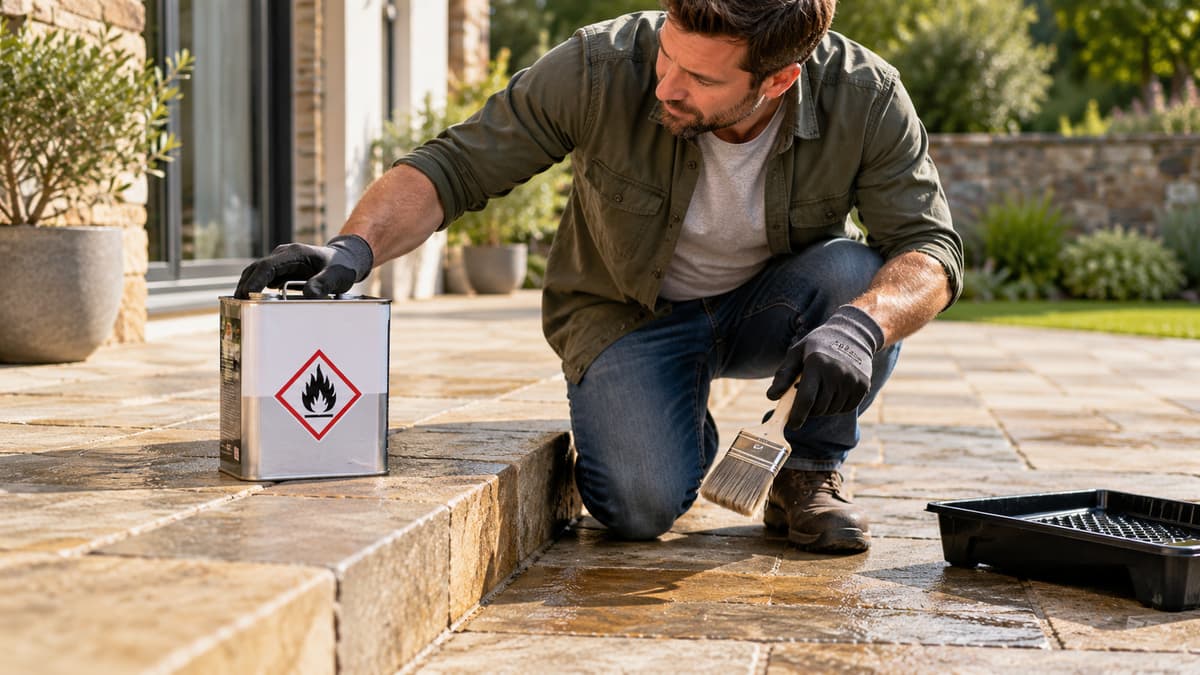
The warning covers Libéron's oil-based interior sealer. Mona-Guard Nhance and Black Diamond's CE-T listing are water-based in this set, and their fields do not state a linseed-cloth fire. A solvent tin can still carry a GB CLP flame mark, which water-based or solvent stone colour enhancer reads as carrier, smell, and outdoor use.
ASIN B0DCZHHN26, titled 5 litres, was £73.21 when read, and the material field says water-based. That conflicts with Libéron's oil page and with B09YMNDXHB. There is no review line, so leave the formula undecided until you open the bottle. If it is the linseed sealer, lay the cloths flat. If it names another base, follow that label. A mismatch with the website is a description point under the Consumer Rights Act 2015. HG's intensifier has its own sheet. A Danger mark on a patio tin is explained in what a GB CLP label is telling you.
Where the cloths go tonight
Spread every cloth in one layer outside, with gaps, before you look at the floor. Hours are the scale the coatings guidance gives, so a bundle left until after dinner is already late. Folds that touch are a small bundle. A rotary airer is sound if each cloth hangs alone. Keep the cloths off dry leaves, a timber stack, and the inside of a wheelie bin.
With no outdoor space, hang them so air meets both sides, out of a cupboard, or soak them under water in a metal container, or use water and a sealed bag. Finish the route you start. Northamptonshire's bag is a bag with water in it. A dry sack in the kitchen bin is a bundle stored indoors. Leave the cloths until they are dry and no longer oily. If they are still tacky the next afternoon, they stay out.
Hang an oily shirt the same way, then wash it once the oil has dried in the air. The floor waits at least 8 hours before normal use. Keep kneelers and dust sheets off the wet stone. Smoke, warmth, or a hot smell means you get everyone out and call 999.
Common questions
These are the questions people ask once the tin is open and the cloths are in their hand. Each answer stays with Libéron's sheet or the fire-service note named in it.
Common questions
Can the cloths catch fire with no flame?
Is the sealed floor going to ignite?
Where do I put the cloths tonight?
Can I bin them in a plastic sack while they are wet with oil?
Does this apply to a water-based patio spray?
Does it apply to the 5 litre Libéron listing?
What if I got oil on my clothes?
Who do I believe if the tin and a blog disagree?

Products Compared publishes British-English buying guides based on amazon.co.uk listings and public UK sources. We do not run a lab and we do not invent test scores.
Related articles
Patio sealer hazard label UK: what the tin means
A flame or the word Danger on a patio sealer is a GB CLP label. Follow the tin at home; COSHH is the work duty.
Water-based or solvent stone sealer: smell and label
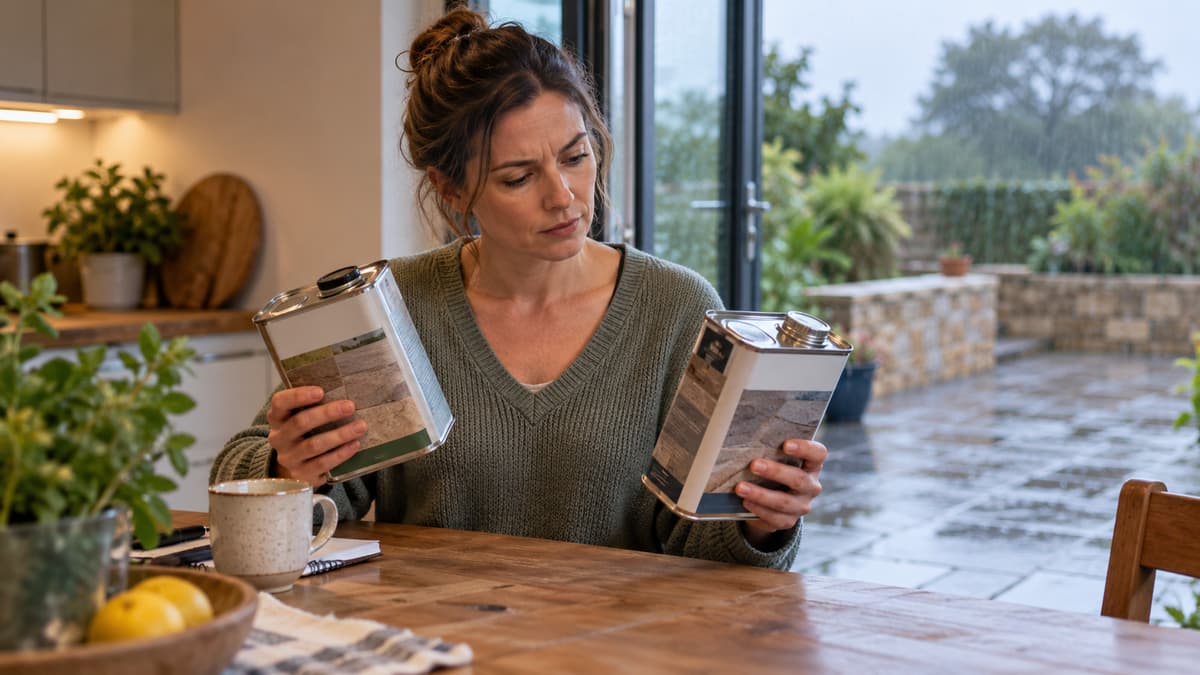
The carrier changes smell and the hazard label. A water-based patio spray sits outside this linseed-cloth warning.

White patches after sealing sandstone: what to do
White patches after sealing sandstone may be damp-stone haze, excess product, or efflorescence. Identify which before you clean.