Porcelain enhancer vs stone colour enhancer: two liquids

A porcelain enhancer forms a surface film. A stone colour enhancer has to soak into porous stone. Here is how to tell the two bottles apart.
On this page

You have a porcelain patio, or a run of Indian sandstone with a porcelain border, and you want the colour closer to the day the slabs went down. A porcelain enhancer vs stone colour enhancer mistake shows up after the liquid has dried, when one product needed open pores and the other was sold to stay on the face as a film.
Porous sandstone can take a matt impregnator and move nearer its wet colour. Low-absorption porcelain usually will not drink it, so the trade sells a film for a just-washed look. Products Compared read the amazon.co.uk listings for this set in October 2026. Nobody here ran a laboratory slip test or a weathering trial. If you buy through a link on the comparison, we can earn a commission at no extra cost to you. Those links use the tag pcuk26-21.
In short
A stone colour enhancer is for porous natural stone. It has to soak in, and the deeper colour is the stone with those pores occupied, judged on a dry test patch rather than by a varnish left on the face. A porcelain paving enhancer, including the two listings kept out of that comparison, is a film on a surface that barely absorbs, sold around a just-washed look. Keep each bottle off the other material.
Two paving materials, two liquids
Porcelain paving is fired and dense. A splash on a dry slab often beads until wind or a mop shifts it. Indian sandstone on UK patios is full of fine pores. Rain fills those pores and the flags go darker. That damp colour is what people want from a stone colour enhancer.
A stone colour enhancer in this set is an impregnator, or in a few indoor cases an oil. Lithofin's UK note describes the liquid riding into the capillaries and leaving material on those walls, so the stone looks darker because the pores are occupied. Pavingexpert separates that soak-in treatment from a coating, which sits on the surface. LTP's guide for unpolished natural stone says the impregnator has to absorb, and that a non-absorbent face, or one already full of moisture, cannot be treated with it.
A porcelain enhancer is built to remain on the face, because the tile will not take the impregnator in. Path and Patio treat film-forming coatings as liquids that sit on the surface. The just-washed wording is that surface look, not rain darkening sandstone from inside the pores. Pale sandstone such as Kandla Grey often stays pale even when the product has gone in. Universeal expects little change on that grey, and says its colour-enhancing sealer is not for non-porous glazed surfaces. Porcelain that sheds water sits in that refusal.
What those porcelain listings were
Two amazon.co.uk listings were read with the stone set and then kept out of the table. LTP Porcelain Tile Enhancer, ASIN B0DW7LFJ4Z, was a 5 litre film-forming pack at £139.99, worded around a just-washed look, and it names porcelain. Ecoprotec's porcelain paving enhancer, ASIN B0DW7XF9T3, was 1 litre at £34.99 on the same reading. Those figures are the listing prices at the time, not today's amazon.co.uk price. About £28 a litre against £34.99 a litre does not turn either bottle into a stone impregnator. Under the Consumer Rights Act 2015, goods should match their description, so the word porcelain on the tin is the description you can hold a seller to.
LTP also sells stone products, which is where the names collide. The unpolished-stone instructions say the liquid must absorb, and the external stone sealer guide describes a non-film-forming impregnator. That is the sandstone job. If the front of the can says porcelain and the look is just washed, you are holding the film. If the sheet says the product has to penetrate, and that you must remove excess from the face, you are holding the impregnator. A shared brand is not shared chemistry. A gravel dye from the same set stays out, so a mulch colourant is not compared with a patio impregnator.
What fails if you swap the bottles
A stone impregnator on porcelain beads, because there is no pore to empty into. Wipe late and you chase a tide mark. Leave it and the excess dries as a streak, a dull patch, or a shiny spot. Universeal says to take excess off within 20 to 30 minutes, and that a sticky or shiny patch means the excess was left behind. On porcelain almost everything you poured is excess. The patchy look is dried residue. It will not go in overnight.
A film-forming porcelain enhancer on porous sandstone stays on a stone that still moves moisture. Path and Patio say a wet-look film wants a dry, well-drained surface. A skin can look glossy at first and later peel, craze, or hold dirt. This page has no timed trial of those two removed tins on sandstone. Path and Patio say a gloss finish can raise the slip risk. This project measured no pendulum value. HG says its intensifier will not make the surface slippery. That is HG's claim about the HG bottle, not about LTP's porcelain film or Ecoprotec's tin.
If the instructions say the product must absorb, breathe, or be wiped while it is soaking, it is the wrong liquid for a tile that sheds water. The finish choice on stone is the subject of the colour enhancer versus sealer page. That page only flags porcelain.
Sandstone and porcelain together
A patio of Indian sandstone next to porcelain is two jobs that share a joint. Mask the line, treat one material, and follow that tin's own cure before you touch the other. Porcelain is often calibrated, with a crisp edge and a face that imitates stone. Riven sandstone varies in thickness and drinks water at the arris. If you cannot tell them apart after rain, stop. Mixed porcelain and natural stone is a case for a paving contractor.
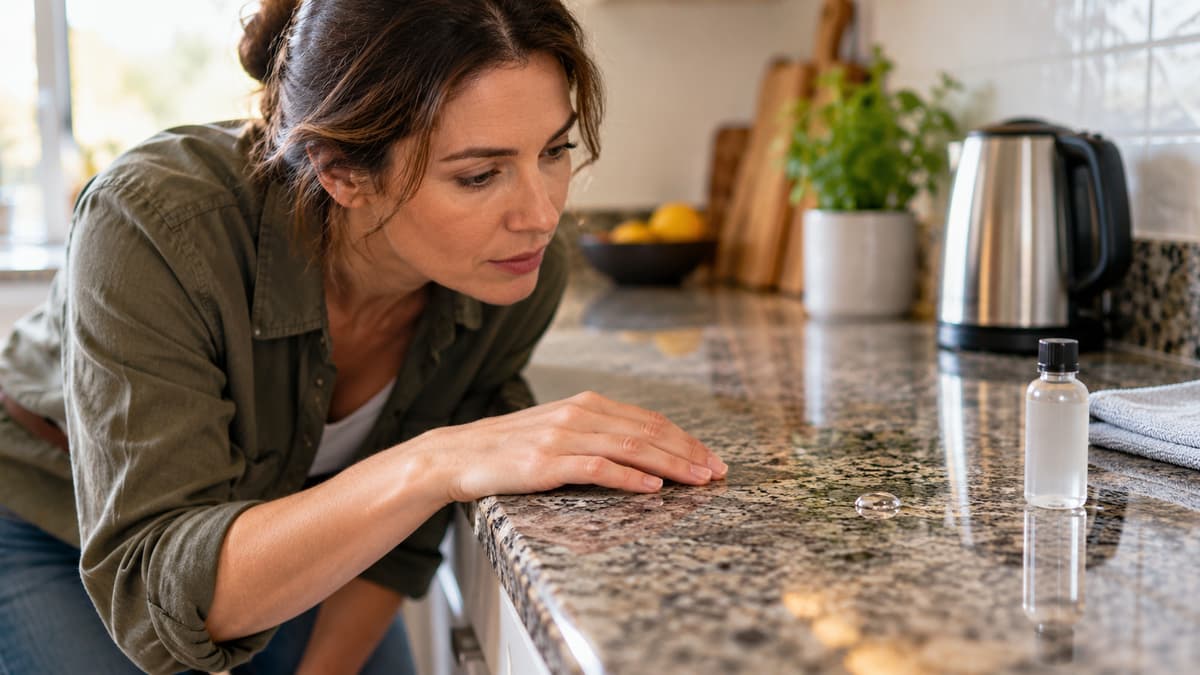
On a dry, clean face, put a few drops on each material and wait. Thirsty sandstone often takes the water within a minute. Porcelain in this problem usually holds the drop. Dense granite can hold a drop as well, and Kandla Grey can drink water and still refuse to go much darker. A drop that sits is a reason to leave the stone colour enhancer closed and read the porcelain label instead. The buying guide uses that check to keep porcelain off the stone shortlist.
Cure times in this set disagree, so you follow the tin in your hand. HG talks about walking after 4 hours and full use after 3 days. Libéron wants at least 8 hours on its interior stone floor sealer. Universeal says to keep the treated face dry for up to 72 hours. There is no honest rain window here for the two tins that were removed. Do not lay an impregnator over a film that has already closed the face. If the sandstone is damp, wait. Trapping that damp under a porcelain-style film is the worse error. Test a dinner-plate patch on each material and judge it the next day in daylight.
Where to read the stone products
When the water drop disappears into sandstone, slate, limestone, or another porous stone, use the stone colour enhancer comparison. Nine amazon.co.uk listings stay in it. Porcelain is outside those nine so the table does not pretend a film and an impregnator are the same purchase. HG Natural Stone Colour Intensifier, 50 ml, at £14.80, shows 3.8 from 168 reviews. It is an indoor intensifier for granite, blue stone, and other natural stone. Fifty millilitres will not finish a patio, and the bottle is the wrong tool for porcelain paving. It leads this card only for absorbent natural stone indoors.
Mona-Guard Nhance, 1 litre at £27.95, is the pack whose bullets name drives, patios, and natural stone, and call the liquid water-based. The saved listing has no review line. Libéron's colour-enhancing stone floor sealer is an indoor oil for York stone, slate, terracotta, and quarry tiles, at about 10 to 15 square metres per litre. Leave that oil off exterior porcelain. Outdoor porous sandstone is covered on the sandstone patio page. Cleaning, a dry face, a thin coat, and wiping excess are the sequence on how to apply a stone colour enhancer. Those pages assume the slab can absorb. The porcelain tin names porcelain. The stone tin names stone.
Common questions
I only have porcelain slabs. Should I use the stone colour enhancer comparison?
Can one bottle treat Indian sandstone and porcelain on the same patio?
What does a just-washed look mean on a porcelain paving sealer?
Can I use a stone sealer on porcelain?
Will a stone impregnator go patchy on porcelain?
Is a film on porcelain the same slip question as a matt impregnator on sandstone?
Why were the LTP and Ecoprotec listings removed?
Can I darken porcelain the way rain darkens sandstone?

Products Compared publishes British-English buying guides based on amazon.co.uk listings and public UK sources. We do not run a lab and we do not invent test scores.
Related articles
Colour enhancer not working on granite: why it stayed pale
Dense granite often stays pale. A drop that sits is the same warning porcelain gives when it will not absorb.

Water drop test for stone sealer: read the result
A drop on dry stone shows whether an impregnator can soak in before you buy a colour enhancer.
Stone colour enhancer cost: budget for your patio
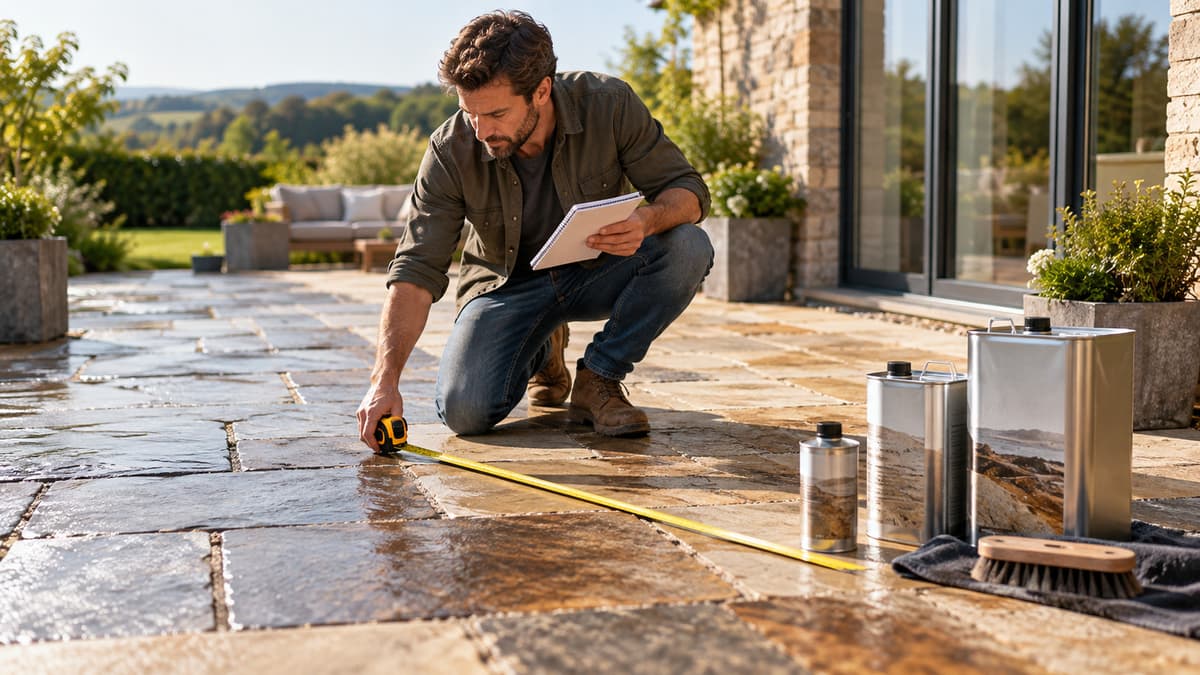
Work out stone colour enhancer cost from UK pack sizes, realistic coverage and a test patch.