Colour enhancer not working on granite: why it stayed pale
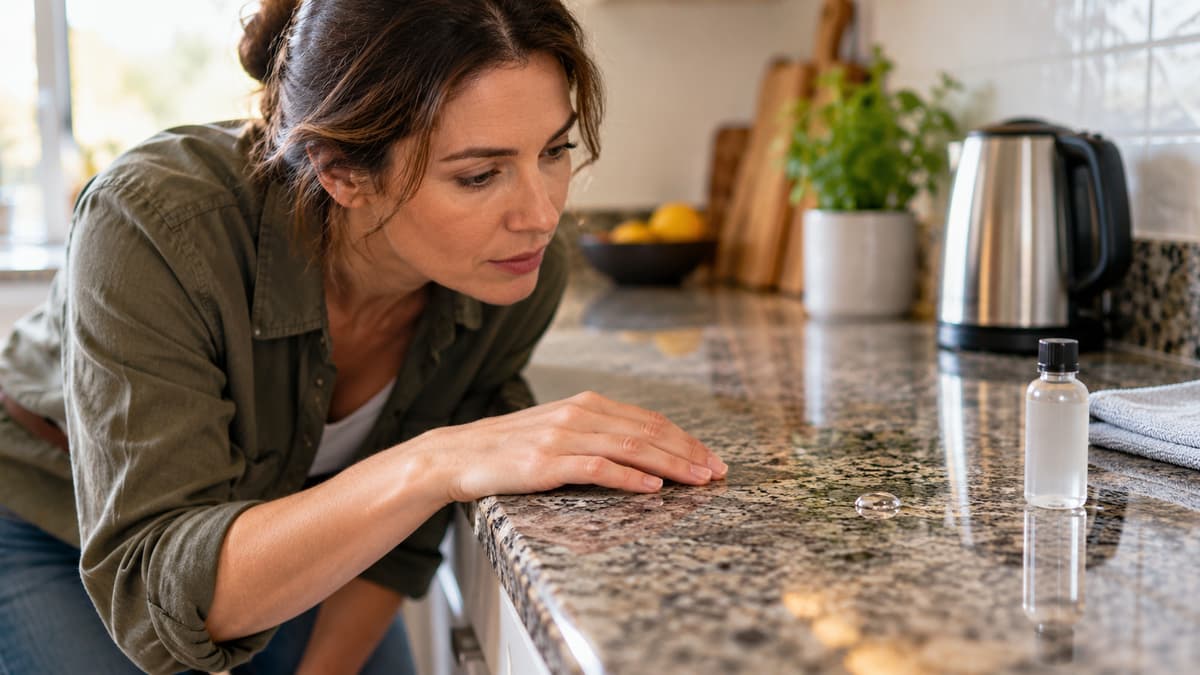
Dense granite often stays the same colour after a colour enhancer. Test the underside first, read the UK reviews of the 50 ml HG bottle, and stop there.
On this page

You finished the wipe, waited, and the granite worktop still matches the untreated patch beside the kettle. A colour enhancer not working on granite usually means the face never took the liquid in. These products deepen colour by occupying pores, the way rain darkens open sandstone. A polished or very dense granite often has too tight a face for that change to show, even when you followed the tin.
Stop after one honest test. Extra coats of the same bottle sit on a face that has already refused the first. Products Compared read the amazon.co.uk listings and the UK review file for this comparison in October 2026. We did not measure your slab in a lab. Links on the comparison use the tag pcuk26-21. If you buy through one of them, we can earn a commission at no extra cost to you.
In short
A colour enhancer needs open pores, so dense granite, and a polished worktop in particular, often stays the same shade. UK reviews of HG's 50 ml intensifier show a sink or a fire-back tile sometimes improved, while worktops and a sun-bleached sill often stayed pale or went greasy. When a dry test patch matches the bare stone, the test is over.
Granite often does not drink the liquid
The deeper colour is the look of wet stone after the face has dried. A granite worktop is tight, a factory polish closes it further, and a granite worktop colour intensifier still has to find a way in. When water beads and sits, the bottle has nowhere to go. Pavingexpert's check is a few drops on dry stone: gone within a minute means a thirsty face, and still sitting after three or four minutes means a less absorbent one. Slate and some granites may barely drink.
Garden Engineering states the same limit: dense stone may not take enough sealer to matter. LTP says a non-absorbent surface, or one already full of moisture, cannot be treated with an impregnator. HG sells this intensifier for granite, blue stone, Belgian hardstone and other natural stone, and the UK page talks about worn patches, which can open enough to take a little liquid. The buying guide uses the water drop before you commit an afternoon. Flamed or cleft granite, or a sill that darkens under a wet cloth, can be more open. Read a hidden patch the next day, dry.
Polished face and honed edge
A polished granite sealer sold as an impregnator meets the tightest skin on the slab. A honed edge, or the arris by the upstand, can be slightly more open, so a wet corner darkens while the field stays put. Read the field you cook on. HG's worn-patch wording covers dark granite, Belgian hardstone and bluestone that have already lost that skin. If only the edge shifts while it is damp, leave the top alone.
What UK reviews of the HG 50 ml bottle actually say
The listing in this set is HG Natural Stone Colour Intensifier, 50 ml, ASIN B0012719HI, at £14.80, with 3.8 from 168 reviews. The file is mostly United Kingdom. A few German texts at the end belong to another market, and Black Diamond's large pool is mostly United States and Canada writing about a different bottle. The 3.8 from 168 is the figure for this tin. It averages every stone in the sample, and it is not a granite-only percentage.
The UK texts split by surface. Slate floors, wet-room slate, bath surrounds, a limestone hearth on the two-bottle listing, and black limestone after a limescale remover are praised, along with a granite sink and a faded granite fire-back tile. Granite worktops and a sun-bleached sill are the disappointment: little or no darkening, sometimes a greasy film, and in one case a patch that would not then take a different product.
Clean the stone and dry it for three days, or for 24 hours if floor heating has been on, with the heating off for 12 hours first. Wear gloves, use a thin coat, and wipe surplus at 5 to 10 minutes. Repeat only on very porous stone. Coverage is about 100 square metres per litre, so 50 ml is about 5 square metres only where the stone drinks. The £24.62 twin and the £34.23 triple are the same liquid, at the prices on the listings we read.
The best stone colour enhancers page sets that sample beside the other tins. The stone colour enhancer comparison is the next read when a hidden patch does darken. Fifty millilitres is a sill or a worktop test, and it will not treat a patio.
A greasy film is surplus on the face
A greasy film on a granite worktop is liquid that stayed on the surface. The darker colour, when this family of products manages it, sits inside the stone. A smear you can still move with a fingertip an hour later never went in. HG tells you to wipe surplus at 5 to 10 minutes. Leaving the coat overnight is how the smear sets.
LTP's sheet for its own colour intensifier says a non-absorbent surface cannot be treated, that excess can oxidise into an unsightly gloss, and that a hardened intensifier is very difficult to remove. HG reserves another coat for very porous stone. Keep the trial to a coaster-sized patch, air the room, and wear the gloves. This listing does not establish a water-based carrier. While the film is soft, lift it with a dry lint-free cloth and stop. Once it has set shiny, ask a mason. This page has no stripper, and a solvent on a food-preparation surface is the experiment to skip.
Leave a failed patch alone
One UK review is enough to pause a second brand. After the HG coat, that granite patch would not take a later product. The colour had stayed put, and the face had still changed. A patio tin, or a second intensifier, does not open pores the 50 ml bottle could not enter. A patio impregnator poured over the pale area can close the face for a later product.
Under the Consumer Rights Act 2015, sections 9 and 11, goods should be of satisfactory quality, fit for a particular purpose you made known, and as described. A shade the stone cannot produce is not, by itself, a faulty tin. Where the listing promised a result and the bottle did something the description rules out, ask the retailer, and keep the tin.
The how to apply a stone colour enhancer page covers the wipe and the wait on stone that can absorb. A clear impregnator, a colour enhancer and a gloss coating are different finishes, and this set has no slip figure for a film. That choice is on the colour enhancer versus sealer page, on a fresh patch.
Test the underside before the show face
Use the underside, or a back edge you will not see. The stone should be dry. After a wash, HG's wait is three days, or 24 hours where floor heating has been on, with the heating off for 12 hours before you start. A worktop that has been dry all week does not need a fresh wash, because washing it starts that clock again.
- Put a few drops of water on the hidden face and wait three or four minutes.
- If the drops are still sitting, stop the colour test there, because an impregnator needs the path the water failed to find.
- If the water has gone in, spread a thin coat on a patch about the size of a drinks coaster and wipe the surplus after 5 to 10 minutes.
- Read it the next day, dry, in daylight, against bare stone beside it.
- If the two match, leave the worktop untreated and leave the larger packs of the same liquid on the shelf.
Judge the dry colour. HG's optional polish after 30 to 40 minutes is for gloss on stone that has taken the product, and polishing a coat that never soaked in only burnishes the surplus. Call a mason when the polish will not give the colour, when a film has already set, or when the patch refuses a later product. Honing changes the sheen and the edge, and this page has no grit sequence. Until a mason has looked at the joint and the drainer, leave the patch as it is.
Common questions
I followed the instructions and nothing changed. Is the bottle bad?
Should I put on three more coats?
It went greasy. What does that mean?
Can I use a different brand on the same patch?
My slate floor worked and the granite sill did not. Why?
Is polished granite different from a honed edge?
Should I test the underside of the granite?
When is a worktop a stone-mason job?

Products Compared publishes British-English buying guides based on amazon.co.uk listings and public UK sources. We do not run a lab and we do not invent test scores.
Related articles

Porcelain enhancer vs stone colour enhancer: two liquids
Porcelain needs a surface film. Dense granite still has to pass a soak-in test before any stone colour enhancer.

Water drop test for stone sealer: read the result
A drop that sits on dry granite is the warning to stop, before a colour enhancer goes across the worktop.
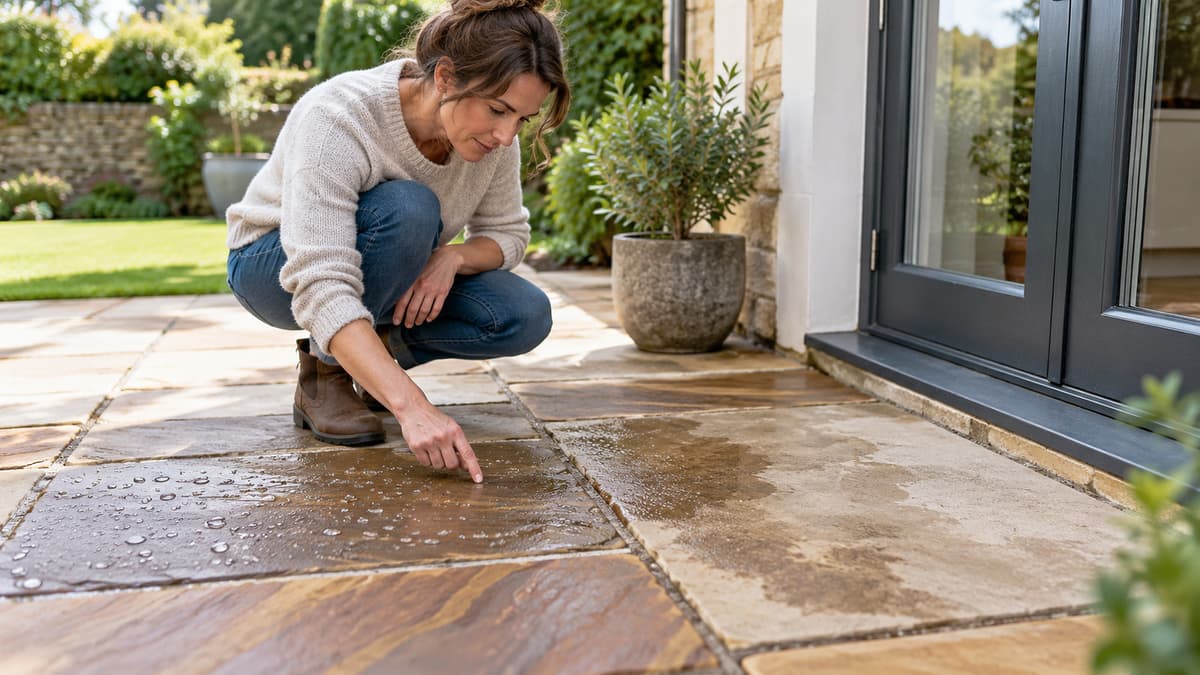
How often to reseal sandstone patio: the bead test
Makers quote two, three or five years. On Indian sandstone, a water-bead check decides the next coat.