How to fix a gargoyle to a garden wall: brick first

Drill sound brick, not the mortar. A small keyhole gargoyle can hang on one stainless screw you can unhook. A heavy casting needs two fixings, or a mason.
On this page
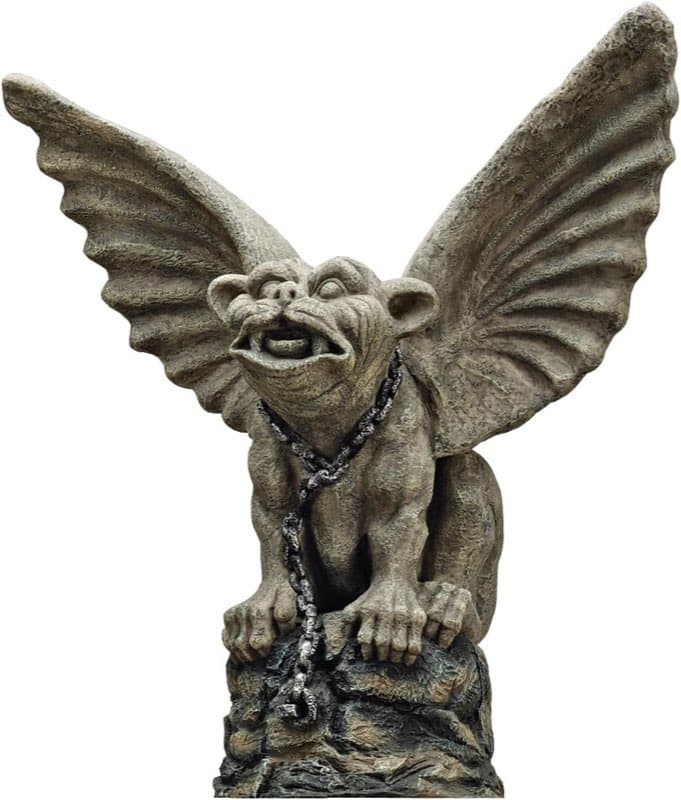
The casting is on the patio, the brick looks solid, and the only hole in the back is a keyhole the size of a screw head. How to fix a gargoyle to a garden wall starts with that weight. A piece you can lift off again with one hand can hang from one stainless screw driven into the brick. A body you have to hug, or an old stone spout that already belongs to the wall, is a different job. A plug in the mortar joint is how the light one falls on a wet day.
This is for a small cast ornament on brick you can see. It is not a church waterspout, and it will not pin loose stone back into a house. Products Compared used JJB Castings' garden gargoyle page, DIY Doctor's masonry guide, YARDART's note on brick-wall fixings, and section 8 of the National Association of Memorial Masons' code, which covers plaques. Prices are the amazon.co.uk gargoyle rows filed on 19 October 2026. We did not load a wall in a lab. A qualifying purchase through our links can earn us a commission at no extra cost to you.
In short
Weigh the casting first. A small keyhole gargoyle can hang on one stainless or exterior-grade screw in sound brick, with the head left proud so you can lift it off. Drill the brick, keep the hole out of the mortar, and clear the dust before the plug goes in. Two fixings share the load when one screw would be the only thing above the path. Stop if the brick powders, if you cannot rule out a cable, or if the wall is listed and you have not asked the council.
Weigh the casting before you drill
Pick the casting up before you fetch a drill. One hand that can hold it, mark the brick, and later lift it off the screw means a single fixing can be enough. Needing both arms, or a rest on a ladder, means one screw is the wrong plan. Health and Safety Executive guidance is about the whole awkward task, not a gargoyle weight on a packet. If the piece will not stay steady while your other hand works, put it on the ground.
JJB Castings lists a Jesmonite garden gargoyle about 13 by 12 by 6 cm, with a keyhole and no screw supplied, at £14.99. Choose a screw for that slot. A head narrower than the slot's neck lets wind walk the casting off. A head screwed tight to the brick stops the slot dropping on. Leave it proud by about the thickness of the back, then lift the piece off without a twist.
The top pick in our gargoyle comparison stays on the ground. The Design Toscano Chained Cathedral, EU35033, was £29.95 on 19 October 2026, with 4.4 from 140 ratings, and its uses line says Garden. Bullets say resin with crushed stone, about 42 by 24 by 43 cm and 2.25 kg. Item weight is 2.27 kg. Another line says 12 by 12 by 35 cm, so use the size that matches the weight. UK reviews call it light, and wind has knocked one off a rockery. Weigh it on the patio, or bring it in during extreme weather. The best garden gargoyle page explains why this garden row outranks a higher-star indoor figure. Allow about half an hour, as a rule of thumb, and wear eye protection once the masonry bit turns.
A keyhole on sound brick
A keyhole on sound brick is one plug and one stainless or exterior-grade screw, with the head still visible. Copy DIY Doctor: match the plug to the screw, drill the brick, keep clear of the joint, go a little deeper than the plug, and clear the dust. YARDART's brick note adds exterior-grade or stainless metal, and treats the load on a packet as guidance only.
Complete the job in this order.
- Mark the keyhole on the centre of a brick, clear of the mortar, with the casting held where it will hang.
- Wear eye protection, then drill a masonry hole a little deeper than the plug, using a bit sized to that plug.
- Blow or brush the dust out so the plug can grip a clean socket.
- Drive a stainless or exterior-grade screw until the head stands proud by about the thickness of the casting's back.
- Hang the gargoyle and lift it straight off again, which shows the slot still works.
- If it jams, or a sideways tug slides it free, change the head or the gap.
That proud head stops the casting walking off, and it leaves room for the slot to pass over. The back plate, seen edge-on, is a workable rule of thumb. You also need to see bare brick. Render can make a plug feel firm when it is only in the coat, so stop if the joints are hidden. Keep the hole to a little more than the plug depth, and stop at the near face of a boundary wall. A fence board splits around a masonry plug. The resin or cast stone gargoyle page separates a light resin body from cast stone, which asks for a heavier fixing than this paperback screw.
Two fixings and stainless steel
Two fixings are for a casting that would otherwise have one screw between it and the path. YARDART says many pieces need two, and that the printed load is still only guidance. Put each screw in its own brick, in stainless or exterior-grade metal. Two plugs in one mortar bed fail together. If the lower screw carries the weight and the upper one only touches, you still have a single fixing. A zinc-plated indoor screw rusts, stains the brick, and can swell until the slot locks and the casting snaps as you lift it. Match each plug to its screw from the packet. A maker's bracket is sound when every hole is in brick and you can still take the piece down.
A downspout is a different wall job. The Design Toscano Ranier, CL4370, was £14.56 on 19 October 2026, with 4.7 from 284 ratings. Uses says Home and mounting says wall mount. Bullets say about 40.5 by 20.5 by 12.5 cm and 2.25 kg, while the item weight is 1.36 kg. No pipe opening is stated, and UK buyers have reported a pipe that did not fit. Measure it on the gargoyle downspout page before you drill for that mouth.
Keep a way to unhook a light piece before frost. Design Toscano says freezing water in crevices can crack designer resin, and that portable statues should come indoors in freezing weather. A fixing you cannot undo turns that care line into work on a ladder. Storage for the freestanding statue, and the point where a listed wall stops you, sits on the resin gargoyle winter care page. The Chained Cathedral wants weight on the patio, or a shelf indoors.
Soft brick, cables, and glue
Soft brick produces dust, a bit that sinks, and a plug that spins. Stop in that hole. A longer screw only widens the socket. Try a harder brick, or leave the gargoyle down. Resin anchors are made for weak masonry, and they are the wrong next product when a paperback-sized ornament meets a wall that powders across several courses. The wall is the fault. Resin in one hole will not give the casting a sound support, and it will not show you a cable.
Check for cables before the drill comes out of the box. YARDART says to look. Sockets, porch lights, bells, alarm boxes, and conduit mark a line to avoid, above and below the fitting. A detector helps and can still miss a cable in solid brick. If the route is unclear, use a pier or a step. A nicked cable is a dead circuit and a hole you then have to make safe. No plug size repairs that.
Glue fails as the only fixing above a path. It sticks to paint, then damp lets the paint leave the brick, and the casting drops whole. A bead is only a rattle-stop behind a stainless screw you have already tested by lifting and tugging. The set's hanger, about 160 g, was £6.99 with 2.6 from 24 ratings, and reviews say the hand does not hook. Those reviews reach for glue, ties, and string, and the pieces still break. Old stock brick can crush while it looks sound. New brick can hide a lighting cable. A sound fixing is a plug that grips in a wall you can account for.
When the job leaves DIY
Stop for a listed wall, for a casting you cannot hold, or for a support that should be a dowel or a corbel. Ask the local planning authority before you drill or glue listed fabric. This research did not find a rule that every garden gargoyle is permitted development. An ordinary garden pier is not the face of a listed house. An object fixed to a listed building can fall inside the listing. The council can say whether your wall is in that group. A screw you could remove later is still a hole, so ask before you make it.
The memorial masons' code, in the section on plaques, supports them with a corbel or a stainless dowel set at least 10 degrees off horizontal. That is trade practice for plaques. It is not a law about a garden grotesque, and it is not a drill angle to copy. If a mason would bed a dowel for the weight you are holding, the keyhole method is finished. Book the mason, or keep the ornament where a fall cannot hit the path.
A built-in stone waterspout that moves, or a crack running into the brick, needs a masonry repair. A resin face beside it can hide the stain, and it does not stop water in the wall. Eye protection, a plug that grips, and a screw you can undo are the limit of this DIY job. At about 2.3 kg the freestanding statue stays off the ladder, because wind moves it and a fall snaps a wing. Weigh it on your paving, or bring it in.
Common questions
If you can lift the casting with one hand, one stainless screw in the centre of a brick is the job. If you cannot hold it, or the brick powders, leave it down or call a mason. The questions below cover mortar, rust, cables, glue, and a listed wall.
Products Compared prepared this on 22 October 2026 from the gargoyle rows filed on 19 October 2026. We did not load a wall in a lab. A qualifying purchase through our links can earn a commission at no extra cost to you.
Common questions
Can I hang a garden gargoyle on one screw?
Should the screw go into the brick or the mortar?
Will an indoor screw rust on a garden wall?
What if the brick is soft and the plug spins?
How do I know a garden wall has a cable in it?
Is glue enough to hold a gargoyle on brick?
Does a listed house need consent before I drill for a gargoyle?
When should a mason fix the gargoyle instead of me?

Peter F. is the editor for DIY & tools at productscompared.co.uk. Comparisons in this category are checked against amazon.co.uk listings, review evidence and public UK sources.
Related articles

How to move a heavy garden pot without hurting your back
How to shift a large ornament without treating the HSE 25 kg figure as a hard limit for awkward clay.

Why a terracotta amphora cracks in a British winter
A frost-resistant amphora still cracks when water freezes in the clay and the drain is blocked.
Draining a garden fountain before the first hard frost
Empty the bowl and store the pump before a hard frost. A wall bowl stays on its fixings while you sponge it.