Independent comparisons. We may earn from shop links. More info

How to Use a Splitting Wedge

Updated: 15 October 2026

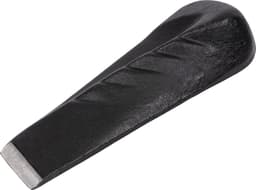
The round for the wood burner is on the ground, the steel wedge is in one hand, and the hammer is moving. How to use a splitting wedge is the order that gets your fingers clear of that swing. Seat the tip in a check in the end grain, take your hand away, and strike the face square. If the wood stops opening, you stop, and a second wedge goes into the crack. The Products Compared editorial team read the amazon.co.uk listings in our [splitting wedge comparison](/hub/forestry-tools/splitting-wedge), plus HSE's note on eye protection and Sealey's axe instructions. We did not lab-test the steel. A qualifying purchase on amazon.co.uk can earn us a commission, at no extra cost to you.

The round for the wood burner is on the ground, the steel wedge is in one hand, and the hammer is moving. How to use a splitting wedge is the order that gets your fingers clear of that swing.

Our top picks

On this page

Set the round and find a check

Set the round on firm, level ground, or on a wide block that will not tip, and keep other people back from the swing. The face for the splitting wedge is the end grain, where the growth rings show. A round that can roll will shift when you strike, and the wedge shifts with it. Look for a check, the drying crack running in from the bark, and put the tip there, along the grain you want to open. On a smooth face, start near the rim. Reviews on amazon.co.uk often describe a wedge stuck in the centre of a round after a start in the middle. Seat that tip until the wedge stands without your hand.

Seat it before you swing

The wedge has no handle, so you hold the steel only while you tap. UK reviewers on these amazon.co.uk listings seat it with a club hammer or a lump hammer, walking the tip into the check. Stop when it stands on its own, and take your hand away before the sledge moves. A lean means it is not seated, so give it another light tap down the line of the steel. A full swing while your hand is still on the body is how a miss meets your fingers. Once it stands, the listings name a sledgehammer or a maul. A claw hammer is a poor stand-in, because the face is small and the handle is light for steel on steel.

Strike the face, not the edge

Hit the striking face square, in line with the wedge. A corner blow, or one that arrives at an angle, can send the wedge off the round. If the rim has mushroomed into a lip, stop, because that lip throws fragments. Do not hit the wedge with the back of an axe, and do not use an axe as a hammer. Sealey's axe instructions say not to drive a wedge that way. Wear impact eye protection before the hard blows. The Health and Safety Executive treats projectiles as an eye hazard. Keep the steel wedge out of a chainsaw kerf. When it stalls, stop, and do not lever it free with the hammer handle.

When it sticks, stop

When the crack stops growing, or the wedge sits halfway and further blows only ring the steel, stop. Drive a second wedge into the crack, off to one side, so the two push the split apart. Leave the chainsaw out of the rescue. Cutting the steel free puts the chain against the splitter, and that recovery is the one to refuse. Leave the hammer handle out as well. If the second wedge also stops, leave the round. Call someone whose work it is when the wood is a standing tree or a hung-up stem, when people are in the swing path, or when a broken wedge leaves hardwood you cannot steer. A pinched knot is the case on splitting knotty hardwood. If you own only one wedge, choose a second from the splitting wedge buying guide, and see which to keep on best splitting wedges.

Common questions

Where on the log do I start?
Start on the end grain of a round already cut to length, with the tip in a check if you can see one. A check is a drying crack in from the bark, and you follow it along the grain. On a smooth face, start near the rim, because amazon.co.uk reviews often describe a centre start as a wedge stuck halfway. A standing tree is outside this method.
When can I take my hand off the wedge?
Take your hand off once light taps with a club hammer or a lump hammer have left the wedge standing alone. Those taps are the only time you hold the steel. A full swing while your hand is still on it is how a miss meets your fingers. If it leans, tap it straight again. The sledgehammer or maul waits until your hand is clear.
Can I hit the wedge with the back of an axe?
No. Do not strike the wedge with an axe poll or use an axe as a hammer. Sealey's axe instructions say not to drive a wedge that way. The swing belongs to a sledgehammer or a maul, and seating taps belong to a club or lump hammer. Put the axe down before you start.
What do I do when a splitting wedge sticks halfway?
Stop hitting the stuck wedge. Drive a second wedge into the open crack, to the side of the first, and let the pair open the split. Refuse another heavy blow, including the hope that one more strike will free it. Do not cut the steel out with a chainsaw or lever it with the hammer handle. If the second wedge also stops, leave the round.
What is the point of eye protection when splitting logs?
Wear impact eye protection before the hard blows, because a struck wedge can throw steel. The Health and Safety Executive treats projectiles as an eye hazard. A Rolson review title on amazon.co.uk names safety goggles, and Amtech reviews include a steel shard in a shin. Steel-toe boots lower that risk compared with light shoes, and this page sets no glove standard.
When do I stop and leave the round?
Stop when blows no longer open the wood, and again if a second wedge in the crack does the same. Leave the round instead of trusting one more heavy strike. Stop too for a mushroomed face, anyone in the swing path, or hardwood you cannot control. A standing tree or a hung-up stem needs someone who does that work.

Related pages

Sources

Public UK and manufacturer sources used for this comparison; last accessed 15 October 2026.

  1. HSE: Using the right type of PPE (retrieved 15 October 2026)
  2. HSE: Firewood processing machines (retrieved 15 October 2026)
  3. Provision and Use of Work Equipment Regulations 1998 (retrieved 15 October 2026)
  4. Consumer Rights Act 2015 (retrieved 15 October 2026)
  5. GOV.UK: Selling wood for domestic use in England (retrieved 15 October 2026)
  6. Roughneck: Wood Grenade Splitting Wedge (retrieved 15 October 2026)
  7. Roughneck: Wood Twister Splitting Wedge (retrieved 15 October 2026)
  8. Bahco: Traditional steel splitting wedges (retrieved 15 October 2026)