Independent comparisons. We may earn from shop links. More info

Splitting Knotty Hardwood When a Wedge Sticks

Updated: 15 October 2026

A garden oak or elm is on the block, the knot sits off to one side, and the first steel wedge has sunk in and stopped. That stall is a normal point in splitting knotty hardwood, and the grain is what usually causes it. By the end you should know where to start beside the knot, when a second splitting wedge is the next step, and when the round has stopped being a garden job. The nine wedges are on [Compare splitting wedges](/hub/forestry-tools/splitting-wedge). The Products Compared editorial team read those amazon.co.uk notes, and there was no lab test. Buying through an amazon.co.uk link on the comparison can earn us a commission at no extra cost to you.

A garden oak or elm is on the block, the knot sits off to one side, and the first steel wedge has sunk in and stopped. That stall is a normal point in splitting knotty hardwood, and the grain is what usually causes it.

Our top picks

On this page

What the knot is doing

A knot is a branch the trunk has grown around, so the fibres turn instead of running in one plane. Stringy-grain firewood such as elm keeps holding after a crack opens, which is why splitting elm logs so often stalls. Move the wedge before you blame the steel. Aim beside the knot, into a drying crack, so the split runs around it. The Wood Burner puts the steel in that crack, off the knot. With no crack, saw a shallow groove at the rim, because a twist in the middle of a hard face bounces and sticks.

One wedge is often the one that sticks

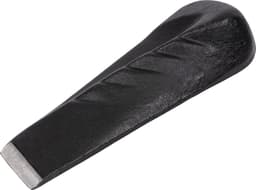
On a wide or knotty round, the first wedge often binds once the knot clamps the taper, and further blows only bury the head. The Wood Burner and Gränsfors treat two wedges for a large round as part of the job. Seat the first wedge near the edge, drive it until the split lengthens, then set the second further along the crack and strike that one so the first can loosen. Stop once that lone wedge is buried, and keep the hammer handle out of the crack. Seating and the square strike are on how to use a splitting wedge.

What this set's reviews say about hard wood

Reviews on these amazon.co.uk listings disagree. On the Rolson 10782, one reviewer split white oak after an axe had failed and said the wedge did not shatter, and another on the same listing could not start a split. The Roughneck Wood Twister, at 2.3 kg, draws praise on knotty Scots pine. One report describes a Twister breaking into four pieces in a long green hardwood log. Grenade-style reviews say knotty or damp wood buries the head. Compare those profiles on grenade or twist wedge, and use the splitting wedge buying guide when the log should choose the first wedge.

When this is no longer a garden round

A standing tree, a hung-up stem, or a felling cut is no longer a garden round. When the tree is still attached, or anyone stands in the swing, stop and call someone who fells for a living. If you sell the wood, an easy split is the wrong certificate. In England, firewood sold under 2 cubic metres must be Ready to Burn, at 20% moisture or less, under the GOV.UK rule. Scotland, Wales, and Northern Ireland do not share that English rule, so use a moisture meter on a fresh face.

Common questions

Should I aim the wedge through the knot?
Aim beside the knot, into a drying crack near the rim, so you split around a knot. Fibres there change direction, and a wedge through the middle tends to sink while the round stays closed. A split that runs past the knot can leave it in one half, which is still firewood. If there is no crack, saw a shallow groove at the rim and start there.
Why does a splitting wedge stick in oak?
A wedge stuck in oak has usually opened a crack and then met a knot that clamps the taper. Further blows drive the head deeper because the fibres hold the steel. Green oak does this when the grain is stringy, and dry knotty oak does it when the cracks miss your line. A second wedge in that same crack is the usual next step. If the only wedge is buried, stop.
Will a twist wedge start on a hard face?
A twist often fails to bite when the chisel edge sits in the middle of a flat, hard end. Roughneck Twister reviews praise large knotty rounds once the wood is open, and they say the tip needs a groove or another wedge first. Start in a crack near the rim, or saw a nick, then drive it. If it bounces, that spot is the wrong start.
How do two splitting wedges work together?
Seat the first wedge in a crack near the edge and drive it until the split lengthens. Set the second further along that crack and strike the second so the first can ease. Gränsfors describes that order on big knotty logs, and The Wood Burner moves the pair along a long split. Use a hammer face larger than the wedge head. If the only wedge is buried, stop, and keep the axe edge off the steel.
Is green wood easier to split than seasoned hardwood?
Green wood often opens more willingly, which is separate from how it should burn. Reviewers in this set find dry straight stove wood easy, seasoned knotty rounds and holly stubborn, and green wood easier again, though stringy elm still fights. In England, small retail loads need 20% moisture or less under Ready to Burn. One easy blow is not that figure, so test a fresh face with a moisture meter.
What if the round is still part of a standing tree?
Leave the tree standing. A splitting wedge is for a cross-cut round on a block, not for a stem that is upright or hung up in another crown. Felling is chainsaw work, and paid felling sits under training rules. If people could be hit by the tree or by a chip, stop. Buy the wedge after the rounds are on the ground.
Does an easy split mean the log is dry enough to sell?
An easy split does not show moisture. In England, domestic firewood sold under 2 cubic metres must be Ready to Burn, at 20% moisture or less. GOV.UK states that for those volumes. Wet straight wood can fall apart, and dry knotty oak can refuse. Test a fresh face with a moisture meter, and treat the rule as English unless you have checked where you sell.

Related pages

Sources

Public UK and manufacturer sources used for this comparison; last accessed 15 October 2026.

  1. HSE: Using the right type of PPE (retrieved 15 October 2026)
  2. HSE: Firewood processing machines (retrieved 15 October 2026)
  3. Provision and Use of Work Equipment Regulations 1998 (retrieved 15 October 2026)
  4. Consumer Rights Act 2015 (retrieved 15 October 2026)
  5. GOV.UK: Selling wood for domestic use in England (retrieved 15 October 2026)
  6. Roughneck: Wood Grenade Splitting Wedge (retrieved 15 October 2026)
  7. Roughneck: Wood Twister Splitting Wedge (retrieved 15 October 2026)
  8. Bahco: Traditional steel splitting wedges (retrieved 15 October 2026)