How to point patio slabs with a damp mortar
You are about to fill joints on concrete flags that already sit still. Two mistakes waste the afternoon: a dry brush across the face, and a whole bag of rapid mortar. This is how to point patio slabs with a damp mix in small batches. Cards are on the [paving joint mortar comparison](/hub/flooring-tools-and-accessories/paving-joint-mortar). Which bag to buy is [best paving joint mortar](/hub/flooring-tools-and-accessories/paving-joint-mortar/sub/paving-joint-mortar-best). Rigid joint versus brush-in tub is [jointing compound vs sand and cement](/hub/flooring-tools-and-accessories/paving-joint-mortar/sub/paving-joint-mortar-vs-sand-and-cement). If the units are 20–30 mm porcelain, read [porcelain paving joint mortar](/hub/flooring-tools-and-accessories/paving-joint-mortar/sub/paving-joint-mortar-porcelain) instead of copying this method.
You are about to fill joints on concrete flags that already sit still. Two mistakes waste the afternoon: a dry brush across the face, and a whole bag of rapid mortar.
You are about to fill joints on concrete flags that already sit still. Two mistakes waste the afternoon: a dry brush across the face, and a whole bag of rapid mortar. This is how to point patio slabs with a damp mix in small batches. Cards are on the paving joint mortar comparison. Which bag to buy is best paving joint mortar. Rigid joint versus brush-in tub is jointing compound vs sand and cement. If the units are 20–30 mm porcelain, read porcelain paving joint mortar instead of copying this method.
Our top picks
| Badge | Product | Mix | Working time | Application | Note | Price | Offer |
|---|---|---|---|---|---|---|---|
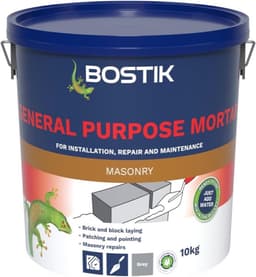
| Best overall |  Bostik Bostik Cementone mortar, 10 kg | Pre-mixed powder | Rapid setting, minutes not stated | Add water and mix in the tub | 9.0 | about £14.99 | View offer |
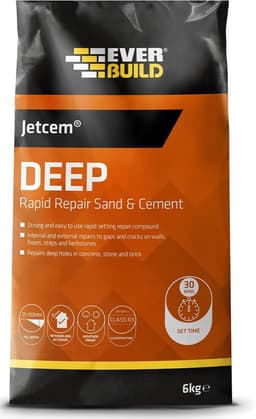
| Alternative |  Sika Everbuild Everbuild Jetcem rapid repair, 6 kg | Premixed powder | 30 minutes on the listing | Add water | 8.8 | about £10.70 | View offer |
| Best value |  Siroflex SX Siroflex mortar repair, 300 ml | Ready paste | Keep the surface dry for at least 5 hours | Applicator gun and V nozzle | 8.4 | about £7.96 | View offer |

On this page
Check the slabs before you mix
Mix a damp mortar, not a dry brush
Small batches for a rapid premix or a cartridge
Dust, wet cement, and when to stop
Common questions
Do you brush dry sand and cement into the joints?
What mix does Marshalls describe for ordinary flags?
How much Jetcem should you mix?
When can you use the SX cartridge?
What protection do you need when raking old mortar?
What if the slabs move when you stand on them?
When should you stop and call a professional?
Related pages
Sources
Public sources used for this comparison, with the amazon.co.uk listings read on 20 October 2026.
- Bostik UK TDS02249, All Weather jointing compound (retrieved 20 October 2026)
- Joint-it Simple (retrieved 20 October 2026)
- Dansand Kerama (retrieved 20 October 2026)
- Marshalls concrete paving installation guidelines (retrieved 20 October 2026)
- England: permitted development technical guidance (retrieved 20 October 2026)
- BSI on BS 7533-101 (retrieved 20 October 2026)
- HSE: cement (retrieved 20 October 2026)
- HSE: chasing concrete and raking mortar (retrieved 20 October 2026)