Porcelain patio jointing compound
The slabs are outdoor porcelain, the joints are tight, and a neighbour has offered a bag of block-paving sand. That sand is the wrong method on this surface. Porcelain is dense and low-porosity, the usual joint is about 3–5 mm, and a dry sand-and-cement brush-in can stain the face without ever becoming a rigid joint. This page is the porcelain patio jointing compound case. Block paving is [kiln dried sand vs jointing compound](/hub/flooring-tools-and-accessories/paving-joint-compound/sub/paving-joint-compound-vs-sand). The ranked bags are on the [paving joint compound comparison](/hub/flooring-tools-and-accessories/paving-joint-compound). Peter F. did not lab-test these tubs on porcelain. If you buy through our links, we may earn a commission at no extra cost to you.
The slabs are outdoor porcelain, the joints are tight, and a neighbour has offered a bag of block-paving sand. That sand is the wrong method on this surface.
The slabs are outdoor porcelain, the joints are tight, and a neighbour has offered a bag of block-paving sand. That sand is the wrong method on this surface. Porcelain is dense and low-porosity, the usual joint is about 3–5 mm, and a dry sand-and-cement brush-in can stain the face without ever becoming a rigid joint. This page is the porcelain patio jointing compound case. Block paving is kiln dried sand vs jointing compound. The ranked bags are on the paving joint compound comparison. Peter F. did not lab-test these tubs on porcelain. If you buy through our links, we may earn a commission at no extra cost to you.
Our top picks
| Badge | Product | Porcelain on the listing | Stated joint width | Type | Note | Price | Offer |
|---|---|---|---|---|---|---|---|
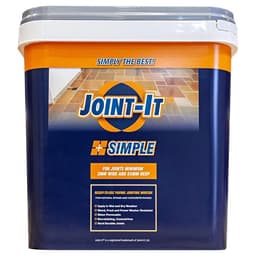
| Best overall |  Joint-It Joint-it Simple, dark grey, 12.5 kg | Yes | Not stated | Ready-mixed jointing mortar | 6.8 | about £155.58 | View offer |
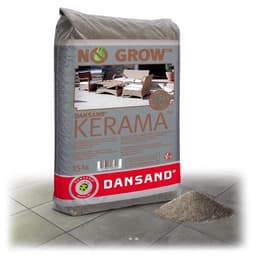
 Dansand Dansand Kerama grey, 15 kg | Yes, tiles 20–30 mm thick | Up to 10 mm | Brush-in grout for porcelain | 0.0 | about £39.99 | View offer | |
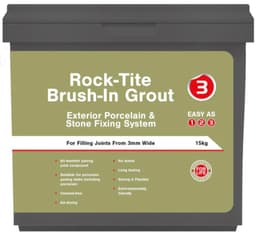
 Households Direct Rock-Tite blanched almond, 15 kg | Yes, porcelain and natural stone | Not stated | Polymer-modified cement brush-in | 0.0 | about £34.99 | View offer |
On this page
Why porcelain is not block paving
What this comparison actually offers
Residue on a dense surface
When to leave this set
Common questions
Can I brush block-paving sand into porcelain?
What joint width do porcelain slabs usually need?
Which products in this comparison actually name porcelain?
Will a brush-in leave a haze on dark porcelain?
Is Joint-it Simple the porcelain product, given the price?
Related pages
Sources
Public UK sheets and guidance, plus the amazon.co.uk listing lines kept for these ten products. This is not a laboratory test.
- Sika Setting Sand product data sheet, January 2026 (retrieved October 2026)
- Bostik UK TDS02249, 25 April 2025 (retrieved October 2026)
- Sika UK surface guide: match the jointing compound (retrieved October 2026)
- HSE: dry sweeping and construction dust (retrieved October 2026)
- BS 7533-103:2026, permeable pavement design (retrieved October 2026)
- Marshalls: how to lay a porcelain patio (retrieved October 2026)
- Pavingexpert: pointing (retrieved October 2026)
- Joint-it Simple, maker page (retrieved October 2026)