Independent comparisons. We may earn from shop links. More info

How to apply paving jointing compound

Updated: October 2026

How to apply paving jointing compound starts with the hose you are about to reach for. Setting sand is swept in dry and then misted. A ready-mixed brush-in is worked into wet paving and compacted. The wrong water step washes one product out or leaves a film on the other. Which bag belongs on which joint is the [paving jointing compound buying guide](/hub/flooring-tools-and-accessories/paving-joint-compound/sub/paving-joint-compound-buying-guide). Prices and review counts are on the [paving joint compound comparison](/hub/flooring-tools-and-accessories/paving-joint-compound). Peter F. did not run a patio trial. If you buy through our links, we may earn a commission at no extra cost to you.

How to apply paving jointing compound starts with the hose you are about to reach for. Setting sand is swept in dry and then misted. A ready-mixed brush-in is worked into wet paving and compacted.

Our top picks

On this page

Dry brush, then a mist

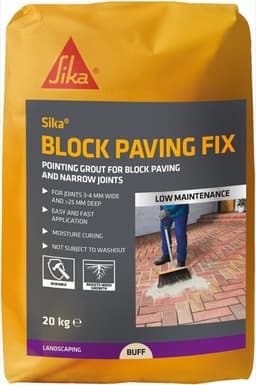
This section is for Sika setting sand, not a ready-mixed tub. The January 2026 sheet wants joints dry and clean, 2–5 mm wide and at least 25 mm deep. Remix the bag, sweep a small area in, and brush the surplus off the face before any water. The activator is a fine mist or a watering-can rose, not a jet. A pressure washer is how sand leaves a slope before it has cured. Do not lay if rain is imminent or the temperature is +5 °C or below. The surface dries in about one to two days and full cure takes up to 28 days. After that, keep a washer nozzle at least 10 cm off the paving. The Health and Safety Executive’s workplace limit for silica dust is 0.1 mg/m³ over eight hours, a workplace figure, not a domestic offence.

Wet brush-in and compaction

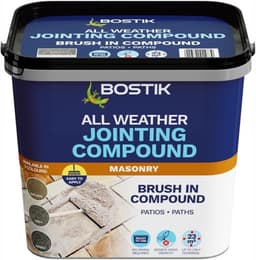
This section is for a ready-mixed brush-in such as Bostik all weather, not for setting sand. Soak the paving first, let standing water drain, and keep the surface wet while you work. Tip out only what you can use. Bostik’s sheet gives about 30 minutes of working time once opened, on roughly 2–3 m², from +5 °C to +30 °C. Compact with a pointing tool, top up where the joint settles, and brush surplus off on a diagonal. Do not soak the patio and then sweep setting sand into it. One UK review says the opened Bostik pot had gone solid before the next section. Walk-on is about 24 hours and load-bearing about six days, both at +20 °C.

Surplus, rain and the first month

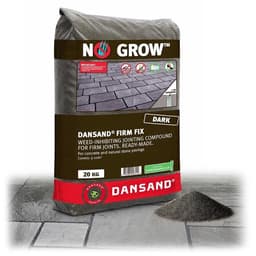
Both methods fail if a film stays on the face. Setting sand misted before the last brush-off cures as a haze. Paste left in the texture stains, and Dansand reviewers who left dust on jet-washed blocks report that staining. Brush on the diagonal, then check the face in a raking light the same afternoon. Imminent rain is a reason not to start with setting sand. A downpour can move sand that has not cured. Heavy rain before cure can still soften a wet brush-in. Power washing waits at least 28 days. Weeds still sit on the surface in Sika reviews.

When the joint is not a DIY job

Stop if a corner rocks. Compound fills a gap. It does not glue a loose slab to a failed bed. Stop if the base holds water after a normal shower. Bostik needs a free-draining site, and an air-curing compound stops when the joint stays wet. BS 7533-103:2026 is a design guide, not an approval stamp for a tub. Porcelain is the other hand-off. Dry sand-and-cement can stain those slabs and will not stay rigid. If the gap is about 3 mm and no bag states a width that low, that case is on porcelain patio jointing compound. Clean soil out to full depth rather than capping it with 10 mm of fresh compound.

Common questions

Do I soak the patio before setting sand?
No. Sika setting sand goes into dry, clean joints. You remix the bag, sweep it in, brush the surplus off, and only then mist it. Soaking first is the ready-mixed brush-in sequence, and it will wash setting sand along the fall. If the joints are damp from overnight rain, wait until they are dry rather than starting the wet method by accident.
Should I use a hose, a watering can, or a pressure washer?
For setting sand, use a fine mist from a hose or a watering-can rose. A jet blows the sand out. For a ready-mixed brush-in, wet the paving first, and still keep a pressure washer off the fresh joint for about 28 days.
How soon can I walk on it, and when is it fully cured?
On setting sand, the Sika sheet treats the joint as walkable after you have activated it. The surface dries in about one to two days, and full cure can take up to 28 days. On Bostik, walk-on is about 24 hours and load-bearing about six days, both stated at +20 °C. A colder day will not match those hours. Do not treat either product as fully cured because the face looks dry.
What if rain is forecast tonight?
Do not start with setting sand if rain is imminent. That limit is on the Sika sheet, along with a bar at +5 °C or below. A ready-mixed brush-in is applied to wet paving, but heavy rain before cure can still soften it and wash unset compound out. If the forecast turns after you have finished, keep people and the pressure washer off the joints and accept that the cure may take longer.
Why has the compound stained the slabs?
Surplus was left on the face and then wetted, or dust sat on blocks that were already jet-washed. Setting sand cures as a haze if you mist before the last brush-off. A paste stains the texture if you do not remove it on the diagonal while it is still workable. Check in a raking light the same afternoon. Stain on porcelain is a separate problem, and block sand should not have been on that surface at all.

Related pages

Sources

Public UK sheets and guidance, plus the amazon.co.uk listing lines kept for these ten products. This is not a laboratory test.

  1. Sika Setting Sand product data sheet, January 2026 (retrieved October 2026)
  2. Bostik UK TDS02249, 25 April 2025 (retrieved October 2026)
  3. Sika UK surface guide: match the jointing compound (retrieved October 2026)
  4. HSE: dry sweeping and construction dust (retrieved October 2026)
  5. BS 7533-103:2026, permeable pavement design (retrieved October 2026)
  6. Marshalls: how to lay a porcelain patio (retrieved October 2026)
  7. Pavingexpert: pointing (retrieved October 2026)
  8. Joint-it Simple, maker page (retrieved October 2026)