Plate compactor or trench rammer: which wacker you need
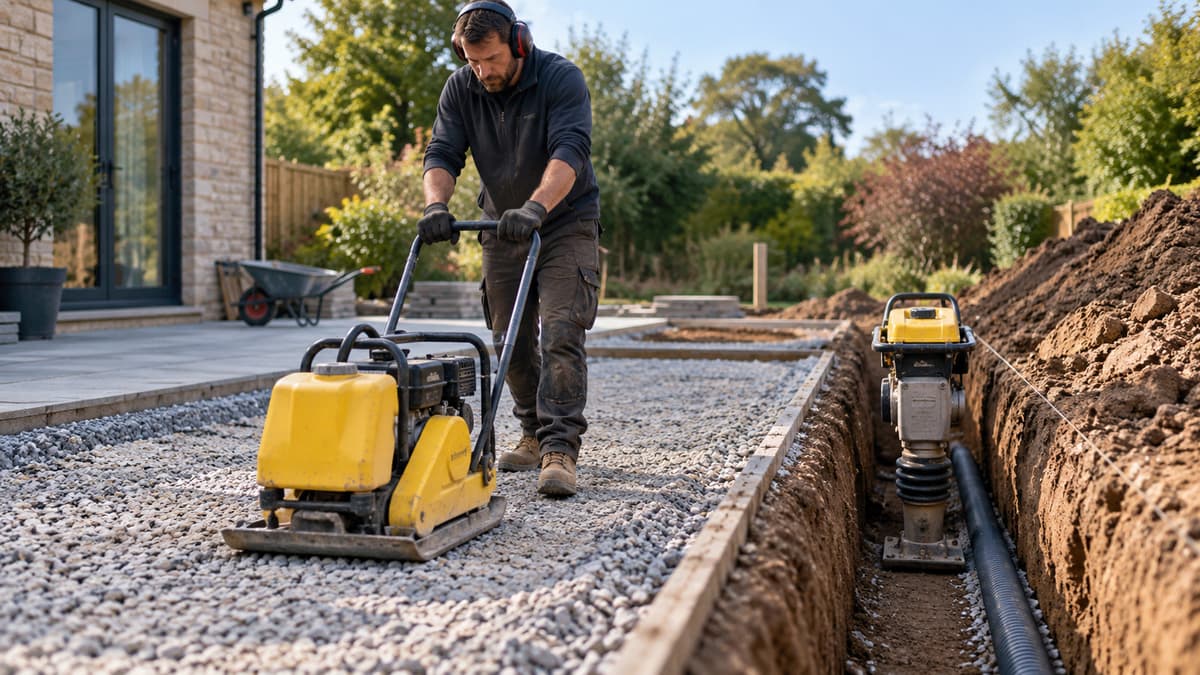
Plate compactor or trench rammer? UK hire pages blur the names. See when a vibrating plate suits MOT Type 1 and when impact beats area vibration.
On this page
You are on a hire website, the depot photo shows a yellow machine, and the caption says wacker without saying whether it jumps or slides. Meanwhile your job is split: a tray of MOT Type 1 for a patio, and a narrow trench for a land drain where the plate clearly will not fit. Choosing a plate compactor or trench rammer is not about brand loyalty; it is about whether the ground needs area vibration on granular fill or repeated impact in tight, often cohesive, space. Get that wrong and you either bridge a trench with a flat plate that never reaches the sides, or you spend an afternoon bouncing a rammer on open hardcore when a plate would have finished in three passes.
In short
For open patios, drives and shed bases built on imported hardcore or sand, hire or run a vibrating plate and keep lifts thin. For pipe trenches, footing backfill against a wall, and much sticky clay, a powered trench rammer is the matching tool. A hand earth rammer is a third category: slow, manual, and right for small edges, not a substitute for either powered machine. The word wacker on a UK desk usually means plate, rammer, or roller; read the machine type before you pay.
One name, three tools
On British hire sites and builder forums, wacker has become shorthand for almost anything that compacts soil. Depots list plate compactors, trench rammers, and sometimes rollers under similar headings.
A plate compactor drives a flat base in a horizontal vibrating motion across a surface. Weight and frequency spread through granular material, such as crushed stone with fines, sharp sand, and some gravel layers, so long as the layer is thin enough for the machine you hired. A trench rammer uses a smaller foot and a jumping action: lift, impact, lift again. That vertical blow helps cohesive soils and tight backfill where a wide plate cannot enter or would span a void.
The third tool is the one Amazon and Screwfix aisles sell as an earth rammer or hand tamper: no engine, no kilonewton figure, just mass and your arms. It belongs in the same conversation because searchers type wacker plate vs wacker rammer and still click a 5 kg hand tool. Our earth rammer comparison covers that hand class; this page is about the two powered types hire desks actually deliver on a trailer.
Plate on open granular fill
Picture the stage after turf is off and before slabs or blocks arrive: a rectangle of MOT Type 1 or similar sub-base, raked roughly flat, maybe 75–100 mm waiting for the first pass. That is plate territory, because the material is granular and the workspace is open.
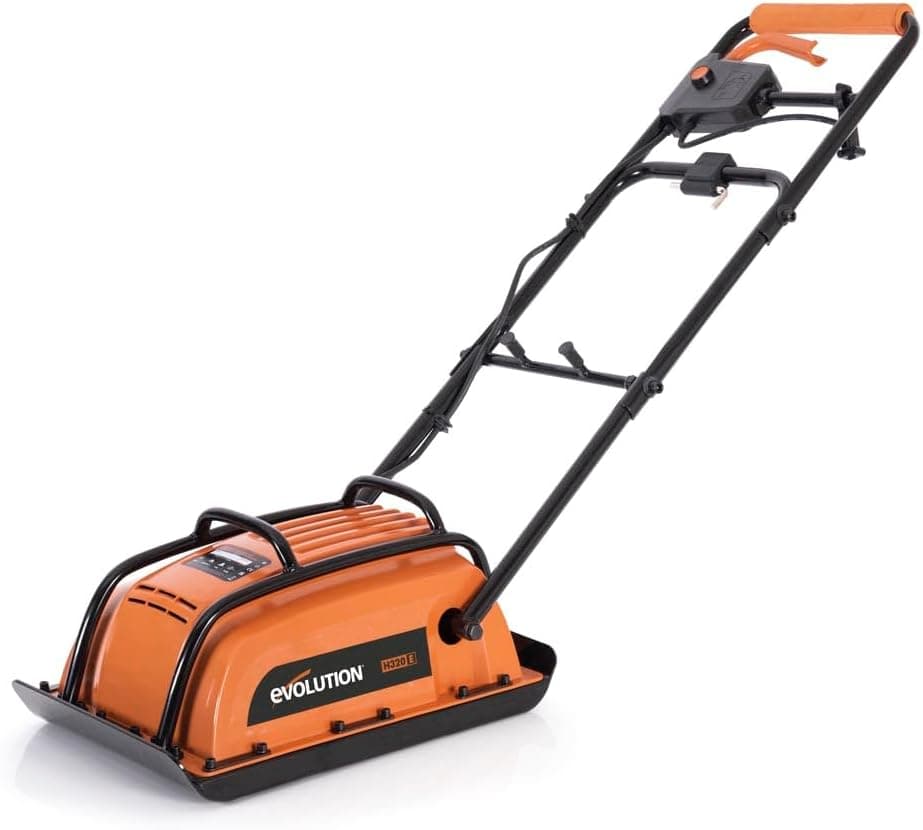
Compaction force on a plate is spread across the whole base. Hire fleets often stock petrol plates in the 60–90 kg class with quoted forces far above lightweight electric models sold for sheds. The Evolution H320-E in our plate compactor comparison states 5 kN and 26 kg on 230 V, at £235.81, with 4.5 from 155 amazon.co.uk reviews. It suits thin lifts on an outdoor lead, not a deep driveway.
Thin lifts are non-negotiable. A plate can polish the top of a 200 mm loose heap while the middle stays soft, which is how patios later rock and puddle. Guides from hire firms and landscapers repeat 75–100 mm per pass as a working band; some electric makers quote tighter. Detailed sequencing sits in how to use a wacker plate and in the patio depth notes on compact MOT Type 1 for a patio.
Plates struggle when the ground is cohesive clay that smears rather than shatters, when the space is narrower than the plate, or when you must compact directly against a vertical face without room to walk the machine. For a typical UK garden patio, with a granular sub-base and no vehicle overrun, a plate plus hand tamper at the haunch is the standard pairing, which is why cost articles compare hand tamper or plate hire rather than rammer hire for that shape of job.
Rammer in trenches and clay
Now shift to a 300 mm wide trench after a clay spade: pipe laid, granular surround ordered, sides too tight for a plate to drop level with the pipe springing. Here the jumping jack earns its hire fee. National hire descriptions for trench rammers emphasise impact in narrow backfill, exactly the geometry where a plate would bridge the trench and compact nothing at the haunch.
Cohesive soil behaves differently from MOT Type 1. Clay plates under your boots; vibration alone may not break down air pockets against a shutter or pipe. The rammer's foot concentrates energy on a small patch, working layer by layer until the backfill supports itself.
Drainage runs, service trenches along a wall, and footing backfill are the jobs that should trigger a rammer. A rammer is not a magic wand on pure granular fill in the open: you cover a tiny width each jump, exhaust and vibration multiply, and a plate would finish the same square metres in a fraction of the time. Running a rammer across an entire patio because it is already on the trailer is a common DIY false economy.
If your trench is wide enough that a small plate fits entirely on both sides of the pipe with safe edging, a plate can compact granular surround. The moment the plate spans the void or tilts, stop and switch tools. Describe the width and the soil to the hire desk before you book.
Hand earth rammer is different
Before you add a powered rammer to the basket, check you are not actually shopping for a hand earth rammer. The shapes look related, a flat bottom and a long handle, but the work rate and the physics are not. A hand tamper depends on you lifting roughly 5–15 kg of head and letting it fall; progress is measured in square metres per hour, not per minute. Highway reinstatement guidance in the UK treats hand ramming as supplementary; it is not a stand-in for proper compaction on structural layers.
That manual tool still has a place. Edges where the plate guard would bite paving, a haunch against a wall, a patch too small to justify hire delivery: the hand rammer finishes what the plate cannot reach. Our earth rammer versus plate compactor subpage walks the three-way split between hand tamper, plate, and powered rammer without conflating the names.
Do not expect a hand earth rammer to replace a trench rammer in clay backfill for a 20 m run. Do not hire a jumping jack to tap block-paving edges when a tamper already in the shed will do.
Noise, fumes, vibration and hire paperwork
Powered plates and rammers share hazards that hand tampers skip. Petrol engines mean exhaust and noise outdoors; HSE campaigns on hand-arm vibration target powered vibrating tools, reminding you that gloves and breaks are part of the job, not optional extras. Operators complain of tingling after long rammer sessions more often than after a plate walk, because the jump transmits vertically through the arms.
Carbon monoxide kills in enclosed spaces. Petrol plates and most hire rammers belong outside. Covered walkways, partial roofs, and a machine run just inside the garage door have still produced incidents when fumes pool. Electric plates remove exhaust but introduce trailing leads and still demand hearing protection; they are not an excuse to run compaction in a sealed basement.
When you collect plant, photograph fuel level, foot pads, and throttle linkage. Return disputes often hinge on a claim that it was already like that at the depot. For a first patio, pairing depot advice with our what size wacker plate notes keeps you from hiring a plate too light for the lift you spread.
Common questions
If your base still moves after compaction, the fault is often lift thickness or moisture, not the wrong badge on the handle. See patio slabs that sink after winter for how that shows up once frost and foot traffic arrive.
If you buy through a link on our plate compactor comparison, a qualifying purchase can earn us a commission at no extra cost to you. We ran no lab test of plates against trench rammers. The Evolution H320-E price and rating above are from the amazon.co.uk listing in that comparison.
Common questions
What is the difference between a wacker plate and a trench rammer?
Which do I need for a patio?
Which do I need for a drainage trench?
Which works better on clay?
Is an earth rammer the same as a small trench rammer?
Do I need ear defenders with a plate or trench rammer?
Can I use a petrol plate compactor indoors or in a garage?
Should I hire both a plate and a rammer for one job?

Peter F. is the editor for DIY & tools at productscompared.co.uk. Comparisons in this category are checked against amazon.co.uk listings, review evidence and public UK sources.
Related articles
Hand tamper or a day's plate hire
Whether a £24 hand rammer beats a day's plate hire for a patio base depends on area, lifts, and how often you will reuse the tool.

Compact MOT Type 1 in thin layers
One thick spread of hardcore will not densify. Thin lifts decide whether your plate or tamper can actually finish the base.

Patio slabs that sink after winter
Rocking slabs after frost often trace back to a loose sub-base, not the bedding sand on top.