Hand tamper or hire a wacker plate: what a day really costs
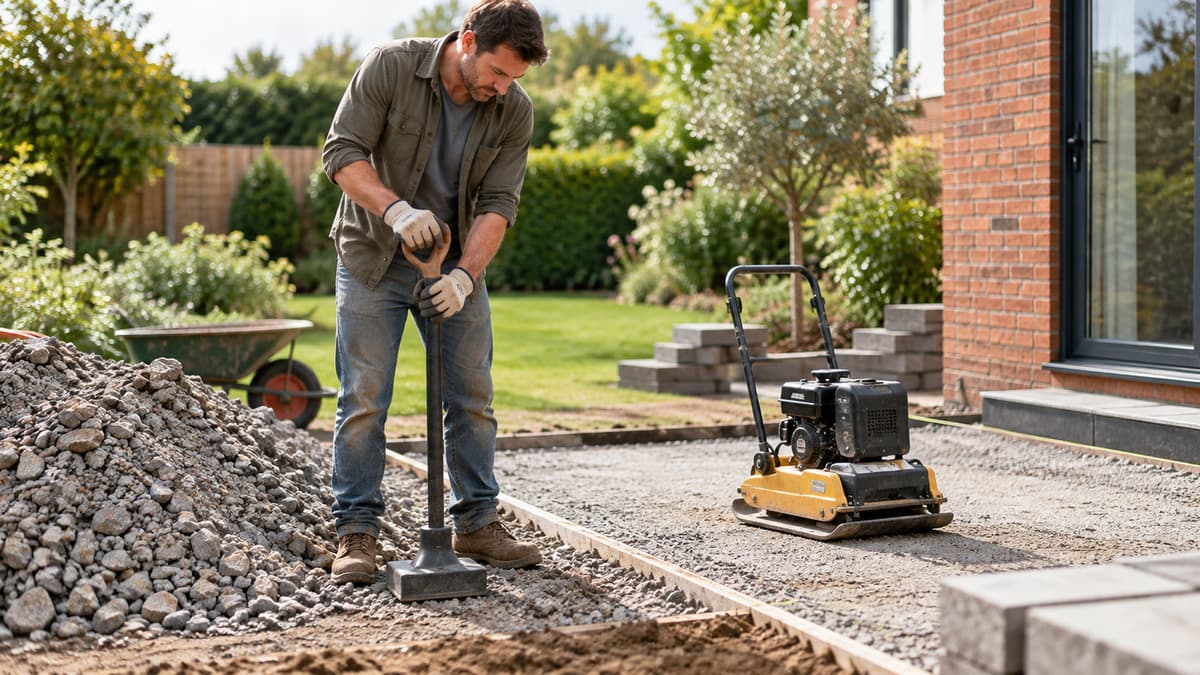
A hand tamper on amazon.co.uk sits in a £24–£46 band. Plate hire has two very different day rates. Here is how to price the job, not an average.
On this page

You have a sketch of a patio, a heap of MOT Type 1, and two numbers that are not answering the same question: roughly thirty pounds for a hand tamper on amazon.co.uk, and something from six pounds a day if you look only at the smallest plate. One is a tool you keep for foot traffic and edges. The other changes with plate width, fuel, and whether the figure is ex VAT. The earth-rammer shelf band and Speedy Hire’s published plate rates were checked for this article. It is not a lab test, and a qualifying purchase through our links can earn a commission at no extra cost to you. Name the surface first. A walked path is not a drive, and four square metres is not twelve in three thin lifts. Hire wins when vibration does what your shoulder cannot repeat evenly. Buying wins when the area stays small and you will use the tamper again. Averaging rates from different machines is the error.
In short
On amazon.co.uk the hand rammers in our comparison set run from about £23.99 to £45.99, and that band mixes light sectional tampers with a one-piece trade rammer at the top. Speedy Hire’s plate category lists day rates from £6.43 for a 320 mm petrol plate and from £15.51 for a 400 mm diesel line, ex VAT, while a Wacker Neuson DPU2540H page lists £76.66 for the first day, also ex VAT. Do not merge those hire numbers into one typical day. Match the machine to your area, add VAT and transport if they apply to you, then compare that total to the tamper that fits the traffic and the edges.
What you are pricing
Write three lines: the open area in square metres, the compacted depth, and who will load the finished surface. Foot traffic keeps a hand rammer in play for the whole pad only if the area stays small and you accept slower progress. Cars, vans, or stored machinery on the hardcore push the main field toward plate hire, whatever the tamper costs on the shelf.
MOT Type 1 goes down in thin lifts, each one firmed before the next. A hand tamper can keep that rhythm on a modest patch. A plate puts repeated vibration across a swathe you would otherwise hit blow by blow. GR8 Tool Hire’s guide is blunt: granular fill in the open suits a plate; a narrow trench suits a rammer. A patio base is usually plate work in the middle and hand work at the margins. A £40 tamper across two weekends is cheap in pounds and expensive in calendar. A £70-plus ex-VAT hire day, plus fuel and a van, looks steep until you count the hours spent lifting a 5 kg head. The plate compactor comparison covers owned vibrating plates for repeat use, not every one-off pad.
The hand-rammer band on amazon.co.uk
In the twelve-listing earth-rammer set, shelf prices run from £23.99 to £45.99. Entry tools are sectional steel tampers around 2–4 kg with bolted handles sold as adjustable height, and UK text in the middle of the set repeats the same complaint: bolts loosen during the job. At the top, the Roughneck ROU64379 is £45.99, with a one-piece fibreglass shaft, a 200 × 200 mm cast-iron head, a listed weight of 5.4 kg, and 4.7 from 754 reviews.
A £23.99 tamper may flex at the joints. It is a lighter tool, not a stand-in for that one-piece rammer. Reviewers who had used both a hand rammer and a hired plate said the plate was faster and more even on a larger base. A 125 mm head covers less ground per hit. A 200 mm head near 5 kg hits harder and tires the arms sooner. The earth rammer buying guide walks shaft type and listed mass. If you hope to skip hire, match the tamper to the heaviest job. The best value model is not the top pick, and it will not replace a plate on wide granular fill. A mid-band tamper can beat hire on cash for one small foot-traffic pad. A spongy middle is a hire-page problem.
Hire lines, machine by machine
Plate hire is quoted per machine. Speedy Hire’s plate category, checked for this article, shows a 320 mm petrol plate from £6.43 per day and a 400 mm diesel from £15.51 per day, ex VAT. Those from lines are entry points on specific kit, not a promise that every depot stocks every size tomorrow.
The Wacker Neuson DPU2540H page lists a 400 mm diesel plate in the 160 kg class at £76.66 for the first day, ex VAT. That is a different offer from £6.43. Plate hire from a fiver is the small petrol end. A day on a wacker may mean the heavy diesel end. You need the model that matches hardcore depth and area. Householders often pay VAT at collection, so £76.66 ex VAT is not the till price if VAT applies. Fuel is separate. Deposit and damage terms sit in the hire conditions, not in the day rate. Many plates will not ride in a hatchback, so a van hired the same morning belongs on the hire side of the note.
Another chain may list different widths. Open the page for the machine you can collect, add VAT, fuel, and transport if they apply, then set that total against the tamper in the basket. When hire still looks dear beside a £30 tamper, ask what vibration does on a three-metre run that repeated blows will not match evenly. Pavingexpert treats hire as the point once vehicles load the surface. The cheap line can still be the right tool. The heavy line is what a wide, deep pad needs.
When the cheaper line is still the wrong tool
A cheap day on a small plate can still be the wrong machine on clay, or too close to a fragile drain cover. A cheap tamper can still be the wrong tool if the pad will be a parking spot and the open area never saw vibration. Hiring nothing because a heavy diesel price frightened you, then hand-tamping a base for slabs and a hot tub, leaves the middle soft. Buying the lightest sectional tamper to dodge hire, then finding the handle loosens before the hardcore firms, wastes the saving. One thick dump of Type 1 is the wrong method with either tool. Thin lifts stay the rule. The question is who compacts each lift.
Plates need swing room. A 100 mm strip against a house wall is hand-rammer work, slow as it is, because the plate risks the brickwork and any paving already laid. A rammer-only plan leaves the middle of a large pad uneven, because later blows get weaker as you tire. If the drawing includes vehicle overrun, even occasionally, plate hire on the open area is part of the specification. A hand tamper still suits haunching, narrow paths, and repair patches. If you are unsure which side of that line the job sits on, read when a hand tamper is not enough and the earth rammer versus plate compactor notes.
Mixing hire with a tamper you keep
Many patio budgets use both. Hire the plate for the morning you compact the main lifts, then use a rammer you own around gully grates, walls, and corners where the plate would bite paving already set. If the open area fits one day on a small petrol plate, ex VAT plus fuel can still sit under a top-of-band one-piece rammer before you add a van. If you need a 400 mm diesel-class machine, the hire line moves toward the DPU2540H first-day figure, and a tamper alone is false economy unless the traffic stays on foot.
A rammer in the shed has no second hire fee when you reset fence posts later. Hire is charged each time you call the depot. If another pad is likely, keep the rammer and hire a plate only when area or traffic demands it. Do the edges while the hardcore still moves under foot, not after bedding sand is down. Lift thickness and tool choice stay linked in compact MOT Type 1 in thin layers.
Common questions
Measure the open area, note foot traffic or vehicle loading, and open the hire page for the plate you can collect before you buy the cheapest tamper.
Common questions
Is it cheaper to buy a tamper than hire a plate?
What do UK hire shops charge for a day on a plate?
Are hire prices shown with VAT?
Does a cheap hand tamper replace plate hire on a drive?
Can I hire a plate for the open area and keep a tamper for edges?
What if I will only ever do one small pad?
Do I need petrol training or plates to hire a wacker plate?
Will a second patio later change the sum?

Peter F. is the editor for DIY & tools at productscompared.co.uk. Comparisons in this category are checked against amazon.co.uk listings, review evidence and public UK sources.
Related articles

When a hand tamper is not enough
The signs that hand blows will not hold the base, and when hire becomes the sensible line.
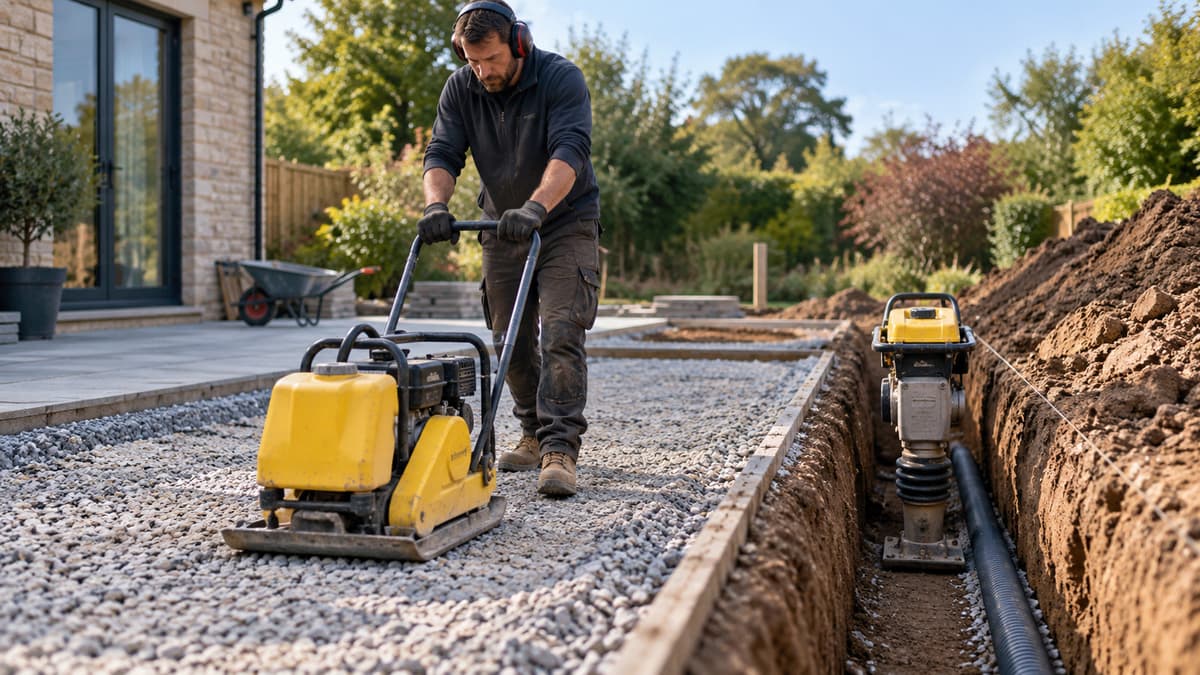
Plate compactor or trench rammer
Vibration on granular fill versus impact in a trench or clay, so you hire the right machine.

Compact MOT Type 1 in thin layers
Why one thick lift does not compact, and how hand work and plate passes fit the same rule.