When to hire a wacker plate: hand tamper signs

You bought a hand tamper but the sub-base still moves. Here are the UK checks that mean plate hire, not more blows, and when the tool itself is at fault.
On this page

The tamper arrived, the MOT Type 1 is raked, and you have been at it since mid-morning. Your heel still finds give, or the rake tooth sinks where you thought you had finished. The tool is already paid for, and hire feels like an extra admission. When to hire a wacker plate is whether the base still moves after sensible lifts, whether the finished load matches what a hand face can densify, and whether the tamper is delivering blows into the stone.
This is a stop list if you already own a light or mid-weight hand rammer. Products Compared drew on Pavingexpert, Wickes patio instructions, BuildWiz's practitioner area note, buyer themes in the earth-rammer set, and HAUC reinstatement material. Nothing here is a lab compaction test. A qualifying purchase through our links, tag pcuk26-21, can earn a commission at no extra cost to you.
In short
If a lift still moves after roughly 50 mm of damp, not sloppy, MOT Type 1, more blows on the same setup rarely fix it. Vehicle load means plate hire for the open area. A large foot-traffic patio outgrows a hand tamper when time and unevenness show up first. Loose bolts waste energy and mimic a soft base. A public footway is not DIY tamper work. Keep the tamper for edges and hire vibration for the field.
The surface still moves
You finished a lift, and the surface still behaves like loose aggregate under body weight. Pavingexpert's sub-base material says the finished layer should not move. That is not the same as concrete. Granular Type 1 can mark when damp. What you are hunting is pumping: stone shifting sideways, a heel sinking deeper on the second pass, or a ridge collapsing when you rake highs to lows. Repeating the same blows may only firm the top few centimetres while the middle stays open.
A crust is common when the heap was too deep and you tamped the crown. The top locks and the tamper bounces. Wickes expects each layer compacted before the next. A tamper and a plate are not the same physics. Fix the lift height first, as described in compact MOT Type 1 in thin layers, then decide if the area needs a plate. Earth-rammer buyer comments say dry hardcore barely moves until water is added, and a sloppy lift smears. If a thin, damp lift still moves, the limit is energy and coverage.
Use the heel test as a gate, not a certificate. Walk the lift and shift your weight. If it keeps accepting your heel, change tool or method. A tamper can still be right on a one-metre strip a plate cannot travel. It is the wrong answer when the whole rectangle fails.
Area and load have outgrown the tool
The next signs are scale and traffic. A hand rammer only hits a footprint about the size of its base. A shed pad or a side return can be overlapped until it feels dead. On a wide patio, fatigue arrives first, so the centre stays soft. Reviewers in the earth rammer comparison who own both tools report the same split: fine on a small patch, slower and less even across many square metres.
BuildWiz's rule of thumb, quoted on UK hire blogs as practitioner advice rather than a standard, puts hand work near a square metre and a plate beyond a few square metres. Those numbers are not permission to stop at 1.2 m² if the heel test still fails. If you are on lift three of a six-metre pad and your shoulders finish before the grit does, that is a hire sign even for footfall and a barbecue.
Load is the harder line. Feet and chairs still need a stable sub-base. Once a car will use the surface, Pavingexpert's drive notes treat a vibrating plate as the compactor for the main area. Price on amazon.co.uk does not change that. Keep the hand tool for edges and narrow strips. A van, stored motorcycles, or bins on the hardcore are still load, so plan hire before the slabs go down. On a foot-only garden, ask whether the area has outgrown the tamper.
The tool itself is the problem
Sometimes the tamper never put full energy into the stone. Sectional steel tampers with bolted handles fill the lower price band on amazon.co.uk. They store easily, and they loosen under impact. UK reviews repeat the same complaint: retighten mid-job, lose strike force, blame the hardcore. Loose bolts are a product fault, not proof that MOT Type 1 cannot compact. If the head rattles, part of each blow vibrates the handle instead of closing voids.
Stand the tamper on clean ground and strike once. If tightening only holds for ten minutes, you may need a different tool even on a modest area. The comparison's top pick, the Roughneck ROU64379, is £45.99 with a one-piece fibreglass handle and a 200 mm cast-iron face. It still will not vibrate a drive.
Listings under about 3 kg with a 125 mm base are sold for sand and loose topping. MOT Type 1 needs repeated blows through a thin lift. If the tool skates, check depth and moisture first. If those are right and it still bounces, it was sized for garden sand. Light tools suit edges, haunching, and repairs. As the main compactor on a wide lift, the job drifts. Upgrade the detail tamper or hire the open ground.
Ground you cannot reinstate by hand
Some stop signs are legal, not physical. A public footway, verge, or carriageway outside your boundary is not a DIY tamper job. HAUC's material on compaction and hand rammer classes belongs to specified street reinstatement. A householder tamper does not make a utility trench compliant.
Inside the fence, BS 7533-102:2025, in the preview consulted for this hub, names rollers, plates, and vibro-tampers for professional paving. A garden patio is not a BS sign-off, but the stone still needs energy through the lift. Make hand-only work on a large area a deliberate choice. On an easement, a shared path, or management-company land, ask first if you do not own the substrate.
What to hire instead
For open sub-base on a patio, path, or drive, hire a forward plate, the wacker plate on hire-shop day rates. It vibrates a flat sole across MOT Type 1. You still work thin, damp lifts. The plate compactor comparison is for people who will own a plate. A one-off pad usually starts with hire.
Keep the hand rammer against a wall, a gully, steps, and corners the plate cannot reach. Hire is the second tool for the middle, not a verdict on the tamper you own. A narrow trench, or some clay, may need a trench rammer instead. This article is about sub-base too wide for hand work.
Hire the plate width and weight you will collect, not the cheapest banner rate. Speedy Hire and other UK depots quote different machines ex-VAT. Add transport, fuel, and VAT before you set that against another tamper. The sums sit in hand tamper or a day's plate hire. Wear ear protection, clear pets, and overlap each pass. One thick lift still fails, so the heel test has to pass before the next layer.
If slabs are already laid and movement appeared after winter, striking the paving from above will not rebuild the base. Read patio slabs that sink after winter, lift carefully where needed, and rebuild the sub-base in lifts with the right plant.
Common questions
The questions below cover heel tests, drives, large foot patios, loose bolts, public footways, buying versus hiring, and mixing a tamper you own with a hired plate. When the handle will not stay tight, follow a bolted tamper handle that will not stay tight.
Common questions
How do I know a hand tamper is not enough?
Is a soft heel print a fail?
Can I hand-tamp a driveway?
What about a large patio that is only for feet?
The bolts are loose — is that why it will not compact?
Who do I call for a public footway?
Should I buy a heavier tamper instead of hiring?
Can I mix hire with the tamper I already own?

Peter F. is the editor for DIY & tools at productscompared.co.uk. Comparisons in this category are checked against amazon.co.uk listings, review evidence and public UK sources.
Related articles
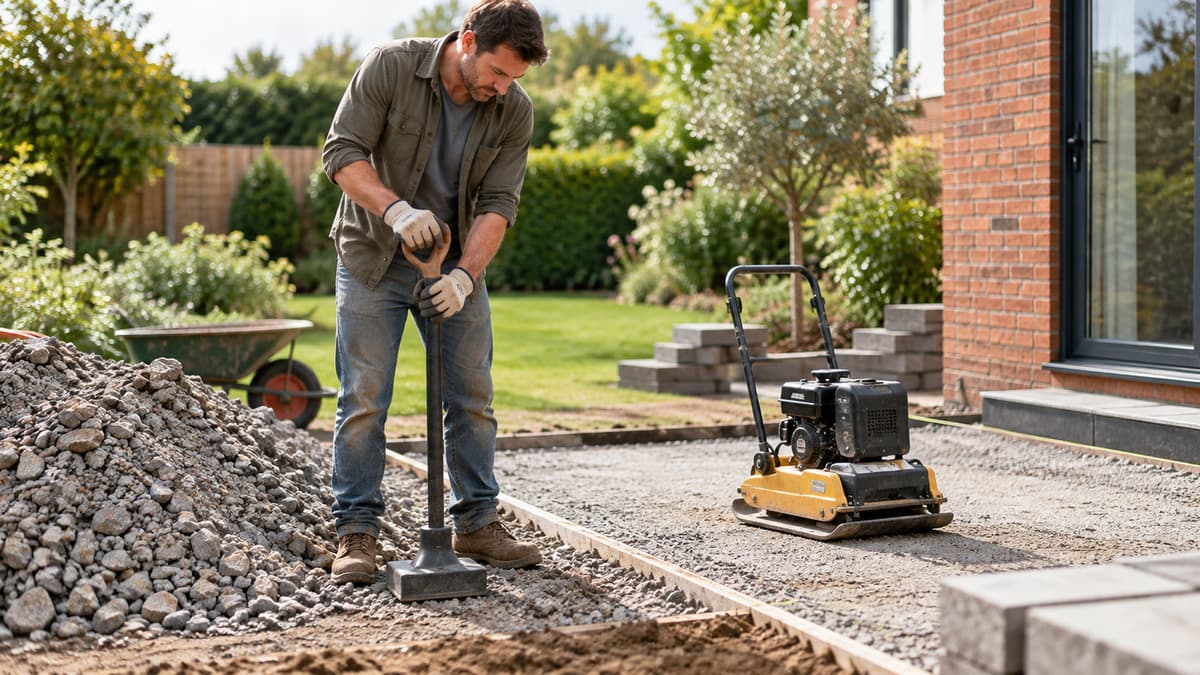
Hand tamper or a day's plate hire
Price the open area and the edges separately before you decide the tamper in the shed can carry the whole job.

Compact MOT Type 1 in thin layers
A firm crust on a thick lift is one reason the heel test fails even after a long afternoon of hand work.
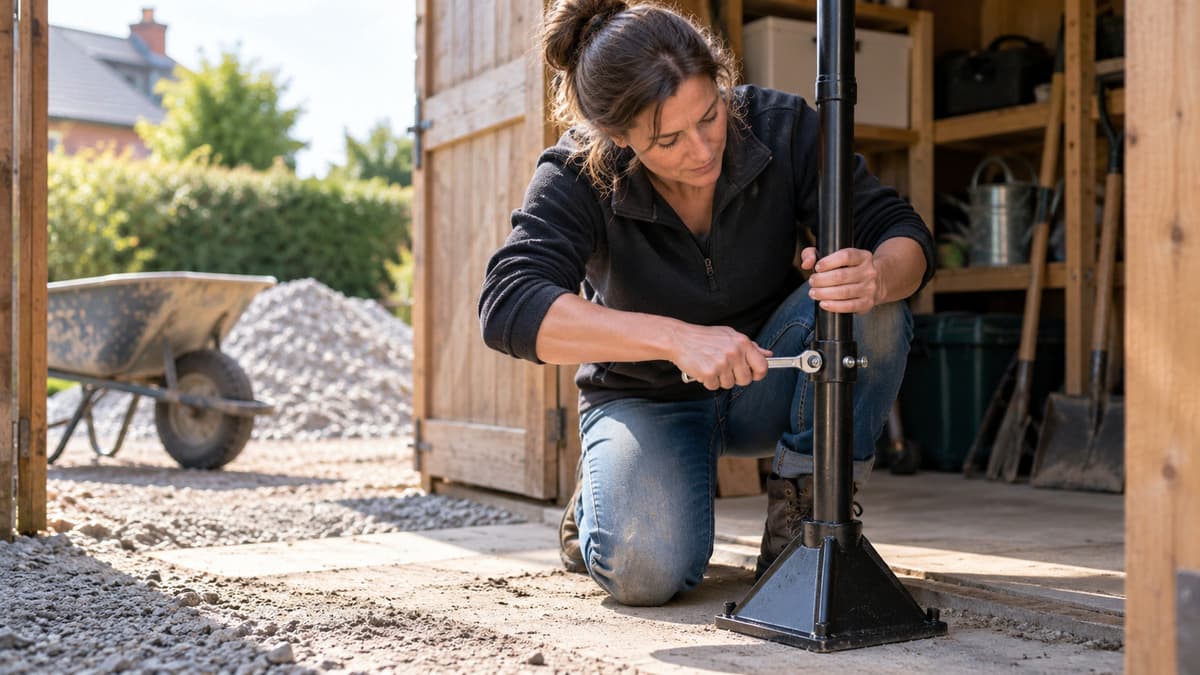
A bolted tamper handle that will not stay tight
Loose bolts waste energy before it reaches the stone. Fix the tool or admit the base needs a plate.