Tamp fence post backfill: compact in a narrow hole

Hand tamping around a fence post works in thin lifts beside the timber, not as a structural spec. UK layer logic, head size, and when to stop.
On this page

The auger has come out, the post is braced plumb, and you are staring at loose spoil that has to go back in. Tamp fence post backfill properly means thin lifts beside the timber, not a patio you can run a plate across. Get the lifts wrong and the panel leans after the first wet week. Get the tool wrong and you chip the post or snap a handle in a space barely wider than your boot. This is hand compaction in a dug hole, not a specification for fence design, post depth, or concrete mixes.
In short
Backfill in thin lifts and compact each lift beside the timber before you bury it. Use a head small enough to fit the hole. Hand tamping firms spoil so it does not settle away from the post. It does not replace concrete when the fence retains load. A 125 mm square rammer reaches corners and post holes. A 200 mm head covers more open ground but may jam in a tight auger cut. Driven posts belong to a pile driver. Public footway reinstatement follows highway rules, not garden practice.
A hole is not a patio
Energy from a blow spreads through loose material. In a deep single dump the top grains lock first and the base stays open. On a patio that shows up as slabs that rock after winter. Beside a post it shows up as timber that tilts and bracket screws that open up.
A patio is an open rectangle. You can hire a plate and keep a hand rammer for the last metre against the house. A post hole is a vertical slot, often with less than 150 mm between timber and the wall of the excavation. You cannot stand in it with a wacker plate. Trade pages that list fence posts next to earth rammers are describing that tight spot, not signing off a retaining run. Compact MOT Type 1 in thin layers is the same failure on open ground: a firm crust over voids. Beside a post the lifts are narrower, and the failure mode is the same.
Thin layers beside the post
Set and brace the post first, and rotate it so the rail faces are where you need them. Tamping will not straighten a twisted post. Pull out flints and roots that would sit in a void. If the base is spongy spoil from the auger, compact that band before you stack depth above it.
Add a shallow band, roughly one spade slice turned on its side, not the full auger depth in one pour. Fill the annulus evenly. Do not pack the side you are standing on and leave a soft pocket opposite.
Strike the soil, not the post. Glancing blows can split green wood. Work near side, far side, then both flanks until the band feels even. Firm foot pressure at the rim should not pump. If it sinks like sand, you are not ready for the next lift.
Very dry sand can look level and still be loose. A light sprinkle between lifts beats one flood at the end. If clay smears onto the plate and pulls away from the timber, let it dry slightly. You want damp cohesion, not a slurry that cracks as it dries. At ground level, crown the fill if rain will pond, or finish flush if you will turf the line. Take the braces off only when a tug at rail height does not shift the plumb.
Head size in a narrow hole
UK hand rammers cluster around two square heads. A 200 mm cast-iron face, such as the Roughneck contractor's tamper that leads many open-area reviews in the earth rammer comparison, moves more soil per blow on a path edge or a wide hole. The Spear & Jackson 5004AX featured here is a 125 mm forged head on a one-piece ash shaft, about £31.34. The bullets say 4.5 kg and the item-weight line says 4.99 kg. Across 59 amazon.co.uk reviews it sits at 4.1. Of the nine United Kingdom reviews in that comparison, five describe the shaft or the head connection snapping or breaking, including on a first use. The narrower head reaches the post. That is not a claim that every shaft stays intact.
If a 200 mm head swings clear of the post and the wall, it finishes faster. In a tight hole it only densifies the soil under its centre and leaves wedges beside the timber, which is where the post leans when those wedges soften. The lighter trade pattern still works if the lifts stay thin. Bolted handles work loose when blows are off vertical. One-piece ash or fibreglass avoids bolts and still shows snap reports under side load. For paid repetition, the HSE manual handling leaflet is the relevant note. Shaft and listed mass are in the earth rammer buying guide. A deep utility cut is hire territory: a trench rammer, not one panel between two houses.
Concrete, loads, and when this is the wrong method
Hand-compacted spoil suits a light garden fence in stable, drained soil that is not pushing the panel downhill. It is the wrong primary method when the fence retains earth, vehicles can strike a gate post, posts are long levers in peat, or a planning condition expects concrete or metal spikes to a defined depth. This guide does not set those depths or mixes. One bag per hole, with no idea of diameter or groundwater, is how posts fail in frost. If the specification already calls for concrete, tamping is for soil above the collar or gravel under the base, not a substitute for the collar. Keep the braces until the mix or the fill will hold a gentle tug.
Driving a post is a different job from backfilling a hole. A manual tube drops impact down a standing post and displaces soil without a full auger excavation. The tubes in the pile driver comparison are that route. If you dug a hole, you need lifts and a rammer. Match the method to the worst bay: six-foot panels on a slope may need concrete or more depth, while one repair between concrete neighbours may still be hand work. If the open area is beyond hand blows, see when a hand tamper is not enough.
The public footway is a different job
A hole beside your own path is not the same as opening a pavement or verge that belongs to the highway authority. HAUC treats hand rammers as tools for tight spots in reinstatement, with training and a specification a garden article cannot copy. Hand ramming in a border is not a licence to reinstate a public footway to whatever feels firm under your boot. Councils publish categories, acceptable compactors, and inspections. A light garden tamper can fail those tests and still be fine behind the shed. If the fence crosses that boundary, start with the permit. A failed inspection, rework, and a surface that collapses under a pram wheel are the costs.
On private ground, a tamped strip is kinder to ankles than loose spoil, and it is still not a sub-base if you later pave the line. Compact in lifts now and plan the paving separately.
Common questions
The questions below cover whether tamping is allowed, how thick a lift should be, head size, concrete versus spoil, pavement rules, a snapped handle, the order of bracing, and how wet the fill should be. If hire is already in the day, hand tamper or plate hire splits the cost of owning the edges from hiring the open field.
Peter F. prepared this on 21 October 2026 from UK trade descriptions for earth rammers, Pavingexpert's layer logic for granular fill, HSE notes on repeated lifting, and HAUC context for hand rammers on reinstatement. This is not a lab test. A qualifying purchase through our links with tag pcuk26-21 can earn a commission at no extra cost to you.
Common questions
Can I tamp the soil back around a fence post?
How thick should each layer be around a fence post?
Is a big 200 mm plate the wrong shape for a post hole?
Should the post be in concrete instead of compacted soil?
Can I compact backfill next to a pavement or public footway?
What if the rammer handle snaps in the hole?
Do I compact before or after I set the post?
How wet should backfill be when I tamp it?

Peter F. is the editor for DIY & tools at productscompared.co.uk. Comparisons in this category are checked against amazon.co.uk listings, review evidence and public UK sources.
Related articles

Compact MOT Type 1 in thin layers
The same lift logic as patio sub-base, applied to granular fill you expect to stay put.

When a hand tamper is not enough
Signs that hand blows will not hold the fill, and when hire makes more sense.
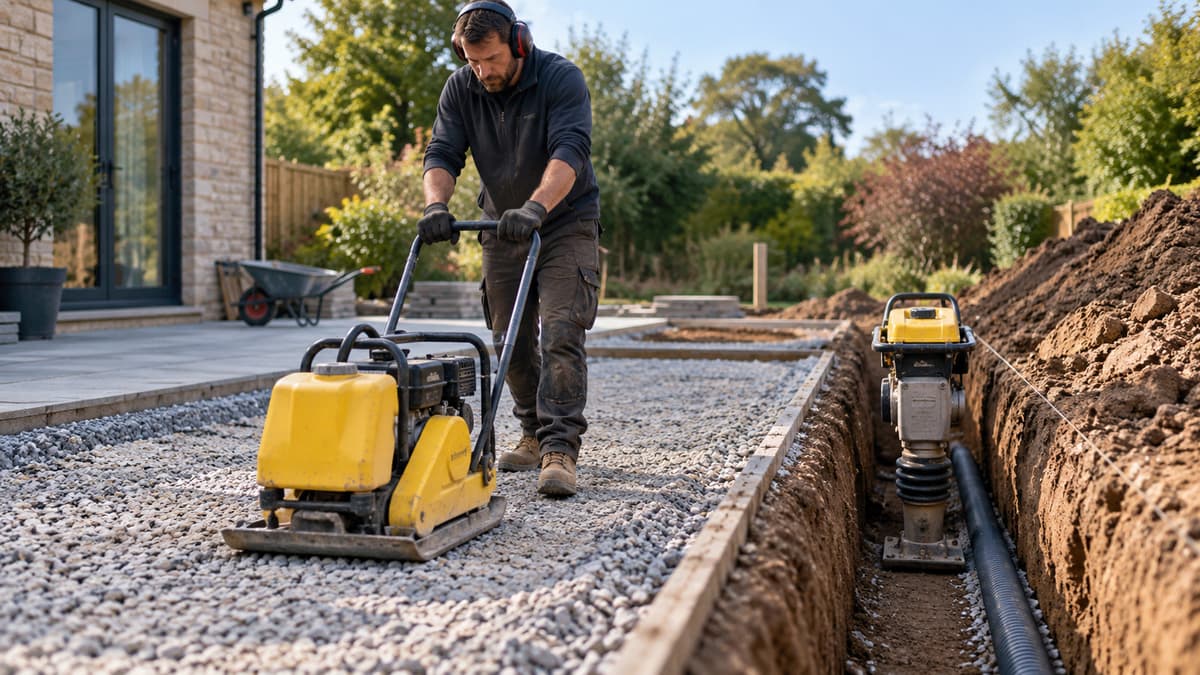
Plate compactor or trench rammer
Vibration on open granular fill versus impact in a tight trench or deep hole.