Independent comparisons. We may earn from shop links. More info

How to install stove pipe

Updated: October 2026

The pipe is on the hearth, the stove collar is in front of you, and the next move is which end points up. How to install stove pipe, for a real wood or multi-fuel stove, means joining a designated connector inside the same room, socket upwards, and stopping when the run would leave that room. The figures are from Approved Document J for England (2022). Wales, Scotland, and Northern Ireland publish their own standards. The twelve products are on our [stove pipe comparison](/hub/fireplaces-and-stoves/stove-pipe). We read the listings on 15 October 2026 and did not fit a stove. A qualifying purchase can earn us a commission at no extra cost to you.

The pipe is on the hearth, the stove collar is in front of you, and the next move is which end points up.

Our top picks

On this page

If the pipe is plastic, you are not installing a flue

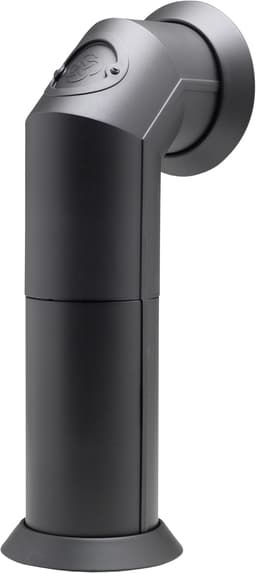
Three pipes in this set are plastic shapes for an electric stove: Dimplex at about £35, the Adam angle at about £25.96, and the Adam straight pipe at about £26.50. They stand on the electric stove. Measure the top, set the shape on the fire, and stop. There is no fire-cement joint and no chimney. A plastic pipe on a wood burner is outside those listings. Plastic flue systems in Document J are for appliances that designate them, such as some condensing boilers. If the carton is one of those three, use our stove pipe for an electric stove page, and leave this method here.

Socket up, and seal the joint

Approved Document J, paragraph 1.33, asks for the socket to face upwards, which merchant notes call spigot down. The crimped end of the upper piece sits into the socket below, so condensate stays in the pipe. Pushing it upwards lets tar weep onto the stove top. On a rear outlet, keep the horizontal run to 150 mm or less, and any bend within 45 degrees of vertical. At most four direction changes. For a vitreous joint, merchant notes describe fire rope and fire cement, and they say not to reduce the diameter. The SFL SVIT guide says not to bolt the pipe to the spigot and to leave about 5 mm. The StoveMaestro 500 mm length only says push-fit and that it can be cut.

Stay in the room, and keep the gap

Single-wall pipe joins the stove to the chimney in the same room. It must not pass through a roof space, a floor, or an internal wall. Twin wall to BS EN 1856-1 is what passes through the building. Guidance cited by the British Flue and Chimney Manufacturers Association asks for 425 mm of twin wall still below the ceiling. Where the designation says NM, not measured, use three times the internal diameter to combustibles, or 1.5 times if a shield is fitted. That is 375 mm for 125 mm pipe and 450 mm for 150 mm pipe. If the plate prints a distance, that plate wins. The StoveMaestro listing prints neither a distance nor NM. Diameter is on our 5 inch or 6 inch flue pipe page.

Alarm, sweeping, and the point you stop

When a fixed solid-fuel appliance is installed, Document J asks for a carbon monoxide alarm to BS EN 50291-1, between 1 m and 3 m from the appliance. Buying pipe does not create that duty. Landlords in England have needed that alarm, except for a gas cooker, since 1 October 2022. Sweep a wood-burning flue at least twice a year, on HETAS advice. Call a HETAS-registered installer or building control for a new stove, a reline, any route through the building, or a missing clearance. This page stops before any sequence for opening a ceiling. What the pipe has to show is on our stove flue pipe buying guide.

Common questions

Can single-wall pipe go through the ceiling?
No. Single-wall pipe stays in the room and connects the stove to the chimney. It must not pass through a roof space, a floor, or an internal wall. Twin wall is the system that goes through the building, with about 425 mm of twin wall still below the ceiling. This page does not describe how to cut that opening.
How far from plasterboard or timber?
Where clearance is not measured, use three times the internal diameter. That is 375 mm for a 125 mm pipe and 450 mm for a 150 mm pipe. Diagram 19 also allows 1.5 times the diameter if a shield is fitted. If the plate on the pipe prints its own distance, follow the plate. The StoveMaestro listing in this set prints no distance.
Do I seal with fire cement?
Merchant notes for vitreous pipe describe fire rope and fire cement in the joint, with the spigot pointing down, and they say not to reduce the diameter. Use the seal your own pipe's instructions specify if they name one. The SFL guide says not to bolt the pipe to the stove spigot and to leave about 5 mm. The StoveMaestro listing only says push-fit.
Do I need a carbon monoxide alarm because I bought pipe?
The alarm follows the appliance. When a fixed solid-fuel stove is installed, Document J asks for an alarm to BS EN 50291-1, between 1 m and 3 m from the stove. A parcel of pipe does not, by itself, create the duty. If a stove is already fitted, check the alarm is there and in date. Landlords in England have needed an alarm for fixed combustion appliances, other than a gas cooker, since 1 October 2022.
Can I fit this myself?
You can remake joints on a designated connector inside the same room when the outlet size and the clearance are already known. Call a HETAS-registered installer or building control for a new stove or chimney, a reline, any route through a floor, ceiling, wall, or roof, or a missing outlet or clearance. A plastic electric pipe stands on the electric stove, and it is not this flue method.

Related pages

Sources

Public UK sources and the amazon.co.uk listings in this scrape, last checked on 15 October 2026.

  1. Approved Document J, combustion appliances and fuel storage systems (England, 2022) (retrieved 15 October 2026)
  2. GOV.UK, smoke control area rules (retrieved 15 October 2026)
  3. The Smoke and Carbon Monoxide Alarm (Amendment) Regulations 2022, SI 2022/707 (retrieved 15 October 2026)
  4. HETAS, when to get a chimney swept (retrieved 15 October 2026)
  5. BFCMA, chimneys and flues (retrieved 15 October 2026)
  6. BFCMA, flue designations (retrieved 15 October 2026)
  7. BFCMA, chimney and flue design (retrieved 15 October 2026)
  8. SFL SVIT installation guide (retrieved 15 October 2026)