Independent comparisons. We may earn from shop links. More info

How to clean wood burner glass

Updated: 22 October 2026

The stove has been out since morning, the glass is a brown-black film, and the first impulse is to spray while the door is still warm. How to clean wood burner glass, on a UK stove, is a cold-door order: confirm the manual allows the thing in your hand, keep liquid off the rope, and stop when a mark will not lift. This page does not rank bottles. Prices and formats are on the [fireplace glass cleaner comparison](/hub/fireplaces-and-stoves/fireplace-glass-cleaner). Peter F., 21 October 2026, from HETAS, SCHOTT, HG's UK page and Charnwood's published instructions. No lab. A qualifying purchase can earn a commission at no extra cost to you.

The stove has been out since morning, the glass is a brown-black film, and the first impulse is to spray while the door is still warm.

Our top picks

HG HG foam stove glass cleaner

Best overall

HG HG foam stove glass cleaner
9.2/10about £17.43
RAKSO RAKSO stove glass pads

Best value

RAKSO RAKSO stove glass pads
8.6/10about £6.70
On this page

Wait until the glass is cold

Charnwood warns that water on hot glass can crack it. HETAS tells you to clean once the glass is cool. HG's UK method is cold or lukewarm only. The rope should be intact and dry, because a soaked rope leaks air. Your manual wins if a shop page disagrees. SCHOTT's dry wiper is for uncoated ROBAX. Coated faces get a soft cloth and a window cleaner, not a steel pad. Charnwood's Aire manual allows a damp lint-free cloth and a proprietary stove-glass cleaner, and it forbids abrasive pads.

If you are using a dry pad

Use the pad dry, on cold glass, and only if the manual allows mesh. Trollull and RAKSO are the pads in this set, not a ranking. SCHOTT's dry wiper is the grey side, used dry, soot tapped out, and not washed. It is for uncoated panels. Keep the pad off the rope. A pad that has gone smooth stops cutting film, so replace it rather than pressing harder. HETAS warns against sharp abrasives that scratch. Charnwood's Bay instructions say abrasive pads can weaken the glass. If the corners stay sticky, the pad has reached its limit. Which format suits the film is stove glass cleaner spray vs pad.
HG HG foam stove glass cleaner

Testsieger

HG HG foam stove glass cleaner
9.2/10about £17.43

If you are using a spray or foam

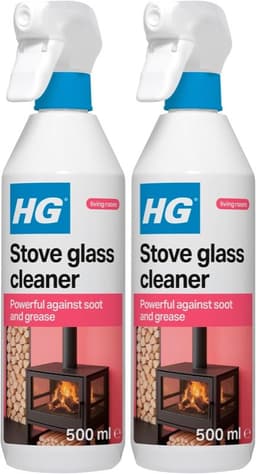
Put a small amount on cold or lukewarm glass and do not flood the door. For HG, including the 431050106 twin, leave it 3 to 5 minutes, wipe with a damp sponge, and do not let the liquid run. Foam that slides onto the rope is the failure mode UK reviews describe. The code-431 sheet classes that mixture as corrosive. Wear what the bottle says, and catch the run-off before it reaches the rope. If the foam runs off in seconds, you used too much.

Ash, residue, and when to stop

Newspaper and cool ash is a method some UK makers describe, and it is not universal. Charnwood allows damp paper in fine ash, with the same hot-glass warning. HETAS says a bit of stone in the ash will scratch, so sift it and stop if you feel grit. If your manual never mentions ash, do not import the trick. Dry the glass before you relight. If a mark will not lift, stop. A crack, a milky patch, or a failed rope is a fitter or a sweep. If the glass is clear and blacks up on the next fire, check the fuel and the air, not a stronger pad.

Common questions

Can I clean the glass while it is warm?
No. Clean it cold, or at most lukewarm if you are following HG's UK page. Charnwood warns that water on hot glass can crack it. HETAS says wait until the glass is cool. A door that has stopped glowing can still be hot enough to shock. If you can feel heat with the back of your hand, wait. Soot does not set harder in the extra hour.
How long do I leave a stove-glass spray on?
For HG, leave it 3 to 5 minutes, then wipe with a damp sponge. Do not let it run, and do not leave it while you make tea. The UK page is cold or lukewarm glass only. Other bottles in this set do not inherit that timer. Read the label on the one you bought. A longer soak is how foam reaches the rope. If the product says rinse or wipe at a different time, follow that label rather than the HG figure.
What if the foam runs off?
Stop adding product and catch what is moving before it hits the rope. HG's instruction is to avoid letting the liquid run, so run-off means too much foam or a glass you did not wipe in time. Cloth along the bottom edge, then a damp sponge for residue, then a dry cloth. Gloves matter if the bottle or the code-431 sheet says the mixture is corrosive. Do not tilt the door open over a rug to let it drain.
How do I keep the rope dry?
Keep liquid on the glass and off the braid. Use a small amount of spray, a cloth at the lower edge, and a dry pad that never dips into a puddle. A soaked rope is damage, not a rinse. If the rope is already wet, blot it and leave the stove unlit until it is dry. A seal that has swollen or pulled out of the channel needs a fitter, not another wipe of the glass.
When do I stop and call a sweep or a stove fitter?
Stop when the mark will not lift, when the glass is cracked or milky, or when the rope has failed. More pad pressure will not fix a broken seal, and a spray will not sweep a flue. Call a sweep if smoke, smell or a sooty chimney suggests the flue, and a fitter if the door, the glass or the rope is the failed part. If the pane comes clean and is black again after one fire, change the fuel and the air before you change the bottle.

Related pages

Sources

Public sources used for this comparison. amazon.co.uk prices, stars and review counts were taken from the listing capture, not a live check on 21 October 2026.

  1. HETAS, stove glass tips (retrieved 21 October 2026)
  2. Defra UK-Air, Burn Better (retrieved 21 October 2026)
  3. SCHOTT ROBAX (retrieved 21 October 2026)
  4. SCHOTT ROBAX dry wiper (retrieved 21 October 2026)
  5. HG UK stove glass cleaner (retrieved 21 October 2026)
  6. HG SDS code 431 ART, 15 November 2023 (retrieved 21 October 2026)
  7. Charnwood Bay instructions (retrieved 21 October 2026)
  8. HSE, COSHH for cleaning (retrieved 21 October 2026)