Independent comparisons. We may earn from shop links. More info

Vermiculite vs fireclay fire brick

Updated: 22.10.2026

You have a light buff board in one hand and a dense clay brick in the other, and both listings say firebrick. Vermiculite vs fireclay fire brick is a choice about heat, not about which title prints the bigger temperature. One material insulates a steel stove. The other stores heat in a floor, a pit, or a stove built for clay. The [firebricks comparison](/hub/fireplaces-and-stoves/firebricks) prices the packs. Shelf prices are from amazon.co.uk on 19 October 2026. A qualifying purchase can earn a commission at no extra cost to you.

You have a light buff board in one hand and a dense clay brick in the other, and both listings say firebrick.

Our top picks

On this page

Two materials, two jobs

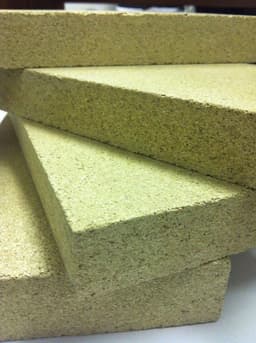
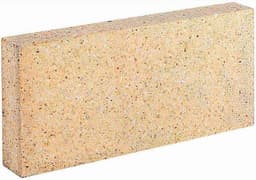
Vermiculite board is the liner in most modern UK stoves. Stove makers use it to keep heat off the steel body. In this set it is stated at 1100°C or 1200°C, it is buff or beige, and the sellers say you can saw it with woodworking tools. Dense fireclay, sold here as alumina clay or dense fireclay and stated at 1300°C, is the brick you choose when you want thermal mass: a pizza-oven floor, a fire pit, or a repair on an appliance that already used clay. Vitcas says they are not substitutes. The old brick is the specification. If you no longer have it, the manual or the spares diagram is. Then match thickness as well as material. The buying guide is the measurement order.

How the pieces in this set differ in the hand

One Stove Wizard vermiculite board, titled 230 × 114 × 25 mm, is listed at 590 g. A six-pack of those light boards is listed at 3 kg. The alumina-clay six-pack is listed at 9 kg for the same count, and its size lines agree. The £28.00 ten-pack is titled vermiculite while its material attribute says ceramic. The £24.49 six-pack is titled 230 × 114 × 25 mm while the part number says 200 × 90 × 25 mm. A 590 g board and a brick from a 9 kg six-pack are not subtle variations of one product.

What goes wrong if you swap them

Vitcas states the consequence directly. Replacing vermiculite with dense fireclay can push more heat toward the stove casing, because you have removed the insulating layer and put a heat store in its place. Replacing fireclay with vermiculite does the opposite: you lose thermal mass and you lose the tougher face. The stove may still light. It is no longer the heat path the body was designed around. Vermiculite is the board buyers shape with a wood saw or a knife, kept dry, because water weakens it. Dense clay is a silica-dust job if you cut it. A 25 mm vermiculite liner and a 25 mm clay brick can share a face size and still be a bad swap. Vitcas’s own examples are not the same rectangle: one fireclay example is 230 × 114 × 32 mm, and one vermiculite example is 200 × 90 × 25 mm. Stove Spares Direct says some ACR, Aga, Henley, and Stanley models use fireclay. That is a seller’s stock note, not a rule for every UK stove.

When clay is the right buy

Clay is the right buy when the job is thermal mass. A pizza-oven floor, a fire-pit lining, and a stove whose diagram shows fireclay are that job. The alumina-clay six-pack at £25.19 is the one in this set with agreeing sizes, a printed 9 kg weight, and reviews that mention a stove, a pizza oven, and a fire pit. Vermiculite remains the right buy when the old liner is a light board and the manual says so. The ten-pack at £28.00 has the review volume for that plain rectangle, with the ceramic-attribute caveat. Outdoor joints, and why a 25 mm clay tile is not a 64 mm oven floor, are on fire bricks for a pizza oven. Fitting either material on a cold stove, without mortaring a liner that should sit dry, is on how to replace stove fire bricks.

Common questions

What is the difference between vermiculite and fireclay?
Vermiculite board insulates and stays light, so stove makers use it to protect a steel body. Dense fireclay stores heat and takes knocks, so it suits oven floors, pits, and stoves specified for clay. Vitcas says they are not substitutes. In this set the light boards are stated at 1100–1200°C and the clay at 1300°C. The degree figure is a material class, not a ranking.
Which one insulates a steel stove?
Vermiculite, when that is what the stove was built with. The board is the insulating liner. Putting dense clay in its place can move more heat into the casing. Match the old liner or the manual, including thickness. A 25 mm board does not stand in for a 30 mm one.
Can I upgrade vermiculite to clay because the degree number is higher?
No. A stated 1300°C against a stated 1200°C does not make the stove more efficient or more legal. It changes the heat path. Vitcas warns that dense brick in place of vermiculite can push heat toward the casing. Buy clay when the appliance, or the oven, was designed for clay.
How can I tell what is already in the stove?
Weigh it and look at it against the manual. A single board near 590–740 g is in the vermiculite range of this set. A six-pack listed at 9 kg is clay. Fire Brick King’s scratch test is a shop hint: light and scratchable leans vermiculite, dense and hard leans clay. If the piece is missing, use the spares diagram rather than the higher temperature on a new listing.
Are house bricks ever acceptable?
No. Fire Brick King states that ordinary house bricks are not stove bricks. They are not the vermiculite boards or the dense fireclay packs in this comparison. Use a refractory the appliance was specified for, at the thickness you measured.

Related pages

Sources

Public UK sources used for this comparison. amazon.co.uk prices, stars and review counts were taken from the listings on 19 October 2026.

  1. Approved Document J (England, 2022) (retrieved 19 October 2026)
  2. HETAS, spring stove maintenance (retrieved 19 October 2026)
  3. HETAS FAQs (retrieved 19 October 2026)
  4. Arada, cracked liners (retrieved 19 October 2026)
  5. Chilli Penguin, vermiculite fire bricks (retrieved 19 October 2026)
  6. Vitcas, replacement fire bricks (retrieved 19 October 2026)
  7. Dupré Micalite vermiculite board SDS (retrieved 19 October 2026)
  8. W T Knowles fireclay data sheet (retrieved 19 October 2026)
  9. HSE INDG463, silica dust (retrieved 19 October 2026)