Independent comparisons. We may earn from shop links. More info

Fire bricks for a wood burner

Updated: 22.10.2026

You are standing at a cold stove with the old liner in one hand and two amazon.co.uk pages that both say fire bricks for a wood burner. This page is the order of decisions: material, then thickness, then every size line on the listing, then how many pieces. The [firebricks comparison](/hub/fireplaces-and-stoves/firebricks) holds the nine kept products. Prices below are those amazon.co.uk shelf prices on 19 October 2026. A qualifying purchase can earn us a commission at no extra cost to you. If the liner is already crumbling, use [how to replace stove fire bricks](/hub/fireplaces-and-stoves/firebricks/sub/firebricks-how-to-replace) only after you have the measurements.

You are standing at a cold stove with the old liner in one hand and two amazon.co.uk pages that both say fire bricks for a wood burner.

Our top picks

On this page

What you are actually buying

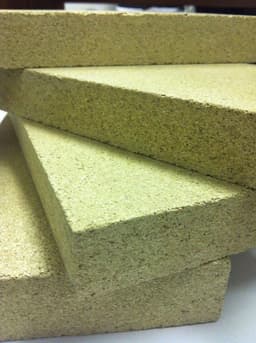
Most modern UK wood burners line the firebox with vermiculite board. In this set that is a light buff or beige panel, stated at 1100°C or 1200°C, and the sellers say you can cut it with ordinary woodworking tools. Dense fireclay, including the alumina-clay six-pack, is stated at 1300°C and is listed for pizza ovens, fire pits, and repairs where you want the brick to store heat. Vitcas, a UK refractory seller, says the two are not substitutes. One insulates the steel. The other holds heat. The piece you removed is the specification. The ten-pack at £28.00 is titled vermiculite while the material attribute says ceramic. The split is set out in vermiculite vs fireclay fire brick.

Measure thickness as well as the face

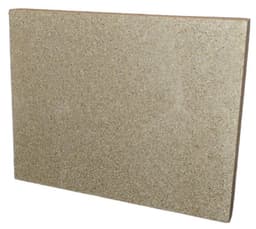
The rectangle you will see most often is about 230 × 114 × 25 mm. The Stove Wizard sells cut-to-size vermiculite at 25, 30, or 40 mm, with a cutting tolerance of about ±2–3 mm. So 25 mm is common, and it is not universal. Measure width, height, and thickness on the old piece before you look at reviews. A 25 mm board in a 30 mm rebate sits low. Every kept pack in this comparison is a 25 mm title. You can trim a face. You cannot invent the missing 5 mm of thickness. The £9.99 single, the £10.99 single, and the £14.98 panel are different spare parts.

When the listing disagrees with itself

Several pages in this set print two sizes. The vermiculite six-pack at £24.49 is titled 230 × 114 × 25 mm, and the part number says 200 × 90 × 25 mm. The £9.99 single is titled 230 × 114 × 25 mm, a size line says 230 × 115 × 25 mm, and a dimension line says 230 × 25 × 110 mm. A couple of millimetres can sit inside a stated ±2–3 mm tolerance. Thirty millimetres cannot. The £14.98 panel’s title says 193 × 303 × 25 mm and a dimension line says 19.3 × 30.5 × 2.5 cm. When two lines conflict, measure the brick in the stove. Do not average the numbers. The clay six-pack at £25.19 is consistent on that rectangle and still the wrong material if the stove was built for vermiculite.

Pack, shaped set, or a single panel

One broken side is a single panel when the old piece is a plain rectangle. The £9.99 board is the cheapest single here, with 4.2 from 20 reviews. The £14.98 panel, 4.4 from 76 reviews, is the one to open when you measured about 193 × 303 mm. The ten-pack at £28.00 has the largest review file, which is why it is the top pick for a standard vermiculite rectangle. The six-pack at £24.49 looks close on price until the 200 × 90 mm part number. A shaped baffle is a third purchase. A generic rectangle does not become a notched throat plate because you own a saw. Oven floors are a separate choice on fire bricks for a pizza oven.

Common questions

What size fire brick does a UK wood burner usually take?
Many modern stoves use a vermiculite rectangle around 230 × 114 × 25 mm, which is the size Fire Brick King and several of these listings sell. It is common, not a universal fit. Measure width, height, and thickness on the piece you are replacing. A 25 mm panel will not fill a 30 mm rebate even when the face matches.
Should I buy vermiculite or fireclay?
Buy the material already in the appliance. Vermiculite insulates a steel body and cuts with wood tools. Dense fireclay stores more heat, which is why these clay packs are listed for ovens and pits as well as repairs. Vitcas says they are not substitutes. A 1300°C claim does not make clay the better liner for a stove that was built around board.
Why does one listing show two sizes?
The title, the part number, and the dimension line are not always the same text. One six-pack is titled 230 × 114 × 25 mm and numbered 200 × 90 × 25 mm. One single titled 230 × 114 × 25 mm also shows a 110 mm side. Measure the old brick. Do not average the two printed figures, and do not assume a ±2–3 mm tolerance covers a 30 mm gap.
Will a generic rectangle replace a shaped baffle?
No. Model sets from UK spares shops use different millimetres for sides, backs, and baffles. If the old piece is notched or tapered, a 230 × 114 mm rectangle is the wrong blank. Follow the stove diagram. Cutting a guess into a throat plate is how a neighbour brick gets cracked.
Does a higher °C number mean a better stove brick?
No. The figure on these listings is a seller’s material class, not a test of your stove and not a smoke-control approval. Vermiculite here is stated at 1100–1200°C. Clay is stated at 1300°C. None of these listings is HETAS-approved as a product. The right brick matches the liner the appliance was designed around.

Related pages

Sources

Public UK sources used for this comparison. amazon.co.uk prices, stars and review counts were taken from the listings on 19 October 2026.

  1. Approved Document J (England, 2022) (retrieved 19 October 2026)
  2. HETAS, spring stove maintenance (retrieved 19 October 2026)
  3. HETAS FAQs (retrieved 19 October 2026)
  4. Arada, cracked liners (retrieved 19 October 2026)
  5. Chilli Penguin, vermiculite fire bricks (retrieved 19 October 2026)
  6. Vitcas, replacement fire bricks (retrieved 19 October 2026)
  7. Dupré Micalite vermiculite board SDS (retrieved 19 October 2026)
  8. W T Knowles fireclay data sheet (retrieved 19 October 2026)
  9. HSE INDG463, silica dust (retrieved 19 October 2026)