Independent comparisons. We may earn from shop links. More info

Vermiculite vs fireclay fire bricks

Updated: 22.10.2026

You still have a piece of the old liner, or the manual names one material, and the basket is full of things called fire bricks. Vermiculite vs fireclay fire bricks is the choice that changes how a stove holds heat. Both survive a fire. They do not do the same work. Stay with the light board or the heavy brick unless the manufacturer says a swap is acceptable. Prices and the full rows are on the [fire brick comparison](/hub/fireplaces-and-stoves/fire-brick), from amazon.co.uk on 19 October 2026. The order of decisions is the [fire brick buying guide](/hub/fireplaces-and-stoves/fire-brick/sub/fire-brick-buying-guide). There was no lab test. A qualifying purchase can earn a commission at no extra cost to you.

You still have a piece of the old liner, or the manual names one material, and the basket is full of things called fire bricks. Vermiculite vs fireclay fire bricks is the choice that changes how a stove holds heat.

Our top picks

On this page

What each material is for

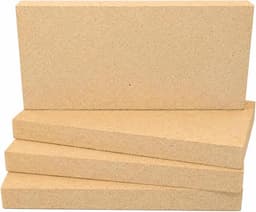
Fireclay is the dense brick. VITCAS describes it as the material that stores heat and stands up to knocks. In this set that is the Stove Wizard six-pack at £25.19, alumina clay, title 1300C, and the twelve-pack at £38.99 with the same face and the same 1300C line. The six-pack weighs 9 kg. That mass is the storage VITCAS is talking about. Vermiculite is the light board. The Stove Wizard singles weigh 590 g, 740 g and 1.23 kg, and the hongyong ten-pack weighs 4.92 kg for ten pieces. The Stove Wizard's explainer says vermiculite is not a clay fire brick. VITCAS says the two are not direct substitutes. Vermiculite insulates. It keeps heat in the firebox rather than sinking it into a heavy wall, and it cuts with a handsaw or a knife. The Fire Shop treats it as a service item: moisture and impacts crack it. If the piece you removed is pale and light, order vermiculite of the same thickness. If it is a heavy clay brick, order the clay packs.

Weight and thickness in this set

One vermiculite board at £9.99 is 590 g. The 305 mm board is 740 g. The 193 x 303 mm board is 1.23 kg. Six clay bricks are 9 kg, about 1.5 kg each if the pack is even. A stove designed around that clay is not the same object with 590 g of board in the rebate. These amazon.co.uk titles are almost all 25 mm. VITCAS lists its own dense fireclay example at 230 x 114 x 32 mm. A 25 mm pack will sit low if your old clay is that thicker trade size, and can leave a lip of steel at the baffle. Stove Wizard says its vermiculite boards shape with ordinary woodworking tools, with a tolerance of ±2–3 mm. Clay in the six-pack has no such bullet. One reviewer still cut those bricks for a log burner. The dry cut is on how to replace fire bricks in a wood burner.

Heat, life and rough loading

Owners who fit vermiculite often describe a hotter firebox, because the board insulates instead of storing heat. An Arbtalk anecdote of about 14 years on clay and under two years on vermiculite in a Villager Chelsea is a forum story, not a lifespan for either pack here. A swap can move temperatures on the stove body, because the appliance was assessed with its original lining. The Fire Shop says impacts and moisture finish vermiculite, and wet logs are the everyday version. Eurostove treats a pink or red board as over-firing. Clay takes knocks and stores heat. If you throw heavy logs at the sides, that is the material VITCAS says resists them. If the stove was supplied with board, do not replace it with clay to make it tougher.

Which listing after you have chosen

Stay with vermiculite and the choice is pack versus blank. The hongyong ten-pack at £28.00 is ten pieces at 230 x 114 x 25 mm, bullets rated 1100c. The title says vermiculite and the material field says Ceramic. The Stove Wizard boards state 1200°C, from £9.99 to £14.98. Buy the ten-pack for several standard panels. Buy one board when the failed piece is a single size. A notched baffle is still the maker's spare. Stay with clay and the six-pack is the listing with stove reviews: £25.19, 4.8 from 48, with bullets that also name pizza ovens, barbecues and fire pits. The twelve-pack at £38.99 scores 4.7 from 12, with two reviews that describe a reptile platform and a gas furnace. The clay packs are the listings that name pizza ovens. Like-for-like replacement is maintenance. A different thickness or a different material changes the firebox the manual assumed. If the manual forbids the swap, stop.

Common questions

Which is better, vermiculite or fireclay?
The better one is the material already in the stove, unless the manufacturer allows a change. Vermiculite insulates and cuts easily. Fireclay stores heat and takes knocks. VITCAS says they are not substitutes. In this set a vermiculite board weighs 590 g to 1.23 kg, and six clay bricks weigh 9 kg.
Is fireclay harder to cut?
Yes, in practice. Stove Wizard says its vermiculite boards cut with woodworking tools, allowing ±2–3 mm. The clay six-pack does not say that. One reviewer still cut clay bricks for a log burner. Expect more effort and more dust, and follow the dry-cut steps on the how-to page.
Can I mix one vermiculite side with clay sides?
Only if the stove manual allows that mix. VITCAS says to match the original material and the way the brick is held. A light side beside heavy sides changes the heat store on one face and can leave an uneven rebate. If the old set was all one material, replace it with that material.
Why is a clay brick so much heavier?
Clay is dense. The six-pack is 9 kg for six bricks of 230 x 114 x 25 mm, about 1.5 kg each. The £9.99 vermiculite board of the same face is 590 g. VITCAS's own clay example is thicker again, at 32 mm and about 1.75 kg, so weight also depends on thickness. The mass is the heat store.
Does 1300C mean clay is safer than 1100c vermiculite?
No. Those are seller claims on different products. Clay titles here say 1300C. Hongyong says 1100c. Stove Wizard boards say 1200°C, and one line says 1250 degrees. None of them is your flue temperature or a safety certificate. Safety in the firebox is covering the steel with the material the stove was built to use.

Related pages

Sources

Public UK sources used for this comparison. amazon.co.uk prices, stars and review counts were taken from the listings on 19 October 2026.

  1. Approved Document J (retrieved 19 October 2026)
  2. Defra exempt appliances, England (retrieved 19 October 2026)
  3. Selling wood in England (retrieved 19 October 2026)
  4. HETAS consumer FAQs (retrieved 19 October 2026)
  5. VITCAS replacement fire bricks (retrieved 19 October 2026)
  6. The Stove Wizard, what is vermiculite fire board (retrieved 19 October 2026)
  7. Consumer Rights Act 2015 (retrieved 19 October 2026)
  8. Stove Spares, vermiculite note (retrieved 19 October 2026)