Independent comparisons. We may earn from shop links. More info

How to use an electric fireplace

Updated: 22.10.2026

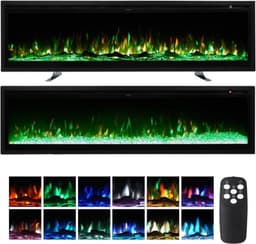
You have a plug-in electric fire in the room, and you want the flame, the heat, or both, without covering the outlet or hiding the cable. How to use an electric fireplace is mostly the same sequence on the amazon.co.uk models in this set, captured on 19 October 2026, and then it stops being DIY. Button layouts are not universal, so one remote diagram will not fit the FLAMEKO Wilton and a NETTA stove. The listings are on the [electric fireplace comparison](/hub/fireplaces-and-stoves/electric-fireplace). We used those pages and UK fire-safety sources and did not test a handset in a lab. A qualifying purchase can earn us a commission at no extra cost to you.

You have a plug-in electric fire in the room, and you want the flame, the heat, or both, without covering the outlet or hiding the cable.

Our top picks

FLAMEKO FLAMEKO Wilton 50 inch

Best overall

FLAMEKO FLAMEKO Wilton 50 inch
9.4/10about £239.97
INMOZATA INMOZATA 127 cm three-way

Alternative

INMOZATA INMOZATA 127 cm three-way
9.2/10about £229.90
NETTA NETTA stove heater

Best value

NETTA NETTA stove heater
8.4/10about £59.99
On this page

Plug in, then find the master switch

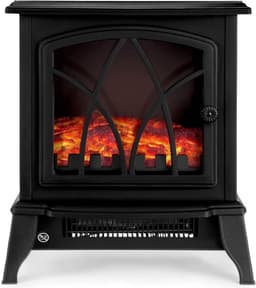
Start with a BS 1363 plug in a wall socket you can see. UK mains are 230 V. West Sussex Fire and Rescue say to check for a British square-pin plug, not a two-pin lead with a loose adaptor as the permanent arrangement. Devon and Somerset Fire and Rescue say portable heaters should sit about one metre from curtains and furniture, with no extension lead and nothing hung on the case. One NETTA review says that stove cannot be used on an extension lead. Treat that as the rule for the set. Look at the outlet grille before the first switch-on. Fit legs where the fire has them. The NETTA arch uses four legs and screws, even though the assembly field says no assembly is required. If the fire has a master switch, that switch has to be on before the remote will do anything. A dead handset is often that switch, or flat batteries, before it is a fault. The Wilton states a UK 13 A plug. If your listing is silent, look at the plug on the lead. Choosing the fire, if you have not bought yet, is the electric fireplace buying guide.

Flame without heat, then the element

Summer use should not turn the element on. On the Wilton, both INMOZATA models, the Verona, the Zanussi, and the YITAHOME, the listing says the flame can run without the heater. Cheriton reviews describe the same. The two NETTA listings do not state flame-only mode. If that sentence is missing, do not plan an evening of lights with the element cold. When you want heat, use the fire’s own settings. In this set that is often a low step around 900–1000 W and a high step around 1800–2000 W. The cheaper NETTA’s title says 1600–1800 W and its specification says 2000 W. Pick the lower step first if the room is small. Which? treats about 2 kW as supplementary warmth, not as the heating for a whole house. At Ofgem’s Great Britain Direct Debit average of 26.32 pence per kWh from 1 October to 31 December 2026, a continuous 2 kW element is about 53 pence an hour while it is on. The heater switching off early is often the thermostat, not a breakdown. The element is supposed to cycle. A thermal cut-out is different. It trips when the case is too hot, commonly because a guard or a throw is blocking the grille. Clear the outlet and let the fire cool. Do not bypass it.
FLAMEKO FLAMEKO Wilton 50 inch

Testsieger

FLAMEKO FLAMEKO Wilton 50 inch
9.4/10about £239.97

Use the fire’s timer, not a plug-in timer

Where the listing has a timer, use that timer. The Wilton, the Zanussi, both INMOZATA models, the YITAHOME, and the Cheriton in reviews include one. The three-way INMOZATA’s timer is 1–8 hours, and the shallower INMOZATA’s is 1–9 hours. The Verona’s listing bullets do not confirm a timer, so do not invent a weekly programme. Do not add a plug-in timer or a smart plug that cuts the mains. Manuals for UK electric fires warn that an external timer can defeat the thermal cut-out, because the safety circuit expects the appliance to stay powered. If you want the fire off overnight, use its timer or switch it off at the unit, then at the socket if you are away for days. A remote that does nothing is a separate fault. On the three-way INMOZATA, several UK reviews say the handset fails after the fire is built in. PURFINO reviews say the remote stays dead after battery changes. On the Wilton and the Verona the listing says two AAA are included. If the buttons on the case still work, use those. If neither works, use the seller’s return route rather than opening the electrics.

When you stop and call an electrician

Plugging a complete fire into a living-room socket is a householder job. Building the cable into the wall is not. Stop and call an electrician if the lead will be buried, if you need a fused spur, if the circuit is new, or if the room is a kitchen or bathroom. Part P in England and Wales is the frame for that notifiable work. Scotland and Northern Ireland do not use an identical form. The Wilton is 21.5 kg and the three-way INMOZATA is 24.5 kg. Two people lift those cases. Boxing the grille in will trip the cut-out and push warmth at a television. Which listings say the air comes forward is on electric fire under a TV. Children need a guard in front of a heater. GOV.UK’s fire-safety leaflet for parents says so. The guard should meet BS 8423:2010+A2:2022 and must not cover the vents. The Silonn claims a shut-off if it tilts more than 45 degrees. Do not assume the NETTA or the Wilton has the same tilt switch. The job-by-job shortlist is the best electric fireplace page.

Common questions

How do I run the flame without heat?
Use the flame or light control and leave the heater setting off. That split is stated for the Wilton, both INMOZATA models, the Verona, the Zanussi, and the YITAHOME, and Cheriton reviews describe it too. The NETTA listings do not state it. If the only switch you can find turns heat and flame on together, you do not have flame-only on that model, whatever a different brand’s manual shows.
Why does the heater switch off before the room feels warm?
The thermostat is cycling the element, which is normal, or the thermal cut-out has tripped because the outlet is covered. Reviews in this set also say some thermostats do not hold the temperature printed on the handset. Clear the grille, give the fire time to cool, and compare with a separate thermometer if you do not trust the number. Do not wedge the fire so it cannot cut out.
Can I put the fire on a plug-in timer?
No. Use the timer built into the fire, where it has one. An external plug-in timer can leave the thermal cut-out without power, which is why UK electric-fire manuals tell you not to add one. Switch off at the appliance, and at the socket if you will be away, rather than putting the lead on a smart plug.
What if the remote does nothing?
Check the master switch and the batteries first. Two AAA are included with the Wilton and the Verona. On the three-way INMOZATA and on the PURFINO listings, reviews describe remotes that stay dead. If the buttons on the fire work, use those and arrange a replacement handset or a return. Do not open the appliance to chase the fault.
Can I use an extension lead?
Devon and Somerset Fire and Rescue say no for heaters, and a NETTA review says that stove cannot be used on one. Put the fire where a wall socket reaches, with the lead uncoiled. A coiled drum is worse, because the cable heats inside the reel. If the socket is on the wrong wall, move the fire or have a socket fitted. Do not solve it with a reel behind the sofa.
Do I need an electrician to plug it in?
Not for a factory 13 A plug into a socket you can see in a living room. You do need one for a buried cable, a fused spur, a new circuit, or a kitchen or bathroom. Media-wall studs often hide the lead, and that is the usual moment this job leaves DIY. The weight of a 127 cm fire is a lifting problem as well as a wiring one.

Related pages

Sources

Public UK sources used for this comparison. amazon.co.uk prices, stars and review counts were taken from the listings in the comparison file, checked on 19 October 2026.

  1. Ofgem, Energy price cap unit rates (retrieved 19 October 2026)
  2. Regulation (EU) 2015/1188 (retrieved 19 October 2026)
  3. GOV.UK, Energy-related products (retrieved 19 October 2026)
  4. Electrical Equipment (Safety) Regulations 2016 (retrieved 19 October 2026)
  5. Devon and Somerset Fire and Rescue, Heaters (retrieved 19 October 2026)
  6. West Sussex Fire and Rescue, Heating appliance safety (retrieved 19 October 2026)
  7. GOV.UK, Fire safety for parents (retrieved 19 October 2026)
  8. Which?, Buying an electric fire or stove (retrieved 19 October 2026)