Independent comparisons. We may earn from shop links. More info

Heat alarm vs smoke alarm

Updated: 20 October 2026

The toast has set the hallway smoke alarm off again, or you are about to fit one heat alarm and call the house covered. Those are the two mistakes this page is for. A heat alarm watches temperature. A smoke alarm watches smoke. Heat responds later, so it belongs in the kitchen, where cooking fumes would nuisance-trip a smoke alarm, and it must not be the only sensor on the escape route. The Products Compared editorial team used London Fire Brigade guidance, Scottish tolerable-standard guidance, and the heat-alarm listings behind our [heat detector comparison](/hub/fire-protection/heat-detector). We did not lab-test either sensor. A qualifying purchase can earn a commission at no extra cost to you. Listings were captured on 19 October 2026.

The toast has set the hallway smoke alarm off again, or you are about to fit one heat alarm and call the house covered. Those are the two mistakes this page is for. A heat alarm watches temperature.

Our top picks

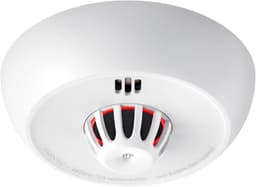
X-Sense X-Sense XH02

Best overall

X-Sense X-Sense XH02
7.7/10about £15.29
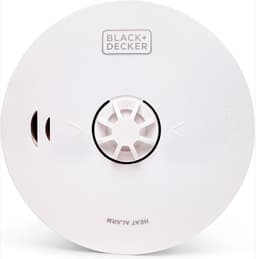
BLACK+DECKER BLACK+DECKER BD/BHE/10

Alternative

BLACK+DECKER BLACK+DECKER BD/BHE/10
6.9/10about £15.19
On this page

Two sensors, two jobs

A smoke alarm is there to notice the particles from a fire that is still small enough to be smoke rather than flame. London Fire Brigade tells you to put smoke alarms in rooms where a fire may start, and to keep them out of steamy or dusty rooms where they false-alarm. A heat alarm waits until the air is hot. Scottish tolerable-standard guidance says heat alarms operate later than smoke alarms, and that their use is restricted to rooms where a smoke alarm would keep going off. Later is the feature in a kitchen. Later is the danger in a hall, because you have given the fire more time before anyone upstairs hears it. Neither sensor does the other’s job. A heat alarm will sit through burnt toast that would trigger an optical smoke alarm, which is why people buy one for the kitchen. It will also sit through a smouldering fire that is producing smoke and not yet enough heat. That is why “heat is safer” is the wrong sentence. Safer for nuisance in a kitchen is not safer as the only alarm between the bedrooms and the stairs. Carbon monoxide is a third sensor, not a mode on these heat alarms. A heat listing that mentions kitchens does not detect CO. If you have a boiler, a fire, or a cooker the regulations name, a CO alarm is another device in another position.

Kitchen versus hall

London Fire Brigade’s cooking guidance is the practical split. Use a heat alarm in the kitchen instead of a smoke alarm, so burnt food does not train you to pull the battery out. Use smoke alarms where a fire may start outside those nuisance rooms: living rooms, halls, landings. The brigade’s “around £10” line is about the cost of a heat alarm in that kitchen role. It is not a claim that one device at about £10 replaces the smoke alarms on the route out. Put the heat alarm on the ceiling, about 1 metre from the hob in Aico’s siting article, not on the wall above the toaster and not in the hallway so it still hears the kitchen. A hallway heat alarm is a bad swap precisely because of the later response. If you want the bedroom to hear the kitchen, you interlink a proper heat alarm with the smoke alarms, inside one brand. You do not move the heat alarm to the landing and retire the smoke alarm. Where to screw it is in how to fit a heat alarm. Bathrooms and shower rooms are not the secret third place for a heat alarm. Aico’s category notes do not treat them as alarm rooms across the usual grades. One listing in our set, the AEGISLINK, names bathrooms. That is a product bullet in tension with the Aico note, not a reason to fit heat instead of ventilation.
X-Sense X-Sense XH02

Testsieger

X-Sense X-Sense XH02
7.7/10about £15.29

What people buy by mistake

Amazon’s browse path files many of these heat alarms under smoke alarms, so a search for a kitchen detector offers you an optical smoke alarm with a similar white disc and a similar 10-year claim. An optical smoke alarm in the kitchen is how you get the 7am toast problem back. If the title says smoke, or the standard line is BS EN 14604 without BS 5446-2, you are looking at the smoke sensor. Send it to the hall if you need a hall alarm. Do not screw it over the hob and then hunt for a hush code. A multi-sensor that combines smoke and heat is still a smoke alarm for this decision. It can be a good escape-route device. It is not the kitchen heat alarm London Fire Brigade is describing, and a removed multi-sensor listing in our research told buyers to keep it out of the kitchen. “Smoke and heat” on a box means the smoke half is still there. Cooking fumes can still find it. The other mix-up is a carbon monoxide alarm sold in the same aisle, sometimes with a digital display and a temperature readout. A temperature readout is not a BS 5446-2 heat alarm. It will not shout at 85 dB because the kitchen is on fire, and a heat alarm will not protect you from a boiler flue.

The mark that matches the sensor

BS 5446-2:2003 is the heat-alarm standard. BS EN 14604 is the smoke-alarm standard. Scottish guidance cites them that way round. When a heat listing also prints EN 14604, as one sealed BLACK+DECKER bullet does, treat it as a confused line, not as a dual certification you can rely on. When a smoke alarm prints only EN 14604, that is the correct family for the hall and the wrong family for the cooker. Class A1, 54°C, or 54–65°C are heat-sensor details. They appear on some of our heat listings, such as the WISUALARM and the AEGISLINK, and they never turn those products into smoke alarms. They also never turn them into carbon monoxide alarms. A Kitemark to BS 5446-2, where the page has one, supports the heat claim. It still does not mean the alarm interlinks, and it does not mean it belongs in the bedroom. Use a heat alarm in the kitchen, and a smoke alarm in the hall, living room and landing. If you are in Scotland, or you are a private landlord in Northern Ireland, those heat and smoke alarms have to be interlinked, which a standalone marketplace heat alarm does not do by itself.

Common questions

What is the difference between a heat alarm and a smoke alarm?
A smoke alarm detects smoke particles. A heat alarm detects a rise to a high temperature, so it responds later. London Fire Brigade places heat alarms in the kitchen instead of smoke alarms, and smoke alarms in other rooms where a fire may start, except steamy rooms. Scottish guidance says the same later-response point and points heat alarms at rooms where smoke alarms would false-alarm. One does not replace the other. A house that needs both jobs needs both sensors.
Can I put a smoke alarm in the kitchen?
You can physically screw one there, and you will likely hate it. Cooking fumes and steam are why London Fire Brigade says use heat rather than smoke in the kitchen. An optical alarm over a toaster is the classic false-alarm complaint. Keep smoke alarms in living rooms, halls and landings. If a kitchen smoke alarm is already there and you pull the battery out to cook, replace that role with a heat alarm and put the smoke cover back on the escape route.
Can one heat alarm cover the hall as well?
No. A heat alarm in the hall is a poor swap because it waits for heat while a smouldering fire may already be making smoke on the route you need. The kitchen heat alarm protects the kitchen from nuisance and from a hot fire in that room. The hall needs its own smoke alarm. Hearing the kitchen from the bedroom is an interlink question, inside one brand, not a reason to move the heat sensor onto the landing.
Why does my smoke alarm go off when I cook?
The sensor is seeing cooking particles, which is what a smoke alarm is for, in the wrong room. Burnt toast and a smoky pan are the cases London Fire Brigade contrasts with a real fire when it recommends a heat alarm in the kitchen. Moving that smoke alarm a metre away sometimes helps and often does not. The reliable split is heat in the kitchen, about 1 metre from the hob, and smoke left on the escape route. Hushing it every morning trains you to ignore it.
Is a multi-sensor smoke and heat alarm the kitchen device?
No. A multi-sensor that still detects smoke is a smoke alarm with an extra heat element. It can suit a hall or landing. It is not a substitute for a heat-only kitchen alarm, and listings of that type have told buyers to keep them out of the kitchen. If the title says smoke and heat, assume cooking fumes remain its problem. Buy heat-only for the cooker, and use the multi-sensor where you wanted faster warning than heat alone can give.
Does a heat alarm detect carbon monoxide?
No. Heat alarms in this comparison are temperature sensors, often Class A1 or a stated degree, with a sounder around 85 dB where the listing prints it. Carbon monoxide is odourless and needs its own alarm. A CO alarm with a temperature display is not a heat alarm either. England’s landlord rules exclude gas cookers from the CO duty, and the Wales rules include gas cooking appliances. That difference does not change the kitchen heat versus hall smoke split.

Related pages

Sources

Public UK sources and the amazon.co.uk listing lines saved on 19 October 2026. No laboratory test.

  1. London Fire Brigade — smoke alarms and heat alarms (retrieved 19 October 2026)
  2. London Fire Brigade — cooking (retrieved 19 October 2026)
  3. Scottish Government — fire and smoke alarms in Scottish homes (retrieved 19 October 2026)
  4. Scottish Government — tolerable standard, fire and carbon monoxide detection (retrieved 19 October 2026)
  5. GOV.UK — smoke and carbon monoxide alarms, landlord Q&A booklet (retrieved 19 October 2026)
  6. Department for Communities — smoke, heat and carbon monoxide alarms in private rentals (retrieved 19 October 2026)
  7. Aico — BS 5839-6:2019 grades (retrieved 19 October 2026)
  8. GOV.UK — Approved Document B fire safety FAQ (retrieved 19 October 2026)