Independent comparisons. We may earn from shop links. More info

How to fit a heat alarm

Updated: 20 October 2026

You have a sealed heat alarm in the box and a kitchen ceiling that already taught you what a smoke alarm does when the toast catches. This page is where that alarm goes, how far from the hob, how you fix it, and how you test it. The distances come from the FireAngel FA6720 manual and from Aico’s siting guidance, not from a lab of our own. The product table stays on the [heat detector comparison](/hub/fire-protection/heat-detector). Whether you wanted heat rather than smoke is in [heat alarm vs smoke alarm](/hub/fire-protection/heat-detector/sub/heat-detector-vs-smoke-alarm). The Products Compared editorial team used those public sources and the listings captured on 19 October 2026. A qualifying purchase can earn a commission at no extra cost to you.

You have a sealed heat alarm in the box and a kitchen ceiling that already taught you what a smoke alarm does when the toast catches.

Our top picks

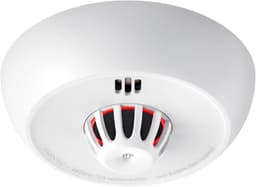
X-Sense X-Sense XH02

Best overall

X-Sense X-Sense XH02
7.7/10about £15.29
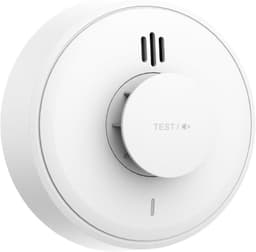
WISUALARM WISUALARM H01

Alternative

WISUALARM WISUALARM H01
7.6/10about £17.99
On this page

Ceiling first

Fit a heat alarm on the ceiling, in the kitchen, garage or loft the leaflet names, not in the hall as a substitute for smoke. The FireAngel FA6720 manual says not to put that alarm on a wall. Aico’s siting article says the same for its sensors: ceiling, not wall. Heat from a fire rises and spreads across the ceiling. A wall point lower down sees that layer later, which is the wrong direction for a sensor that is already slower than smoke. The Status listing in this set says ceiling or wall, and that a professional is not required. That line fights the FireAngel manual and the Aico article. Scottish guidance allows a limited wall exception only if the manufacturer allows it. One amazon bullet is not a reason to ignore the manual in the box you actually bought. Aico’s category notes do not treat bathrooms and shower rooms as alarm rooms. The AEGISLINK listing names bathrooms among its rooms. Follow the leaflet for the alarm you bought, and do not promote a bathroom fit against that Aico note just because one listing printed the word.

Distances that stop cooking alarms

The usual complaint, a heat alarm that still shouts at a frying pan, is often a siting problem. Aico’s homeowner article puts a heat alarm about 1 metre from the hob. That gap is why a unit screwed to the ceiling directly over the rings will see plume after plume. Move it away from the cooker, still on the ceiling, rather than hush it every evening and call the sensor fussy. Keep at least 300 mm from walls and from light fittings. A head tucked into the corner, or tight against a bulkhead, sits out of the moving layer of hot air. Then check coverage: no more than 5.3 metres from the alarm to the farthest wall of the room it is protecting. In a long galley that number is the moment you need a second heat alarm, or a competent person to plan the points. Do not merge 5.3 metres with 7.5 metres. The 7.5 metre figure is Scotland’s note for an open-plan room that includes a kitchen: a heat alarm within 7.5 metres of any point in that space, as part of an interlinked system. If you cannot measure the far corner with a tape and stay inside 5.3 metres, stop and get a competent person rather than guessing a single centre point.
X-Sense X-Sense XH02

Testsieger

X-Sense X-Sense XH02
7.7/10about £15.29

Screw the base

London Fire Brigade’s home guidance is blunt: screw the alarm up, do not glue it. Adhesive fails with heat, paint and time, and a heat alarm that falls off the ceiling is not a heat alarm. The WISUALARM box in this set includes a double-sided sticker and also screws. Some AEGISLINK reviewers describe adhesive or magnetic discs beside screws. Use the screws. The pad is a conflict with the fire-brigade line, not a shortcut for a rental you might leave next year. Battery models in this comparison twist onto a plate. The WISUALARM says you rotate the head to power on, and a minority of reviews say it needs a firm latch before a start-up chirp stops. The FireAngel uses a push-and-twist baseplate, which some buyers find awkward in the slots. Fit the plate first, level enough that the head can turn, then twist until it seats. A dust cover, where the box has one, comes off once decorating is finished. If the plate is missing, stop. BLACK+DECKER sealed-alarm reviews include a missing mounting plate. Do not invent a fixing with the adhesive from another brand’s box. You still do not wire a 230 V alarm yourself.

Test monthly, and stop if it is mains

Test with the button, once a month. Aico’s BS 5839-6 summary gives that monthly button test for systems that are not Grade A. You press the button on the face, or the large button these sealed listings advertise, and you listen for the sounder. You do not hold the alarm over a lit ring, and you do not test it with a flame or a blowtorch. A heat alarm is designed to wait for a high temperature. A homemade heat test can damage the sensor or the ceiling, and it does not tell you the battery path is sound. A hush is not a test. The sealed BLACK+DECKER listing describes a hush of up to 10 minutes while the alarm keeps operating. That is for a real nuisance event after you have dealt with the cause, not for a weekly check you silence because the sound is annoying. If it chirps weeks later, read the leaflet for the low-battery or end-of-life pattern. On a sealed unit the answer is usually a whole new alarm, not a PP3 from a drawer. Two models in this set are mains: the BLACK+DECKER BD/MHE/FF and the Kidde Firex KF3, model 4899. London Fire Brigade says a qualified electrician installs mains alarms. You do not move a mains base or add a wire to make it interlink. What to check before you buy is in the heat alarm buying guide.

Common questions

Does a heat alarm go on the ceiling or the wall?
Put it on the ceiling unless the leaflet in your box expressly allows a wall and describes where. The FireAngel FA6720 manual says not on a wall. Aico’s sensors are ceiling-only in its siting article. The Status amazon listing says ceiling or wall, which is a conflict, not a general permission. Scottish guidance allows a limited wall exception only where the manufacturer allows it. A hallway wall is the wrong room as well as the wrong surface.
How far from the cooker should it be?
Aico’s homeowner guidance is about 1 metre from the hob, on the ceiling, not over the rings. Closer than that, cooking plumes are why a heat alarm still false-triggers even though it ignores ordinary smoke. Also keep 300 mm from walls and lights, and keep the farthest wall of that room within 5.3 metres of the alarm, which is the spacing in the FireAngel manual and the Aico article. Measure with a tape before you mark the hole.
Can I use the sticky pad in the box?
London Fire Brigade says screw, do not glue. The WISUALARM ships a double-sided sticker and screws. Use the screws and the plugs. A pad can be tempting on a textured ceiling or in a rental, and it is the fixing most likely to let go. Magnetic discs mentioned in some AEGISLINK reviews are the same kind of shortcut. If the screws will not hold, change the anchor. Do not change the method to glue.
How do I know a sealed unit has switched on?
Twist the head fully onto the plate. Listings such as the WISUALARM describe rotate-to-power-on, and some buyers need a firm latch before a chirp stops. Then press the test button and wait for the sounder. A quiet click that never alarms is not a pass. If the head will not turn because the slots and the plate do not match, stop and check you have that model’s base. Do not force a different brand’s plate.
How often do I test it, and do I use a flame?
Test monthly with the button. That is the non-Grade-A check in Aico’s standards summary. Do not use a flame, a candle, or a pan held up to the ceiling. Heat alarms wait for a high temperature, so a cooking test is a good way to damage the unit and a poor way to prove the battery. If you have just had a real alarm, use the hush only as the leaflet describes, then test with the button again once the room is cool.
Who fits a mains heat alarm?
A qualified electrician fits the 230 V models. In this set that is the BLACK+DECKER BD/MHE/FF and the Kidde 4899, both with a 9 V backup. You can test with the button after they leave, and you can note whether the new head is smaller than the old one before the ceiling is closed. You should not add interconnect wires yourself, and you should not assume every old Kidde base accepts this connector.

Related pages

Sources

Public UK sources and the amazon.co.uk listing lines saved on 19 October 2026. No laboratory test.

  1. London Fire Brigade — smoke alarms and heat alarms (retrieved 19 October 2026)
  2. London Fire Brigade — cooking (retrieved 19 October 2026)
  3. Scottish Government — fire and smoke alarms in Scottish homes (retrieved 19 October 2026)
  4. Scottish Government — tolerable standard, fire and carbon monoxide detection (retrieved 19 October 2026)
  5. GOV.UK — smoke and carbon monoxide alarms, landlord Q&A booklet (retrieved 19 October 2026)
  6. Department for Communities — smoke, heat and carbon monoxide alarms in private rentals (retrieved 19 October 2026)
  7. Aico — BS 5839-6:2019 grades (retrieved 19 October 2026)
  8. GOV.UK — Approved Document B fire safety FAQ (retrieved 19 October 2026)