Independent comparisons. We may earn from shop links. More info

Natural gas or LPG detector

Updated: 20 October 2026

A mains hob and a propane bottle do not leak into the same layer of air. If you are choosing a natural gas or LPG detector to leave plugged in, decide the height for the fuel you have, and the product standard for the premises, rather than a title that names both gases. Methane from the UK grid rises. LPG vapour sinks. This page is that split, beside the [gas detector comparison](/hub/fire-protection/gas-detector). Updated 20 October 2026 by the Products Compared editorial team. No laboratory test. A later purchase through a Products Compared link can earn us a commission at no extra cost to you.

A mains hob and a propane bottle do not leak into the same layer of air.

Our top picks

Firlarm Firlarm BRJ-502

Best overall

Firlarm Firlarm BRJ-502
8.3/10about £18.66
ABUS ABUS GWM100ME

Rank 2

ABUS ABUS GWM100ME
9.5/10about £53.45
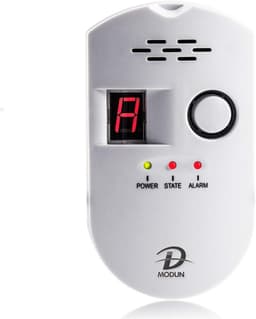
D MODUN D MODUN gas alarm

Alternative

D MODUN D MODUN gas alarm
6.3/10about £15.00
On this page

Which way the gas goes

Mains natural gas is mainly methane, and methane is lighter than room air, so a leak from a hob, a meter, or a joint climbs. LPG is propane or butane from a cylinder. That vapour is heavier than air, so it drops and can collect along the floor or in a low locker. A natural gas or LPG detector is two mounting jobs, even when one box mentions both fuels. An alarm aimed at the ceiling misses LPG that has already sunk, though that high spot is the one you want for methane. The fuel chooses the height, not the shape of the housing. A kitchen on the gas grid needs the sensor where methane has already risen. A propane bottle or a butane heater needs it where vapour has already fallen. One unit cannot occupy both layers, and a plug-in has to live where the socket already is.

Where a leave-on alarm sits

Medem’s location guide is manufacturer guidance, not a test of the alarms we compared, so do not average it with other publishers. For natural gas it puts detection about 150 mm from the ceiling, not below the top of a doorway, and clear of corners and dead air. For LPG and propane it puts the detector about 150 mm from the floor and no higher than 400 mm, above the water you would expect from mopping or a spill, and away from doors, windows, and ventilation that would thin the vapour first. If the sheet in your box gives another gap, follow that sheet. Review wording on the Firlarm and D MODUN listings treats a skirting socket as a poor place for a natural-gas alarm, because the layer you meant to watch is higher up. D MODUN states a British plug and was about £15. A British plug does not lift the sensor. That low outlet can suit LPG, though only within about 400 mm of the floor and above standing water. A handheld pen can be pointed high or low on the how to check a leak page. A plug-in stays at the socket.
Firlarm Firlarm BRJ-502

Testsieger

Firlarm Firlarm BRJ-502
8.3/10about £18.66

A listing that names both fuels

The Firlarm plug-in on amazon.co.uk shows the trap. At our check it was about £18.66. The bullets name natural gas (methane) and liquefied gas (propane and butane), and they say the unit cannot detect carbon monoxide. That is a sensor claim, not two heights. The body still occupies one socket. At skirting level you have chosen the low position, which suits LPG vapour better than methane, even though the bullet mentions both. At a high socket you have chosen the ceiling band, and the propane line does not pull heavy vapour up to the sensor. D MODUN, about £15 with a British plug, is the other listing in that skirting comment. Price and plug type do not make one height right for both fuels. Name your fuel first. The premises come next, because the standard follows the building or the vehicle, not the word caravan alone.

House, touring caravan, or caravan holiday home

BS EN 50194-1:2023 covers fixed apparatus for flammable gas in household premises, including natural gas or LPG, and BSI places caravan holiday homes under this part. It sets tests and performance. It does not require every home to have a detector. In this batch, only the ABUS GWM100ME highlight states EN 50194-1 certification. That claim stays with that fixed alarm and does not transfer to a handheld pen. BS EN 50194-2:2019 covers fixed apparatus in recreational vehicles for an escape of LPG and/or petrol vapour. It points carbon monoxide to EN 50291, so a part 2 alarm is not a carbon monoxide alarm. That split is on the gas detector versus carbon monoxide alarm page. Part 2 does not cover mains natural gas in a motorhome, and no product here is claimed to it. Use part 2 for a fixed LPG alarm in a touring caravan. A caravan holiday home goes back to part 1, as a house does. Neither part orders a purchase. A strong smell is a reason to get people out and call the gas emergency service.

Common questions

Does natural gas rise and LPG sink?
Yes. Mains natural gas is mainly methane, which is lighter than air, so it rises towards the ceiling. LPG vapour from propane or butane is heavier than air, so it sinks and can collect near the floor. A natural gas or LPG detector needs the high position for mains gas and the low position for LPG. Naming both fuels on the box does not put the sensor in two places.
How high should a mains-gas alarm sit, and how low an LPG alarm?
Medem’s location guide is manufacturer guidance, not a test of these alarms. It puts methane detection about 150 mm from the ceiling, and not below the top of a doorway. It puts LPG about 150 mm from the floor and no higher than 400 mm, above water from mopping. Do not average those gaps with other publishers. If your own instructions give another band, follow them.
Is a skirting socket all right for a natural-gas plug-in?
For mains gas, no. Review wording on the Firlarm and D MODUN listings calls a skirting socket a poor place, because methane rises and the sensor would sit below the layer you want to watch. The same low socket can suit LPG if it stays in the low band and above standing water. A British 13 amp plug only means the unit fits a UK socket. It does not choose the height.
If the listing names both fuels, can I use one height?
No. The Firlarm listing, about £18.66 on amazon.co.uk when we checked, names natural gas and liquefied gas together and says the unit cannot detect carbon monoxide. That describes the sensor. The plug still occupies one height, so match the height to the fuel in the room. A pen can be aimed high or low for a brief check. A leave-on plug-in cannot.
Does a caravan holiday home use the same standard as a touring caravan?
No. BSI places caravan holiday homes under BS EN 50194-1:2023, with fixed household alarms for natural gas or LPG. BS EN 50194-2:2019 is for fixed apparatus in recreational vehicles, covering LPG and/or petrol vapour, not mains natural gas. The word caravan on a box is not enough. Neither part orders you to fit a detector.
Will an alarm to BS EN 50194-2 also see carbon monoxide?
No. Part 2 excludes toxic gases such as carbon monoxide and points that hazard to EN 50291. An LPG alarm for a touring caravan does not replace a carbon monoxide alarm, and part 2 does not cover mains natural gas in a motorhome. No product in our comparison is claimed to BS EN 50194-2. Only the ABUS GWM100ME highlight states EN 50194-1, and only for that fixed unit.

Related pages

Sources

Safety rules and standards are from the public sources below. Prices, stars, and review counts are from the amazon.co.uk listings. Last checked 20 October 2026.

  1. National Gas emergency contacts (retrieved 20 October 2026)
  2. HSE domestic gas FAQs (retrieved 20 October 2026)
  3. Gas Safety (Installation and Use) Regulations 1998 (retrieved 20 October 2026)
  4. HSE L56, safety in the installation and use of gas systems and appliances (retrieved 20 October 2026)
  5. GOV.UK smoke and carbon monoxide alarm booklet for landlords (retrieved 20 October 2026)
  6. BSI BS EN 50194-1:2023, flammable gases in household premises (retrieved 20 October 2026)
  7. Cadent, sense of smell (retrieved 20 October 2026)
  8. Safelincs: will a carbon monoxide alarm detect gas leaks? (retrieved 20 October 2026)