Independent comparisons. We may earn from shop links. More info

How to use natural stone adhesive without mixing the methods

Updated: 23 October 2026

You already have a bottle, a tub or a spray, and the label says stone. The mistake is to treat every pack as the same motion: five dabs under a marble tile, a gravel spray on a drive, or thin super glue flooded into a wide chip. How to use natural stone adhesive depends on which chemistry is open. This page is the shared prep, three short methods, and the point where you stop. Product choice sits on the [natural stone adhesive comparison](/hub/fillers-adhesives-and-sprays/natural-stone-adhesive). Cure times below are the ones printed on the named listing. A qualifying purchase can earn us a commission at no extra cost to you.

You already have a bottle, a tub or a spray, and the label says stone.

Our top picks

On this page

Clean, dry, and the right product open

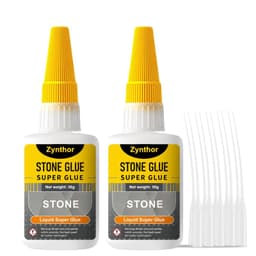
Dust, grease and loose grains stop a water-based binder, a cement bed and a polyester. Dry means dry to the touch and, outdoors, long enough for the cure that pack prints. A ready-mixed tub is not a gravel binder, a 120 ml spray is not a tile adhesive, and Zynthor’s thin glue is not a filler for a missing corner. If you are unsure which you bought, check the natural stone adhesive buying guide. Work small: a notched bed skins, a cyanoacrylate tip clogs, and polyester gels once the hardener is in. If thin glue bonds skin, warm soapy water and roll the skin apart.

Bedding stone tiles

For a natural stone tile, comb a solid bed. Weber’s guide says full contact and no spot-fixing. The Tile Association says comb the ribs in one direction and press and twist so they collapse. Butter the back of pale or textured stone. Natural Stone Online pairs that with a white cement-based powdered adhesive, because a grey bed can stain. LEVEL PLUS RM12’s listing says floor, natural stone, interior and exterior. The Tile Association describes ready-mixed adhesives for walls and a thin bed of about 3 mm, not as a general floor adhesive. The listing prints no cure, so do not invent a time to walk on it.

Locking loose gravel

A binder coats stones you already have. They need to be dry and dust-free, or the crust lifts. Specialist brands quote about 72 hours above about 5°C. Those clocks are theirs, not these bottles. On these bottles, use the hours that bottle prints. SomVibes: touch-dry in 4 hours, fully dry in 72. Houbobo: 12–24 hours. NBOFOL: 24 hours. YumCraft prints no cure; one reviewer waited 48 hours. Do not average them. A watering can wastes a thin binder. Litres, and why a 5 m² line is not a measurement, are on the gravel glue binder page.

A chip or a tight break

A joint you can hold shut takes a drop of thin glue, then pressure. Zynthor’s listing says about 30 to 60 seconds to set and 24 hours to cure. Reviewers say it runs off an open joint. A missing edge needs knife-grade polyester. Harbro is resin plus hardener for vertical faces on marble, granite, onyx and travertine. Leave the fill proud so you can hone it back. It gives no set time in minutes, so do not borrow another brand’s 35-minute cure. The water field says moisture resistant, not waterproof.

When you stop

Stop for a floor, a pool, a show edge or a drive. A solid-bed description does not design movement joints, and Weber flags the joints where a floor meets a wall or crosses a heated bay. None of these seven listings prints a class for a pool or an external landing. The binders are small bottles. A locked crust is not a permeable drive and not resin-bound paving. A new hard standing, or a crack that keeps moving, is no longer this description. DIY that remains is a small dry fixing, a small gravel patch with a printed cure, or one chip you can leave proud.

Common questions

Should I butter the back of the stone?
Yes for pale or textured stone. Butter the back after you have combed the background, so you can see full cover before the tile goes down. Natural Stone Online pairs that step with a white cement-based powdered adhesive, because a grey bed can stain. It fills the contact the notch missed. It does not turn a thin ready-mixed tub into a floor bed.
How do I put a gravel binder on without wasting it?
Start with dry, dust-free stones and put on enough liquid to coat them, not a puddle. A spray-compact-spray sequence is how specialist brands describe a decorative coat. On these Amazon bottles, follow the mix line on your pack: SomVibes says no mixing, YumCraft allows 1 part water to 10 parts glue. Keep rain and feet off for the hours that bottle prints.
How long do I stay off it?
Use the cure on the pack you opened. SomVibes: touch-dry in 4 hours, fully dry in 72 hours. Houbobo: 12–24 hours on the bullet, 24 hours in the cure field. NBOFOL: 24 hours. Zynthor sets in 30–60 seconds and cures in 24 hours. YumCraft, Harbro and LEVEL PLUS do not print a cure you can quote. Do not average them.
What if the polyester has no set time on the listing?
Leave the repair longer than you think, keep it proud, and do not sand because a different brand’s datasheet said 35 minutes. Harbro’s amazon.co.uk listing has resin, hardener and no minute-cure. Faber’s 35 minutes at 22°C belongs to Faber GL 88, not to this listing. If the paste is still soft, it is not ready.
When is this no longer a DIY description?
When the stone is a floor, a pool, a show edge, a drive, or a crack that moves. Also when you cannot keep the work dry for the printed cure, or when the only adhesive you have is the wrong chemistry for the gap. A tiler or a stone restorer is the next step.

Related pages

Sources

Public UK sources used for this comparison. amazon.co.uk prices, stars and review counts were taken from the listings on or before 19 October 2026.

  1. ARDEX X 32 technical datasheet (retrieved 19 October 2026)
  2. ARDEX S 27 W (retrieved 19 October 2026)
  3. Weber UK, tiling natural stone (retrieved 19 October 2026)
  4. Contract Flooring Journal, fixing natural stone (retrieved 19 October 2026)
  5. BSI BS 5385-3:2024 (retrieved 19 October 2026)
  6. Class F hard surfaces, General Permitted Development Order 2015 (retrieved 19 October 2026)
  7. HSE SR22, cyanoacrylates (retrieved 19 October 2026)
  8. NHS Greater Glasgow and Clyde, tissue adhesives (retrieved 19 October 2026)