Independent comparisons. We may earn from shop links. More info

Worm Composter for a Small Garden

Updated: October 2026

You have a balcony, a courtyard or a single raised bed, and a full-size compost bin will not fit. This page chooses a worm composter for a small garden from the space. A buried pot needs soil or a deep container. A bare balcony needs a stack you can shade and drain. Read the [worm composter buying guide](/hub/fertiliser-soil-and-bark-mulch/worm-composter/sub/worm-composter-buying-guide) for the checklist, and the [worm composter comparison](/hub/fertiliser-soil-and-bark-mulch/worm-composter) for prices. A qualifying purchase can earn us a commission at no extra cost to you.

You have a balcony, a courtyard or a single raised bed, and a full-size compost bin will not fit. This page chooses a worm composter for a small garden from the space. A buried pot needs soil or a deep container.

Our top picks

On this page

A small garden is not one site

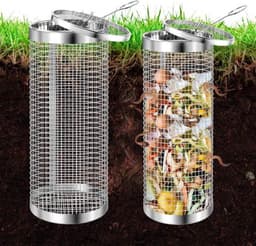
A bare balcony has no soil, so a buried pot cannot go anywhere. A courtyard with a deep planter or a large window box has depth, and a tube can sit inside it. A small raised bed has soil, so a buried tube feeds the bed around it. MidingChai buyers describe a tube in a tiny bed, a courtyard, a large pot or a deep window box. That use comes from reviewers, not from the title. On a bare balcony you want a tray you can shade. The RHS says a wormery suits a small garden, a balcony or a roof garden, and that many people keep one outside because of flies. It will not take every scrap you produce.

What the small buried pots really hold

The MidingChai packs are listed at 8 litres for £25.89 and 4 litres for £24.99, and one reviewer puts the smaller bin nearer 3.5 litres. The Relaxdays pots are £56.90 for 5 litres and £35.78 for 1 litre. One buyer measured a little over 600 ml, and another found the small pot too small for the worms to stay in. The UNIFAMILY pair is £11.59 and prints 30 L against about 9 x 9 x 30 cm, so that 30 is a length. These tubes take a handful of scraps for one or two people, not a full caddy. One UNIFAMILY reviewer kept a two-person household's scraps out of the kitchen caddy between collections. Some councils, such as Edinburgh, say a wormery is not for green garden waste. That is one council's guidance, not a UK-wide rule. Worms are not in these boxes. On a balcony, the DIVCHI three-tray stack at £38.99 is the only listing here that states indoor and outdoor use and names a patio, balcony, garden, greenhouse and utility area. Reviewers say to keep it under cover and report a poor fit.

Shade, rain and a UK winter

A balcony can be hot in July and frozen in January. The RHS gives about 18 to 25°C as the comfortable range, so shade a stack in summer. A loose lid lets rain in. One MidingChai reviewer leaves the lid proud of the soil so rain does not swamp a buried tube. In winter the RHS advises moving a bin into a shed or garage where hard frosts are expected. A buried tube cannot be moved, and the soil around it gives some protection. In a deep planter the soil freezes harder, so cover the lid and keep the planter against a wall. How much to add, and when to drain, is on the how to use a wormery page.

Smell beside the back door

The RHS says a wormery kept indoors can attract flies and smell if it is overfed. The buried pots here state balcony or garden use, and the MidingChai listings do not claim a kitchen. A reviewer says a carbon-filter fabric, bought separately, can cut smell if you keep the bin by a back door. The DIVCHI is the only bin that states indoor use, and no review confirms a kitchen.

Which shape fits which site

A raised bed, or a planter deep enough for a tube, takes a buried bin. The 8 litre MidingChai pack is the top pick for that, at £25.89, with the caution that reviewers report rats. A window box that cannot take 8 litres might use the 4 litre pack. A bare balcony takes the DIVCHI, which you shade and drain. Shape is on the in-ground wormery or stacking trays page. We did not test a bin in a lab.

Common questions

Can I run a wormery with no garden soil?
Yes, but not with a buried pot. A bare balcony needs a stack of trays that you can shade and drain, such as the DIVCHI three-tray bin at £38.99. A buried tube needs soil or a deep planter to sit in, because worms move through slots in its sides.
Will a buried pot work in a raised bed?
Yes, that is the job it is built for. Buyers of the MidingChai and UNIFAMILY bins describe burying them in raised beds and small beds. Expect a small volume, check for rats around the base, and add composting worms yourself, because none of the listings compared here states that worms are included.
Is a 1 litre clay pot enough for one person?
Probably not for daily scraps. The Relaxdays 1 litre pot cost £35.78, one reviewer measured a little over 600 ml, and another found it too small for the worms to stay in. It suits a trial in a small bed, not a household caddy.
Can the small PVC tubes go in a large planter?
Yes. MidingChai reviewers describe using them in a deep planter, a large pot and a deep window box. The planter needs to be deep enough to hold the tube with some soil around it, and you should cover the lid in a hard frost.
Will it smell in a flat?
It can if you overfeed it. The RHS says many people keep a wormery outdoors because of flies and smell. The buried bins here are for outdoor use. A reviewer suggests a carbon-filter fabric you buy yourself, and you should feed little and often.
Do I still need a council caddy?
Usually yes. A small wormery takes some kitchen waste but not everything, and some councils collect food that worms cannot eat. Edinburgh's guidance is one example. Check your own council, because food waste rules differ across the UK.
Which listing here names a balcony?
The DIVCHI three-tray worm composter names a patio, balcony, garden, greenhouse and utility area, and states indoor and outdoor use. The Relaxdays pots name a balcony and garden. The MidingChai and UNIFAMILY listings name gardens and raised beds.

Related pages

Sources

Public UK sources used for this comparison; last accessed 15 October 2026.

  1. RHS: Worm composting (retrieved 15 October 2026)
  2. RHS: Homemade fertilisers (retrieved 15 October 2026)
  3. RHS: Earthworms (retrieved 15 October 2026)
  4. RHS: Composting through the winter (retrieved 15 October 2026)
  5. GOV.UK: Animal material in home compost heaps (retrieved 15 October 2026)
  6. BBC Gardeners' World: Best wormeries (retrieved 15 October 2026)
  7. Natural History Museum: How to make a worm composter (retrieved 15 October 2026)
  8. Wiggly Wigglers: In-ground wormery or a tray kit (retrieved 15 October 2026)