Independent comparisons. We may earn from shop links. More info

In-Ground Wormery vs Tray Wormery

Updated: October 2026

A buried pot and a stack of trays are different tools. This page compares an in-ground wormery with a tray wormery on your own site: a bed you can dig, compost you need to carry, and whether a tap matters. Bury a pot if the bed is the destination. Buy trays if you have no soil or need to take compost away. Prices are in the [worm composter comparison](/hub/fertiliser-soil-and-bark-mulch/worm-composter). Hot bins, tumblers and bokashi are not covered here. A qualifying purchase can earn us a commission at no extra cost to you.

A buried pot and a stack of trays are different tools. This page compares an in-ground wormery with a tray wormery on your own site: a bed you can dig, compost you need to carry, and whether a tap matters.

Our top picks

On this page

What each shape gives you

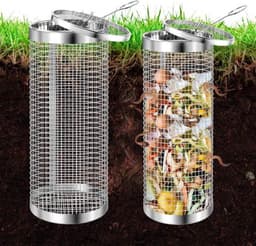
A buried pot is a tube with slots, sunk so the lid is at the surface. Worms move in and out, the waste is eaten in place, and you never empty it. Wiggly Wigglers notes that an in-ground bin stays put and is often cheaper, while a tray kit has a tap and can move to a balcony. A tray wormery is a stack with a sump and often a tap. The RHS describes that layout, and a stack lets you lift the bottom tray without sorting worms by hand. You get compost to carry and liquid to dilute. A stack needs shade and cover from rain. Neither shape replaces a compost heap for hedge clippings. If a raised bed is waiting to be fed, bury a pot. If you have a patio and pots, a stack is the practical choice.

The buried bins in this comparison

Six of the seven listings are in-ground. The MidingChai packs are PVC, at £25.89 for two 8 litre tubes and £24.99 for two 4 litre tubes, both at 4.8 from 10 reviews with very similar text. Reviewers praise thick plastic and locking lids. They also report rats digging the bins up and chewing the plastic. The UNIFAMILY metal pair is £11.59, at 3.8 from 14 reviews. One reviewer says the wire kept rodents out. Others say the lid sticks and bends until you lift the tube out. Its 30 L line conflicts with 9 x 9 x 30 cm. The Relaxdays pots are £35.78 for a listed 1 litre and £56.90 for 5 litres. One small-pot review measured a little over 600 ml, and the 5.0 on the large pot rests on four reviews. None of these listings includes worms.

The one stacking bin

The only tray here is the DIVCHI three-tray worm composter at £38.99. It has a tap, a moisture mat and an airflow lid, and the listing states indoor and outdoor use. It is 4.0 from five reviews. A reviewer says worms did not easily escape. The trays and lid do not align, one buyer superglued the legs, and another calls it flimsy and says to keep it under cover. The page gives no litre capacity and prints 250 g beside 50 x 37 x 74 cm, so treat the weight as unreliable. Put the stack out of direct sun and check the trays sit square before you add worms.

Choose on the site

If you have soil and you want that bed fed, bury a pot and accept the small volume. An 8 litre tube takes a handful of peelings a day for one or two people, not a full caddy. If you have no soil, or you want compost and liquid to carry, buy trays. The DIVCHI is the only stack here with a tap. Use the worm composter buying guide if the shape is still open, the worm composter for a small garden page for a balcony, and the how to use a wormery page once the bin is in place. We compared amazon.co.uk listings and did not test a bin.

Common questions

When is a buried pot the better buy?
A buried pot is better when you have a raised bed, border or deep planter that you want to feed and you are happy with a small volume. It costs less than a stack, needs no assembly and leaves the compost in the soil. It is worse if you want to carry compost elsewhere.
When do I need trays and a tap?
Choose trays if you have no soil, or if you want finished compost and liquid to take to pots. The tap lets you drain liquid, which you dilute about 1 part to 10 parts water. Trays cost more than a buried tube and need shade and shelter from rain.
Can I lift compost out of an in-ground tube?
Not easily. A buried tube has no tray, so the compost stays in the bed. A reviewer of the UNIFAMILY metal bins says you have to pull the buried tube out of the soil if the lid bends and sticks. If you want to carry compost away, a stack is the better shape.
Will worms find a buried pot on their own?
Do not count on it. The slots let worms move in, but the listings do not say worms come with the pot, and one Relaxdays reviewer found that the worms stayed in the raised bed because the pot was too small. Add composting worms yourself and give them food inside the pot.
Does a locking lid make a PVC tube rat-proof?
No. The MidingChai lids lock, but reviewers report rats digging up the bins and chewing the PVC. The lid keeps out pets and wind, not a determined rodent. If rats are active in your garden, consider a metal bin or a stack.
Is DIVCHI the only tray in this comparison?
Yes. The DIVCHI three-tray worm composter at £38.99 is the only stacking wormery among the seven listings. It has a tap and states indoor and outdoor use, but reviewers report poor fit between trays and lid, so check it when it arrives.
What happens if a stack sits in the rain?
A loose lid lets rain in, and the contents turn wet and sour. One DIVCHI reviewer says to keep it under cover. Put a stack in shade under a porch or in a shed, and drain the tap regularly so liquid does not build up.

Related pages

Sources

Public UK sources used for this comparison; last accessed 15 October 2026.

  1. RHS: Worm composting (retrieved 15 October 2026)
  2. RHS: Homemade fertilisers (retrieved 15 October 2026)
  3. RHS: Earthworms (retrieved 15 October 2026)
  4. RHS: Composting through the winter (retrieved 15 October 2026)
  5. GOV.UK: Animal material in home compost heaps (retrieved 15 October 2026)
  6. BBC Gardeners' World: Best wormeries (retrieved 15 October 2026)
  7. Natural History Museum: How to make a worm composter (retrieved 15 October 2026)
  8. Wiggly Wigglers: In-ground wormery or a tray kit (retrieved 15 October 2026)