Independent comparisons. We may earn from shop links. More info

Worm Composter Buying Guide

Updated: October 2026

You have peelings, tea bags and coffee grounds every day, a council caddy that fills faster than it is collected, and a search page that mixes pots, trays, hot bins and books. This worm composter buying guide decides the type, the size and whether worms are in the box before you compare prices. The [worm composter comparison](/hub/fertiliser-soil-and-bark-mulch/worm-composter) holds the table, and this page does not name one winner. If you only want a name, jump to [the best worm composter](/hub/fertiliser-soil-and-bark-mulch/worm-composter/sub/worm-composter-best). A qualifying purchase can earn us a commission at no extra cost to you.

You have peelings, tea bags and coffee grounds every day, a council caddy that fills faster than it is collected, and a search page that mixes pots, trays, hot bins and books.

Our top picks

On this page

Buried pot or stacking trays

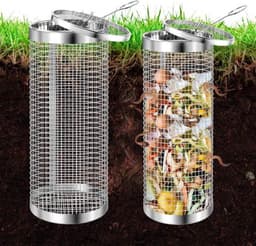
A wormery is not a compost heap. The RHS describes it as turning kitchen waste into compost with composting worms, and the shape decides where the finished material ends up. A buried pot is sunk into a raised bed, border or deep planter. Worms move through slots, the waste feeds that patch, and you never empty it. A stack sits on the ground, usually with a tap, and you lift the finished tray out. Wiggly Wigglers sums the trade-off up as space, maintenance, portability and cost. A buried bin stays put, costs less and needs soil. A tray kit can move to a balcony and gives you liquid, but you pay more and you shelter it. Six of the seven listings here are buried bins, and one, the £38.99 DIVCHI, is a three-tray stack with a tap. If you can dig a bed you want to feed, a buried bin is the cheaper route and its volume is small. If you have no soil, or you want castings to take elsewhere, you are shopping for trays. The in-ground wormery versus tray wormery page goes through that fork.

What size is honest

Makers size a wormery by household waste. Original Organics suggests a small bin for one or two people, and three or four trays when a council caddy fills every week. Wormcity lists a 75 litre bin for two or more people and a 100 litre bin for four or more. Those are manufacturer guides, not figures from these listings. The buried tubes here are much smaller. The MidingChai packs are listed at 8 litres and 4 litres, a review puts the 4 litre pack nearer 3.5 litres, and the Relaxdays pots are listed at 1 litre and 5 litres. One reviewer measured a little over 600 ml in the smaller pot. A tube that size takes a handful of peelings a day for one or two people, not a full family caddy. A buried bin feeds one bed. It is not your main route for food waste. The UNIFAMILY pair prints 30 L and also about 9 x 9 x 30 cm. A tube 9 cm across cannot hold 30 litres, so the 30 is almost certainly a length. Check litres against height and width before you rely on them.

Worms are separate unless the kit says otherwise

None of the seven listings states that composting worms are in the box. The MidingChai title says starter kit, but the contents it names are two bins and two lids. Plan a second purchase from a specialist. The RHS names Eisenia fetida, often sold as tiger or brandling worms, and Dendrobaena veneta. Garden earthworms live in soil and do not thrive on fresh kitchen waste. A kit that prints a worm weight is a different product: on 15 October 2026 the premium listings, roughly £100 to £136, were where that line appeared, for example 250 g on one Wiggly Wigglers kit.

Material only after the job is clear

PVC is cheap, and MidingChai reviewers praise the thick plastic, but the same reviews report rats chewing it. One UNIFAMILY reviewer says the wire kept rodents out, although other reviews say the lid bends and sticks. Terracotta looks neat, yet the 5 litre pot costs £56.90 with four reviews behind its 5.0 rating. Decide type and size before material. A perfect lid is still the wrong buy if you have no soil. Then compare price per litre, the number of reviews and the faults reviewers repeat. Four reviews tell you less than 14. The worm composter for a small garden page applies this to a balcony, courtyard or planter. We did not test a bin in a lab.

Common questions

Should I bury a pot or buy trays?
Bury a pot if you have a raised bed, border or deep planter that you want to feed and you are happy with a small volume. Buy trays if you have no soil, or if you want finished compost and liquid to carry elsewhere. Trays cost more and need shelter, while a buried bin is cheaper but cannot be emptied.
How many trays does a household of two need?
Maker guides vary. Original Organics suggests a small bin for one or two people and three or four trays when a council caddy fills weekly. Wormcity lists three trays for two or more people. Start with the amount of kitchen waste you actually produce, because a tube holding a few litres will not keep up with a full caddy.
Do worm composters come with worms?
Not on these listings. None of the seven amazon.co.uk listings compared here states that worms are included, even when the title says starter kit. You usually buy composting worms separately. Kits that print a weight of worms exist at higher prices, so check the contents line, not the title.
Which worms should I order?
Order composting worms, usually sold as tiger, brandling or compost worms. The RHS names Eisenia fetida and Dendrobaena veneta as suitable species. Garden earthworms are the wrong choice, because they need soil and do not cope with a concentrated pile of kitchen waste.
Why does one listing say 30 litres and a tube 9 cm wide?
The UNIFAMILY listing prints 30 L, but its dimensions are about 9 x 9 x 30 cm. A tube 9 cm across cannot hold 30 litres, so the 30 is most likely a length in centimetres. Check the litres against the height and width before you trust a capacity line.
Is terracotta a different job from a PVC tube?
It is the same job in a different material. Terracotta looks better in a visible bed and avoids plastic in the soil, but it costs more per litre and can break in the post. PVC is cheaper and tougher, though reviewers report rats chewing it.

Related pages

Sources

Public UK sources used for this comparison; last accessed 15 October 2026.

  1. RHS: Worm composting (retrieved 15 October 2026)
  2. RHS: Homemade fertilisers (retrieved 15 October 2026)
  3. RHS: Earthworms (retrieved 15 October 2026)
  4. RHS: Composting through the winter (retrieved 15 October 2026)
  5. GOV.UK: Animal material in home compost heaps (retrieved 15 October 2026)
  6. BBC Gardeners' World: Best wormeries (retrieved 15 October 2026)
  7. Natural History Museum: How to make a worm composter (retrieved 15 October 2026)
  8. Wiggly Wigglers: In-ground wormery or a tray kit (retrieved 15 October 2026)