Independent comparisons. We may earn from shop links. More info

Does weed and feed kill white clover in a UK lawn?

Updated: October 2026

Does weed and feed kill clover? It can affect white clover when the exact product label names it, the plant is actively growing and you apply the labelled rate, but a black lawn after treatment is not proof that the clover has been controlled. Blackening usually shows the separate action of iron on moss. Before choosing a pack from the [weed and feed comparison](/hub/fertiliser-soil-and-bark-mulch/weed-and-feed), decide whether you actually want to remove clover. The RHS treats it as a useful lawn wildflower that fixes nitrogen and provides food for bees.

Does weed and feed kill clover?

Our top picks

On this page

Clover is not moss

A combined granule puts different jobs in one product. A selective herbicide targets certain broadleaf plants. Iron acts on moss and can turn it black. The moss response can show before any change in clover, so a few days is too soon to judge both. White clover may be susceptible to herbicides such as mecoprop-P or dicamba, but only your pack's approved label says what that formulation claims. Miracle-Gro's UK information names MCPA and mecoprop-P alongside ferrous sulphate. Other brands list different combinations. Do not copy an active ingredient or a weed list from a similar-looking bag. Established patches need time. Miracle-Gro says full weed control can take three to five weeks, and that weeds may twist before they die. That is not a seven-day promise. If the lawn is drought-stressed, newly laid or outside the labelled window, wait rather than adding granules.

What these listings actually name

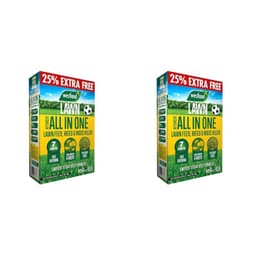
The two saved Miracle-Gro listings name white clover, dandelions and plantain. That is easier to match to a clover problem than major weeds or a missing species. Greenforce says major weed types and names no species in the saved details. The Doff 1 kg bullets say broad-leaved weeds without a full list. A Doff retailer page names white clover and prints MAPP 18963. Westland's own page names 12 weed types, including white clover and daisies. Those pages are a prompt to read the delivered label, not a claim you can paste onto a different listing. If one species decides the purchase, read the label before you open the pack. Check the named weeds, the season, the gram rate and the restrictions together. Those checks are in the weed and feed buying guide.

Why reviews still disagree

Split reviews do not prove the label is wrong. Some UK customers report clover disappearing after Miracle-Gro, Greenforce or Westland. Others report only blackened moss. The pack rate matters more than another reviewer's spreader setting. Clover needs to be growing and carrying enough leaf. A spring feed applied too early can miss clover that thickens later. Mowing just before treatment removes leaf, and drought stresses both the lawn and the weed. Follow the mowing and watering lines rather than adding product because results are slow. Scorched grass usually means excess or uneven granules. Do not fill or stop a spreader on the lawn, and do not double-dose a pale strip. Why 32 g and 35 g must stay distinct is in how to apply weed and feed.

Treat, remove or keep the clover

Keeping some clover is a valid choice. It can stay green when fine grasses struggle, it fixes nitrogen and it supports pollinators. For a mixed lawn, use a feed without herbicide and mow at a height that suits the mixture. A combined product cannot tell valued clover from clover you call a weed. For a few plants, hand removal can be more proportionate than treating the whole area. Take as much root as is practical, and sow only after the herbicide interval. Dense clover often signals thin turf or low nitrogen. Treat chemically only when the label names the weed and you can meet every condition. Packs are compared on best weed and feed UK. Keep people and animals off as the label directs.

Weeds these packs do not claim

Horsetail is not on the weed lists found for these products. Its deep underground growth is a different problem from white clover. All major weed types is not evidence of control. Grass weeds are also a poor match for a selective broadleaf herbicide, because the plant is close to the lawn itself. Identify an unnamed weed before you treat. A rosette may be plantain or dandelion. A grassy clump or a horsetail stem needs another plan. If you are unsure, seek local advice rather than repeating a whole-lawn treatment.

Common questions

Does weed and feed kill white clover?
Some products are labelled for white clover, including the Miracle-Gro information reviewed here, but results depend on active growth and correct application. Check the delivered pack. A listing that says only weeds does not give enough detail to promise clover control.
Why did the moss turn black but the clover stay green?
Iron acts on moss separately from the selective herbicide. Black moss therefore shows an iron response, not successful weed control. Give the herbicide the stated period. Miracle-Gro says three to five weeks, without adding another dose.
Which listings name clover?
The two saved Miracle-Gro listings explicitly name white clover. Separate Westland and Doff brand or retailer information also names it, but their saved Amazon bullets do not. Match those claims to the exact pack and approval details you receive.
Will weed and feed kill dandelions and plantain?
The Miracle-Gro product information in this comparison names both dandelions and plantain. Other packs may have different lists. Identification and the product label matter; do not assume every combined granule controls the same broadleaf species.
Will it kill horsetail?
Do not expect it to. Horsetail is not named in the lists reviewed for these products and is a persistent perennial with deep underground growth. Repeatedly increasing the lawn-product dose risks the grass without establishing an approved horsetail treatment.
Should I keep clover for bees?
You can. The RHS recognises clover as a wildflower that supports bees and fixes nitrogen. If that benefit suits your garden, avoid a combined herbicide and choose feed-only lawn care, accepting a more diverse appearance.

Related pages

Sources

Public UK and maker sources from the research digest, used for this page in October 2026. Prices, stars and review counts are from the eight amazon.co.uk listings in the snapshot of 21 October 2026. Scores are stars plus review volume, not a lawn trial. Coverage figures are listing claims. A pet line is only as long as the label. Hygeia's analysis is the maker's statement. Confirm the MAPP number on the pack. An Irish authorisation is not treated here as the Great Britain or Northern Ireland label.

  1. HSE, garden and home use of pesticides (retrieved 21 October 2026)
  2. The Plant Protection Products (Sustainable Use) Regulations 2012 (retrieved 21 October 2026)
  3. HSE, pesticides after Brexit (retrieved 21 October 2026)
  4. RHS, weeds in lawns (retrieved 21 October 2026)
  5. Miracle-Gro Complete 4 in 1 (retrieved 21 October 2026)
  6. Westland Aftercut All in One (retrieved 21 October 2026)
  7. Doff lawn feed, weed and moss killer (retrieved 21 October 2026)
  8. Greenforce 4 in 1, UK retailer (retrieved 21 October 2026)