Independent comparisons. We may earn from shop links. More info

Spring or Autumn Lawn Feed

Updated: October 2026

If you are holding a high-nitrogen bag in September, the choice between spring or autumn lawn feed is not just a change of application date. Spring feed supports leaf growth while grass is actively growing. Autumn feed uses a different nutrient balance to support roots and resilience without forcing soft growth. None of the seven Substral titles is an autumn-only feed. Check each stated season in the [Substral lawn fertiliser comparison](/hub/fertiliser-soil-and-bark-mulch/substral-lawn-fertiliser), and do not turn a missing season into permission to apply in October. A qualifying purchase can earn us a commission at no extra cost to you.

If you are holding a high-nitrogen bag in September, the choice between spring or autumn lawn feed is not just a change of application date. Spring feed supports leaf growth while grass is actively growing.

Our top picks

On this page

Spring feed is for active leaf growth

UK spring feeding normally begins in mid-spring, often late March to April, once grass is growing and the soil is moist rather than frozen or waterlogged. Spring and summer products generally contain more nitrogen, because the job is leaf growth and recovery from wear. Premium Sport & Play states 20:5:8, 25 g/m² and 400 m² from a 10 kg bag. The programme names March or April, then May to August. If the lawn is about 200 m², one full-rate treatment uses 5 kg. Doubling the dose does not improve the schedule. Feed only when the lawn needs it. The Royal Horticultural Society notes that many lawns cope without fertiliser, and that a wildflower lawn should not be fed. Shade, drought, compaction and drainage need their own remedies. High-nitrogen feeding late in the year can push tender growth as the plant should be preparing for cooler weather. Once the month is right, follow the how to apply lawn fertiliser page.

Autumn feed is a different product

If the month is September or October, look for a product labelled for autumn. Autumn feeding supports roots and resilience, usually with less nitrogen than a spring feed and relatively more potassium. A smaller handful of the summer bag changes the quantity, not the nutrient balance. The Royal Horticultural Society advises against leftover summer feed in October. If growth is poor after autumn maintenance, an appropriate autumn feed may be useful, but feeding is not compulsory. Apply only in suitable conditions and according to that product’s label. Do not choose by a ratio alone. Moos states 6:5:10, which may look less nitrogen-heavy than Premium’s 20:5:8, but its season is March to September, so it is not an autumn feed. An autumn product from outside this set may be the right purchase. Use the lawn fertiliser buying guide before you look elsewhere.

What these Substral listings state

Premium has the clearest spring and summer programme: March or April, then May to August. Its 20:5:8 line and 25 g/m² rate fit a growing all-grass lawn, not October. Express states 14% nitrogen, 5% potassium oxide and 600 m² in the title. Phosphorus is not stated, and no season appears. A lower price per stated square metre does not fill that gap. Verify the season on the bag. Do not borrow Premium’s timetable or use Express in autumn. Moos states March to September, about 140 m² and 6:5:10, with up to three uses in that window. September is not October, and competing-with-moss wording is not a verified mosskiller authorisation. EasyFix also states March to September, and it adds seed for repair rather than feeding alone.

A missing season is not an October yes

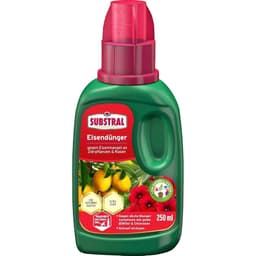
The organic granules have no season or NPK line. Rasen-Vital says to apply to a damp lawn morning or evening, but it states no seasonal window. The 7391 iron bottle also lacks a season and is an iron feed, not a full annual programme. Missing data means checking the physical label. For a dense all-grass lawn in late March or April, a spring product from this set can fit. For October, none of these seven titles is the answer. Buy a clearly labelled autumn feed elsewhere if the lawn needs one, or leave a healthy lawn unfed.

Common questions

When should I apply spring lawn feed in the UK?
Late March to April is a common starting window, but active grass growth and suitable soil conditions matter more than a calendar date. Avoid frozen, drought-stressed or waterlogged ground. Premium’s programme begins in March or April and continues only within its stated May-to-August growing-season schedule.
What is autumn lawn feed designed to do?
Autumn feed supports roots and resilience without driving the soft leaf growth associated with a high-nitrogen spring product. It generally contains less nitrogen and relatively more potassium. Use a product explicitly labelled for autumn and follow its timing. Reducing a summer-feed dose does not create an autumn formula.
Can I use Premium Sport & Play in October?
No, on the stated schedule. Premium names March or April followed by May to August, and its 20:5:8 line is a growing-season feed. The Royal Horticultural Society advises against using leftover summer fertiliser in October. Store or dispose of the remainder according to its label rather than extending the programme.
Is Express Sport & Game an autumn feed?
The listing does not state a season, so it cannot be recommended as an autumn feed. It declares 14% nitrogen and 5% potassium oxide, and phosphorus is not stated. Check the physical bag for its season, and do not infer October use from the absence of that information online.
Is the Moos 6:5:10 bag suitable for autumn?
Its season is March to September. Although 6:5:10 may look closer to an autumn balance than Premium’s 20:5:8, the listing does not call it an autumn feed. Use the stated season and the physical label rather than reclassifying it from the nutrient numbers alone.
What if my lawn looks healthy in September?
You may not need to feed it. Many lawns cope without routine fertiliser, and unnecessary feeding creates extra growth and mowing. Continue sensible autumn care and monitor the grass. If poor growth follows scarifying or other work, consider a clearly labelled autumn feed only when conditions and the label support application.
How many times can I feed during the year?
There is no universal number. Premium and Moos refer to more than one application inside their stated growing-season windows, but that is not permission to continue into winter. Use the rate, interval and maximum frequency on your own product label, and stop if the lawn does not need another feed.

Related pages

Sources

Public UK sources and amazon.co.uk listings used for this comparison; last accessed 15 October 2026.

  1. RHS: Spring and summer lawn care (retrieved 15 October 2026)
  2. RHS: Autumn lawn care (retrieved 15 October 2026)
  3. RHS: October lawns (retrieved 15 October 2026)
  4. RHS: Fertiliser labels explained (retrieved 15 October 2026)
  5. RHS: Moss in lawns (retrieved 15 October 2026)
  6. Fertilisers Regulations 1991, Schedule 2 (retrieved 15 October 2026)
  7. HSE: Garden and home pesticide use (retrieved 15 October 2026)
  8. HSE: Lawn-treatment labelling (retrieved 15 October 2026)
  9. amazon.co.uk Substral lawn fertiliser listings, 15 October 2026 (retrieved 15 October 2026)