Independent comparisons. We may earn from shop links. More info

Lawn Fertiliser Buying Guide

Updated: October 2026

Before you compare bags, measure the grass and name the month. This lawn fertiliser buying guide uses seven Substral amazon.co.uk listings from 15 October 2026, but the first decision is whether your lawn needs feeding at all. A low shelf price can hide missing coverage, while a large expensive bag can cost less per treated square metre. Once you know the job, season and area, use the [Substral lawn fertiliser comparison](/hub/fertiliser-soil-and-bark-mulch/substral-lawn-fertiliser) for the product details rather than choosing by pack colour. A qualifying purchase can earn us a commission at no extra cost to you.

Before you compare bags, measure the grass and name the month.

Our top picks

On this page

Start by deciding whether to feed

Many UK lawns cope without routine fertiliser. The Royal Horticultural Society advises that feeding is optional, and that weak grass, weeds or moss can come from shade, drought, compaction or poor drainage rather than an empty nutrient store. If grass is healthy and grows strongly, extra nitrogen creates more mowing and can favour coarse grass. A dense play lawn asks more of the soil than a relaxed lawn with clover and flowers. A wildflower lawn should not be fed, because fertiliser encourages grasses that crowd out the flowers. Shade, puddles and compaction need their own remedy. Feeding does not correct the ground by itself.

Choose the season before the brand

For an actively growing all-grass lawn, spring feeding normally begins in mid-spring, often late March to April, depending on weather and growth. Spring and summer feeds tend to contain more nitrogen and belong on moist, growing grass. High-nitrogen feeding should stop after August. Autumn is a different job. An autumn lawn feed supports roots and resilience without pushing soft leaf growth into colder, damper weather. The Royal Horticultural Society warns against using leftover summer feed in October. None of the seven Substral titles is an autumn-only feed. Premium Sport & Play names March or April and then May to August. Moos and EasyFix state March to September. Express does not state a season, which is missing information rather than permission for winter use. If you are shopping in September or October, read the spring or autumn lawn feed page before you select a product.

Match the product to the job and form

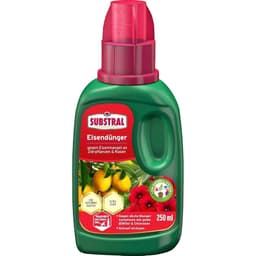
Granules suit a measured area when you can weigh the dose and use a calibrated spreader. Premium states 25 g/m² over 400 m². Express is a 15 kg bag with 600 m² in the title. These packs suit broad, regularly mown lawns, and they are awkward for a small patch. See the best Substral lawn fertiliser picks once your area matches. Moos states about 140 m², a 6:5:10 ratio and extra iron. The listing is about helping grass compete with moss, not a verified authorised mosskiller. The organic granules are described as soil conditioning, with no numeric area, NPK or season. EasyFix is seed, fertiliser and a soil improver at 50 g/m² for up to 150 m². Choose it for thin areas that need seed, not for established turf that only needs feeding. Rasen-Vital states 150 ml in 2.5 litres and NK 3.5-3.5, yet coverage conflicts between up to 67 m² and 10 m². The 7391 iron bottle is a specialist iron feed with no dilution rate stated.

Trust only coverage in square metres

Multiply length by width, then subtract large beds or paving. A 20 m by 10 m lawn is about 200 m², so it needs half a 400 m² treatment at the stated rate, not the whole bag. Split an irregular lawn into rectangles and add them. Usable area claims are Moos about 140 m², EasyFix up to 150 m² at 50 g/m², Premium 400 m² at 25 g/m² and Express 600 m² in the title. At the 15 October 2026 prices, one application is roughly £0.35, £0.41, £0.23 and £0.18 per stated square metre. That is arithmetic from those shelf prices. A lower figure only helps if formulation, season and pack size fit. Low on the organic bag is not an area. The iron listing says both 250 ml and 2,000 ml. EasyFix says 7,500 g and an item weight of 758 g. Rasen-Vital says up to 67 m² in a bullet and 10 m² elsewhere. Check the physical label before you rely on a conflict.

Common questions

Does every UK lawn need fertiliser?
No. The Royal Horticultural Society says many lawns manage without feeding. A lawn containing wildflowers should not be fed. Shade, drought, compaction and drainage may explain weak grass better than a nutrient shortage. Feed only when the lawn type, condition and growing season give you a clear reason.
What should I check first on a lawn feed?
Check the intended job, month, measured area, nutrient line and application rate, in that order. A useful listing connects a pack weight to grams per square metre and total coverage. If one of those figures is absent, or it conflicts with another field, verify the physical label before you buy or apply.
Which products state square-metre coverage?
The listings state about 140 m² for Moos, up to 150 m² for EasyFix, 400 m² for Premium and 600 m² in the Express title. Rasen-Vital gives two conflicting areas. The organic bag says only Low, and the iron bottle has no numeric lawn coverage.
Are granules better than liquid feed?
Neither form is inherently better. Granules make sense for a measured lawn and a calibrated spreader. Liquids suit a watering can or sprayer when the dilution and coverage are clear. A missing liquid dilution is as much of a problem as a granular bag without a grams-per-square-metre rate.
Is organic lawn fertiliser automatically gentler?
No useful application decision follows from the word organic alone. You still need the nutrient declaration, dose, season, watering instructions and any access precautions on the label. The organic Substral listing gives no numeric coverage or NPK line, so its about £33.25 price cannot be compared reliably by treated area.
What should I buy in October?
None of these seven product titles is an autumn-only feed. Do not use leftover high-nitrogen summer feed simply because it is in the shed. If growth and lawn condition justify feeding, choose a product clearly labelled for autumn from another listing and follow that label. Otherwise, leaving the lawn unfed may be appropriate.

Related pages

Sources

Public UK sources and amazon.co.uk listings used for this comparison; last accessed 15 October 2026.

  1. RHS: Spring and summer lawn care (retrieved 15 October 2026)
  2. RHS: Autumn lawn care (retrieved 15 October 2026)
  3. RHS: October lawns (retrieved 15 October 2026)
  4. RHS: Fertiliser labels explained (retrieved 15 October 2026)
  5. RHS: Moss in lawns (retrieved 15 October 2026)
  6. Fertilisers Regulations 1991, Schedule 2 (retrieved 15 October 2026)
  7. HSE: Garden and home pesticide use (retrieved 15 October 2026)
  8. HSE: Lawn-treatment labelling (retrieved 15 October 2026)
  9. amazon.co.uk Substral lawn fertiliser listings, 15 October 2026 (retrieved 15 October 2026)