Independent comparisons. We may earn from shop links. More info

How to use compost for flowers

Updated: October 2026

The bag is already in the hall, and the pots are empty. How to use compost for flowers is a sequence: fill the container, water by feel, feed from the bag’s own window, and store what is left so you are not breathing dust in a hot greenhouse. This is potting compost, not a mulch for the border. The [Flowers compost comparison](/hub/fertiliser-soil-and-bark-mulch/flowers-compost) is where the seven amazon.co.uk bags are set out. This page does not rank them. We used Royal Horticultural Society guidance and the feed lines on those listings.

The bag is already in the hall, and the pots are empty.

Our top picks

On this page

Fill the pot, not the bed

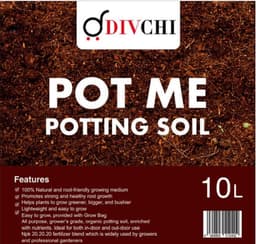
Tip the compost into the pot, not onto the bed. If the sack arrives split, or you find glass, wood or plastic, complain to the retailer and do not pick the debris out. Cover large drainage holes and finish the compost just below the rim. DIVCHI’s bullets do not state how much water to add, so a reviewer’s 3 litres is not the instruction. Which bag you needed is on the compost for flowers buying guide.

Water by depth, not by the surface

A pale crust is a weak signal on a soil-less mix. Push a finger in about a third of the way and water when that depth is dry. If water sits on the surface, stand the pot in a tray for a short soak, then let it drain.

Feed from the printed window

In this set only Miracle-Gro’s 20 litre listing states a window, up to 3 months. Follow that line before you add a separate feed. None of the seven listings prints an NPK. Where the bag is silent, the RHS pattern is to start about six weeks after planting, and only when the compost is moist. The peat wording is on peat-free compost for flowers.

Store the bag and know when to stop

Fold the top, keep the bag out of the greenhouse, and do not breathe into it. The RHS and Public Health Scotland both warn about Legionella longbeachae. Cough, breathlessness and fever after heavy use is a reason to contact NHS 111 or a GP, or NHS 24 in Scotland.

Which rule applies to your bag

If the listing prints up to 3 months, wait out that window. If it prints nothing, the public fallback starts about six weeks after planting. If the sack is split or you find glass, stop.

Common questions

How full should I fill the pot?
Set the rootballs about 5 cm below the rim, fill the gaps, and finish the compost just below the rim so water has a lip to sit in. The RHS planting sequence also says to cover large drainage holes, water slowly, and wash mix off the leaves. A pot filled to the brim spills compost at the first watering. Leave the spare bag off the flower bed. Potting compost is a container mix, not a mulch.
How do I know it needs water if the top looks dry?
Feel about a third of the way down, or 2–3 cm in a shallow pot, and water when that depth is dry. Soil-less mixes can look dry on top while they are still moist underneath, and they can fail to rewet after they bake. Water the compost in the morning or evening, and stop when water reaches the drainage holes. Light rain may wet only the surface. A weekly calendar is a poor match for a hot spell.
When do I start liquid feed if the bag says up to 3 months?
Follow the 3-month line on Miracle-Gro’s 20 litre listing, which is the only bag in this set that prints a window. Do not also start a six-week liquid feed on day one. When that printed window ends, summer flowers need a high-potassium liquid feed, and you read the analysis on the bottle. No compost listing here prints an NPK. Feed when the compost is already moist.
When do I start liquid feed if the bag says nothing?
The other six bags print no feed life. The RHS then suggests feeding containers about six weeks after planting, and hungry bedding three or four times over summer, usually from April to the end of August. Gardeners’ World describes a fortnightly feed from about six weeks for plants in growth in a soil-less mix. That is the public fallback, not a claim about those bags’ ingredients. Short-lived bedding can continue into early autumn. After that, most feeding stops.
Can I tip the leftover bag onto the flower bed?
Leave it in the bag. The RHS says potting compost belongs in pots, and spreading it as a mulch is a common waste of the mix. Fold the top and store it dry for the next container. If the sack is split, or you find glass or plastic, use the retailer’s complaint route. Do not sift a contaminated bag onto a bed and hope the problem is only cosmetic.
Where should I store an opened bag?
Fold the top, keep it out of direct sun, and keep it out of the greenhouse. A dry, ventilated shed is the sort of place Public Health Scotland describes. Gloves, no breathing into the bag, and washed hands are the RHS precautions around Legionella longbeachae. Use the compost in the season you bought it. Cough, breathlessness and fever afterwards are a reason to contact NHS 111 or a GP, or NHS 24 in Scotland.
What if the block does not say how much water to add?
Do not invent a dose from a review. DIVCHI’s bullets do not print a water volume, and one reviewer’s 3 litres of warm water is not the instruction. If your pack is silent, you cannot expand it to a known 10 litres with any confidence. A ready loose bag is the practical choice for planting the same day. Slow wetting and dry patches are a repeated complaint once people do add water.

Related pages

Sources

Public UK sources from the research digest, used for this page in October 2026. Prices, stars and review counts are from the seven amazon.co.uk listings read on 21 October 2026. There is no laboratory test. Peat-free means the listing prints peat-free. An announced retail end date is not an Act. The Growmoor 50 litre and 60 litre review texts in this set are one shared sample.

  1. Defra, sale of horticultural peat to be banned (retrieved 21 October 2026)
  2. Written question 99957, 18 December 2025 (retrieved 21 October 2026)
  3. Deposited letter, 29 January 2026 (retrieved 21 October 2026)
  4. RHS, hanging baskets (retrieved 21 October 2026)
  5. RHS, growing plants in containers (retrieved 21 October 2026)
  6. RHS, peat-free tips (retrieved 21 October 2026)
  7. RHS, John Innes compost (retrieved 21 October 2026)
  8. RHS, minimising health risks in the garden (retrieved 21 October 2026)