Independent comparisons. We may earn from shop links. More info

Tomato feed on strawberries or a specialist bottle

Updated: October 2026

You already have a bottle of tomato feed in the shed, and the strawberries in the hanging basket have started to flower. The question is whether tomato feed on strawberries is already the right liquid, or whether a specialist bottle is worth another trip. This page holds that one pair. Open the [berry fertiliser comparison](/hub/fertiliser-soil-and-bark-mulch/berry-fertiliser) for the eight amazon.co.uk packs. Application steps sit on [how to use berry fertiliser](/hub/fertiliser-soil-and-bark-mulch/berry-fertiliser/sub/berry-fertiliser-how-to-use). We did not trial Tomorite against UK GROW or Vitax. A qualifying purchase through our links can earn a commission at no extra cost to you.

You already have a bottle of tomato feed in the shed, and the strawberries in the hanging basket have started to flower.

Our top picks

On this page

Tomato feed is already a strawberry feed

A tomato liquid is a high-potash feed. Strawberries in fruit want potash more than a leafy, high-nitrogen diet. Gardeners' World tells you to use a high-potash fertiliser or tomato food every week or two from early spring, especially in pots and baskets, if you dilute it and water moist compost. Levington Tomorite is the bottle that question usually names. Love The Garden's product FAQ says yes, you can use it on strawberries, at the diluted rate on the bottle. The UK NPK printed on that page is 4-3-8. The tomato rate on the same page is 20 ml in 4.5 litres. That 20 ml line is the tomato dilution, not a strawberry trial we ran. Do not invent a stronger mix because the plant is a strawberry. On potted raspberries a high-potash liquid through flowering is a usual habit. Mulched ground raspberries often need no extra feed. Tomorite's claim of more tomatoes is a versus-unfed claim on tomatoes. Do not reuse it on strawberries. If the plant is a blueberry, that fork lives on berry fertiliser for blueberries.

When a berry-labelled pack is still worth it

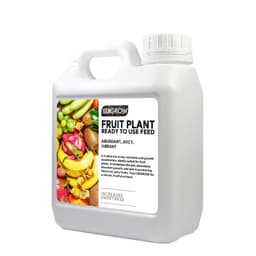
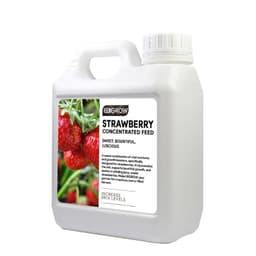
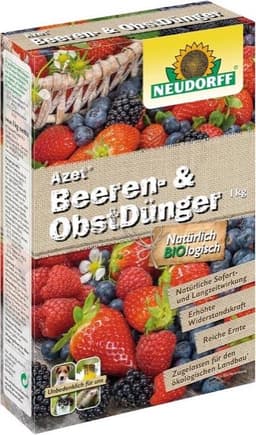
A specialist pack earns its keep when it does a job the tomato bottle does not. Vitax Organic Strawberry Feed is the usual high-street 1 L strawberry liquid. It is not in this set, so it is not scored. In this set the strawberry-labelled liquids are UK GROW 500 ml at about £9.99 and the 5 L at about £24.99, both 4.3 from 15. They name strawberry. They do not print an NPK or a dilution on the listing. The 1 L fruiting bottle at about £10.99 names berries among fruit plants and is 4.8 from 11. No printed analysis on the listing, so it does not defeat a 4-3-8 tomato bottle on chemistry we can quote. Tomato feed does not replace a spring granule. Azet 1 kg prints organic 7-3-10 and states animal by-products. Naturen 1.2 kg claims up to three months, states no animal ingredients, and prints no NPK on this listing. Those bags are a bed purchase after a poor year. Cultivers prints vegan 8-1-5 as a fruit granule, without a berry list. If you wanted an organic or vegan granule, or you do not own tomato feed at all, a berry pack is a first purchase.

When neither bottle is the right aisle

On a blueberry, check pH and tap water before you open either bottle. Tomato feed, a general berry bag, manure and poultry pellets are the wrong addition. Dry compost is the shared failure on strawberries. Tomato feed and UK GROW both need water in the pot first. A dry hanging basket sheds the diluted can down the side, and a second dose stacks on the first. A long-lasting granule in March plus a weekly Tomorite can at full strength is two diets in a small pot. After fruiting, Gardeners' World's June-bearer tidy-up is a general feed once. Hortulani's 500 g soil improver is not a declared NPK fertiliser on this listing. Jobe's 4 lb import at about £49.12 is not the shed-bottle answer.

One pair, with a condition

Keep the pair tight: high-potash tomato liquid versus a berry- or strawberry-labelled feed. If the shed already has tomato feed, use it on strawberries at the bottle's diluted rate. Buy a berry pack when you need a granule, an organic story, a strawberry label, or you have no tomato bottle at all. This page does not rank the eight listings against Tomorite.

Common questions

When is a strawberry bottle worth buying?
When you do not already own tomato feed, when you want a strawberry job printed on the label, or when you want an organic berry granule rather than a weekly mineral can. UK GROW's strawberry liquids in this set do not print an NPK, so they do not win a chemistry argument against Tomorite's 4-3-8 line.
Will tomato feed work on blueberries?
No as a default. Blueberries are ericaceous. Tomato feed, strawberry liquid and a general berry granule are the wrong aisle. Use rainwater, ericaceous compost and a modest acid feed.
How often do you dilute Tomorite for strawberries?
Love The Garden says use the diluted rate on the bottle. The printed tomato mix on that page is 20 ml in 4.5 litres. That is the tomato dilution, not a strawberry trial. Every week or two from early spring is the Gardeners' World interval for pots, not a reason to mix it stronger.
Should you use both a spring granule and tomato feed?
Not as two full rates in one small pot. A spring granule is a bed tool after a poor year. Tomato feed is a pot liquid through flowering. If the granule is already in a 20 cm pot, a weekly full-strength can is a second diet.
Is tomato feed organic?
Often not. Many tomato liquids are mineral high-potash feeds. If you came for an organic or vegan granule, Azet, Naturen or Cultivers are different purchases. Organic on a berry bag is an ingredient story, not a pet-safe test, and it does not make tomato feed wrong for strawberries.

Related pages

Sources

Public UK and maker sources used for this page in October 2026. Prices, stars and review counts are from the eight amazon.co.uk listings. Shelf date 21 October 2026. A star line scaled to a score is not a laboratory test. An NPK is quoted only when that listing prints it.

  1. RHS, grow your own strawberries (retrieved 21 October 2026)
  2. RHS, grow your own raspberries (retrieved 21 October 2026)
  3. RHS, grow your own blueberries (retrieved 21 October 2026)
  4. RHS, fertiliser labels explained (retrieved 21 October 2026)
  5. Fertilisers Regulations 1991 (retrieved 21 October 2026)
  6. GOV.UK, rules to prevent water pollution (retrieved 21 October 2026)
  7. BBC Gardeners' World, how to grow strawberries (retrieved 21 October 2026)
  8. Neudorff UK, Azet fruit and berry food (retrieved 21 October 2026)